
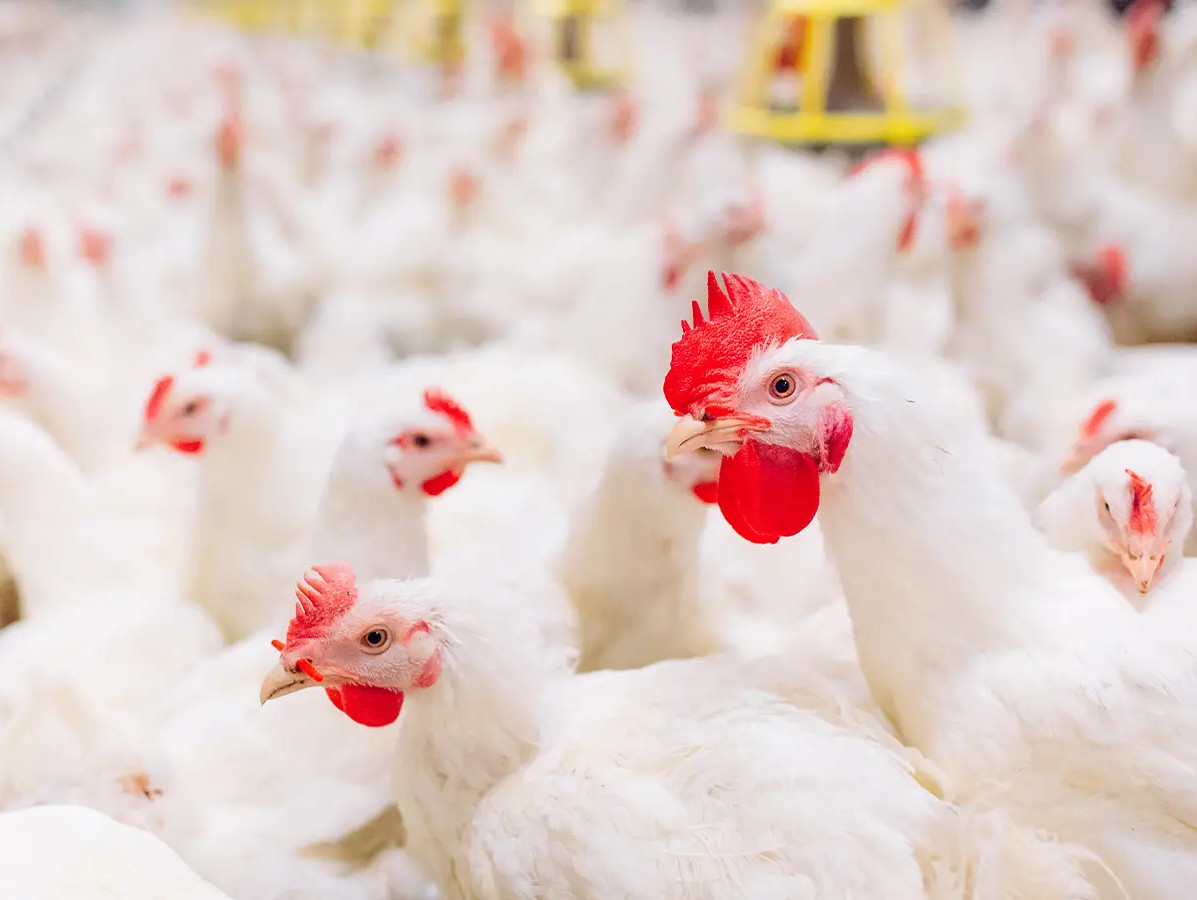
Campylobacter remains a key concern for European food safety. In Europe, the number of human infections is rising, while the Netherlands is reporting lower levels in the poultry chain. According to NEPLUVI’s annual Campylobacter monitoring, both the share of positive broiler flocks and contamination levels on finished products declined further in 2025.
The European Union One Health Zoonoses Report 2024 by EFSA and ECDC reports more than 168,000 confirmed human Campylobacter cases in Europe. This makes Campylobacter the most frequently reported foodborne zoonosis. Over the past five years, there has also been a significant upward trend.
According to NEPLUVI, the Netherlands differs from this European development. In 2011, 53 percent of supplied broiler flocks were still Campylobacter-positive. In 2025, that figure was 23 percent.
The decline is also visible on finished products. The share of Campylobacter-positive neck skin samples with more than 1,000 cfu per gram fell from 9.3 percent in 2020 to 4.7 percent in 2025. This happened despite the tightening of European process hygiene criteria in 2025.
According to NEPLUVI, the efforts of the Dutch poultry sector appear to be having an effect. There are fewer positive flocks. The organization says this also translates into fewer positive samples after slaughter. As a result, developments in the Netherlands are moving against the European trend.
The Dutch poultry sector aims to further reduce Campylobacter levels. To achieve this, the sector is working on improvements in slaughterhouses and research into additional control measures. Cooperation within the poultry chain also remains part of the approach. In addition, the sector is focusing on further strengthening biosecurity on primary farms.
Source: Nepluvi
Magazine Voedingsindustrie has been made possible in part by:



© COPYRIGHT 2026 VOEDINGSINDUSTRIE | ALLE RECHTEN VOORBEHOUDEN
Powered by Wallbrink Crossmedia © 2026