
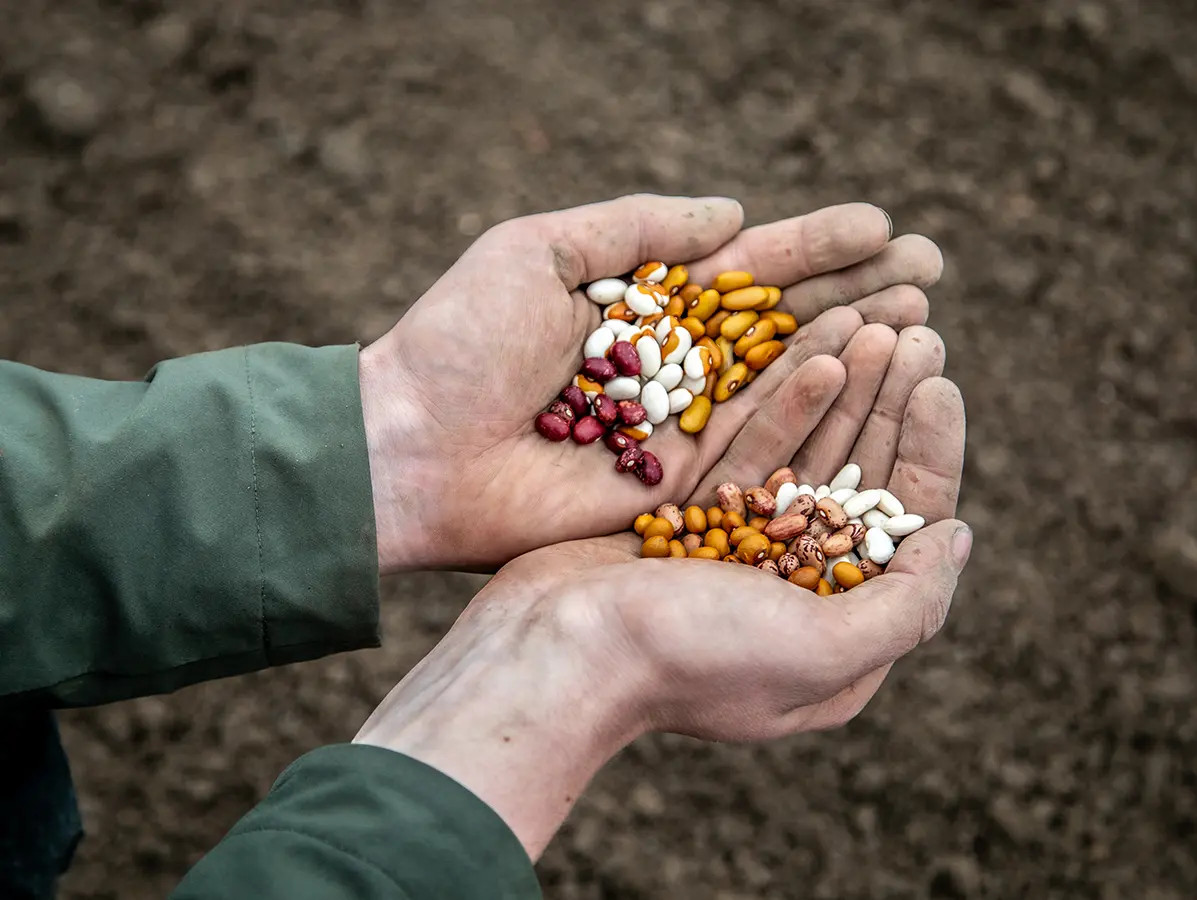
Traditional Dutch beans are getting renewed attention at HAK. The vegetable and legume producer is launching a trial with old Dutch bean varieties. The company wants to determine which varieties could once again offer opportunities for Dutch cultivation and consumption.
The Netherlands once had a far wider range of legumes than most consumers know today. Alongside brown beans and capuchin peas, regional varieties were also commonly served. Changing eating habits gradually pushed many of those beans out of sight.
HAK is now investigating which older varieties could become relevant again. The trial field includes the Wieringer bean, Walcherse kogelboon and Noord-Hollandse krombekboon. The Drentse kievitsboon, Friese woudboon, Reade krobbe and Groninger strogele are also part of the trial. The manufacturer is drawing inspiration from local initiatives working to preserve traditional Dutch legumes.
According to HAK, interest in legumes continues to increase. That aligns with recommendations from the Dutch Nutrition Centre, which advises eating at least 250 grams of legumes each week. Chickpeas, kidney beans and lentils in particular are becoming more popular. Not all popular varieties grow well in the Netherlands. That is why HAK is specifically focusing on beans suitable for local cultivation.
The trial is being carried out together with FarmPlus at family-owned company Van den Hoek in Heinenoord. “It’s great that this small-scale trial allows us to contribute to rediscovering ‘forgotten’ legumes,” says grower Van den Hoek. “It is interesting to see how these different varieties perform on our soil and what the final results will be.”
Nicole Freid, managing director of HAK, also sees opportunities. “At the same time, we also want to encourage local cultivation, and there is far more variety in beans in the Netherlands that have traditionally grown well here.”
Source: HAK
Magazine Voedingsindustrie has been made possible in part by:



© COPYRIGHT 2026 VOEDINGSINDUSTRIE | ALLE RECHTEN VOORBEHOUDEN
Powered by Wallbrink Crossmedia © 2026





