
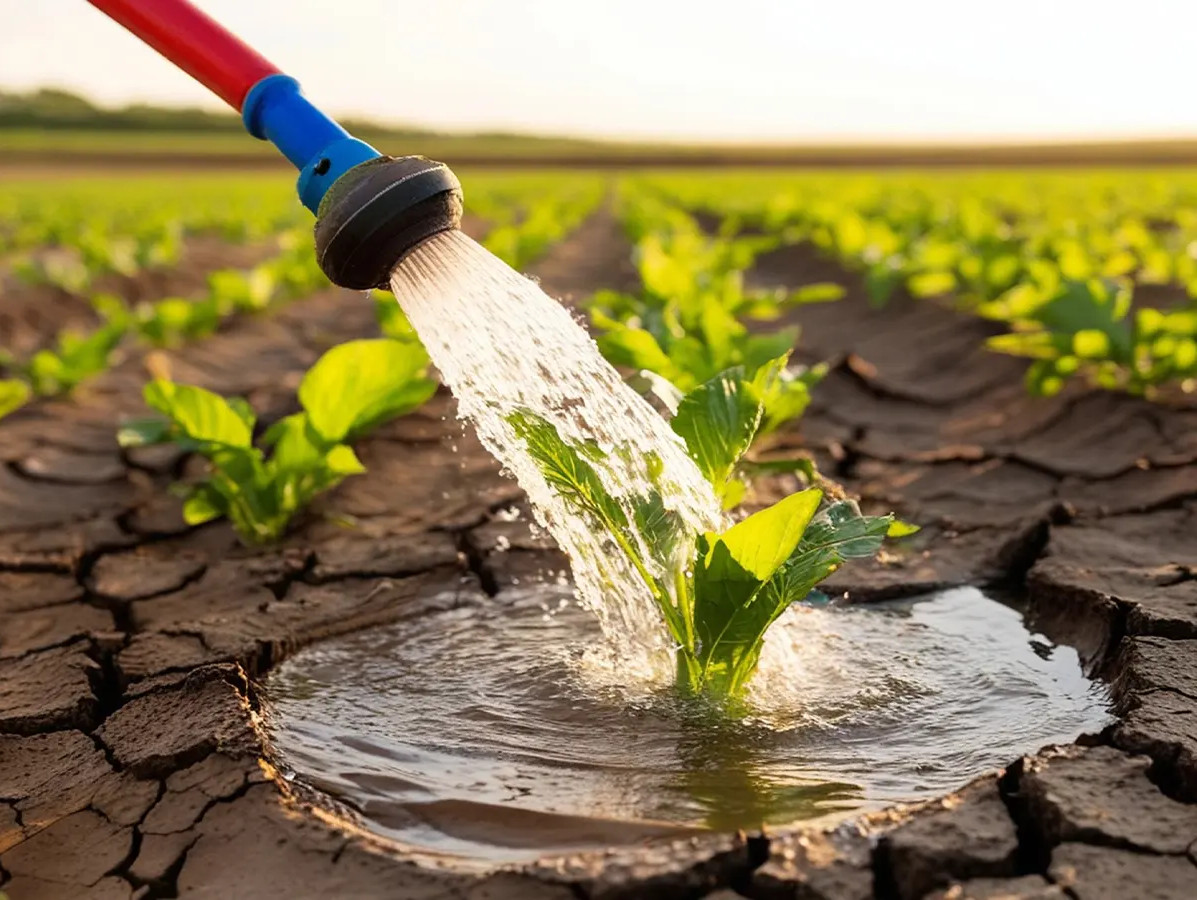
The ongoing drought is affecting nearly all agricultural and horticultural sectors. LTO Nederland reports lower yields, declining quality, and growing concerns about livestock feed supplies. Logistics and agricultural markets are also facing mounting pressure. Accelerated ripening is forcing growers, transporters, and processors to realign their schedules. Meanwhile, the impact on growers, processors, and consumers is becoming increasingly apparent.
The nearly completed grain harvest offers the first evidence of the drought’s impact. Grain handlers report disappointing yields following a dry July. Concerns are also growing for other crops. Potato yields are expected to be at least 8 percent lower than in 2025. Crops are suffering from heat and drought stress. Some plants are dying, while others are ripening faster. In several areas, this is also affecting quality.
The Nederlandse Fruittelers Organisatie is also sounding the alarm. Pear production is under particularly severe pressure. Heat and drought are causing several vegetables to ripen faster. As a result, harvesting, transportation, and processing schedules must be realigned. This may temporarily cause fluctuations in supply. Supermarket produce sections may also occasionally be less well stocked.
Corn is currently at a crucial stage of development. Adequate moisture is essential during ear formation and kernel filling. If the drought persists, the corn will mature more quickly. As a result, the ears will remain small. Grass growth has nearly stopped on many farms. Some dairy farmers fear a shortage of forage later this season.
Freshwater supplies in Zeeland are under severe pressure. The agricultural water pipeline pumps more than 800 cubic meters per hour. Under current conditions, that capacity is insufficient. Soils are also extremely dry elsewhere in the country. Irrigation often provides only temporary relief. Irrigation bans are now in effect in several areas. Midden-Delfland prohibits the use of surface water.
Large parts of Europe are also experiencing persistent drought. This is increasing uncertainty across several agricultural markets. Potato prices are now beginning to edge higher. Demand is also gradually picking up again.
Farmers can obtain coverage for weather-related losses through the Broad Weather Insurance scheme. Conditions include a minimum precipitation deficit, damage thresholds, and a deductible. The policy also caps the total payout. LTO is calling for affordable premiums and coverage that better reflects current risks. About 15 percent of farms with a weather-sensitive primary crop currently have this insurance.
Source: LTO Nederland
Magazine Voedingsindustrie has been made possible in part by:



© COPYRIGHT 2026 VOEDINGSINDUSTRIE | ALLE RECHTEN VOORBEHOUDEN
Powered by Wallbrink Crossmedia © 2026