
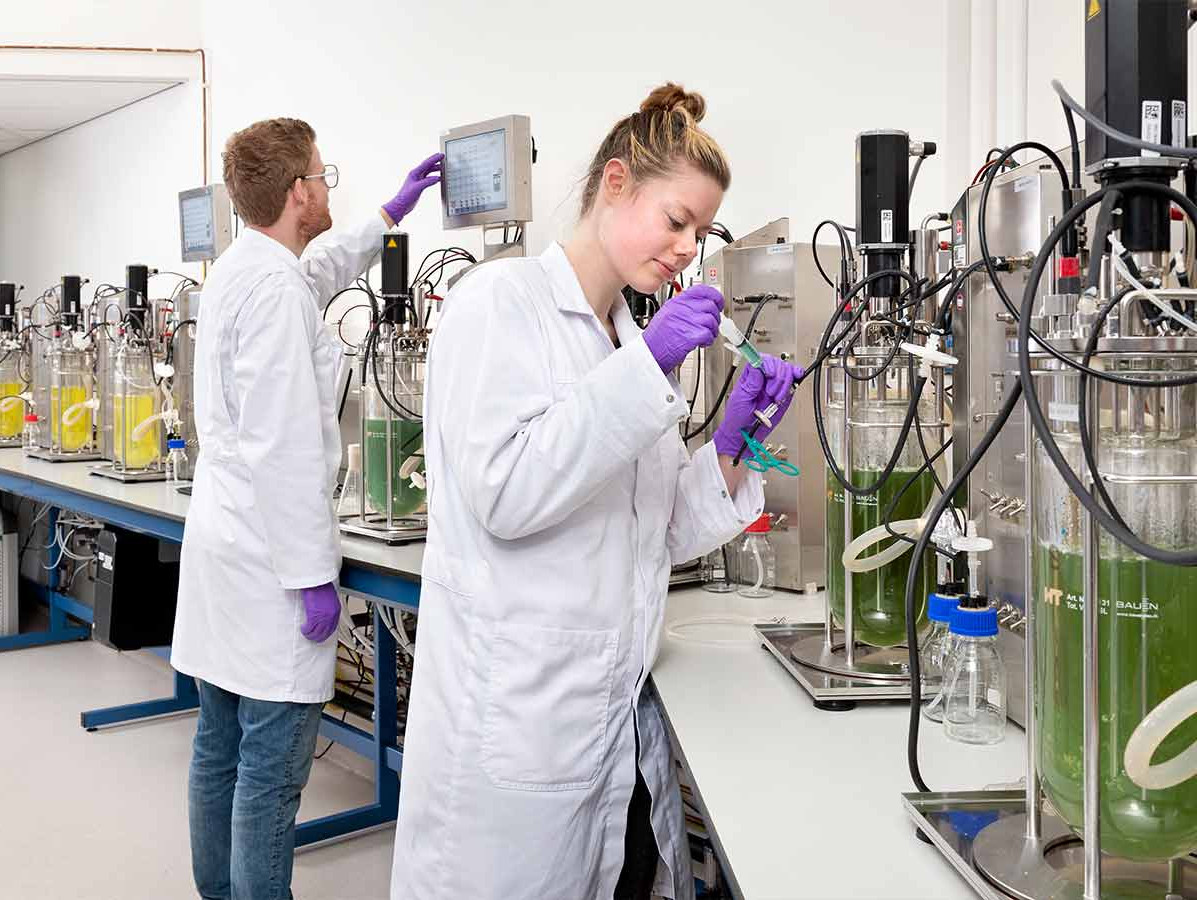
Precision fermentation is reshaping the food industry. This technology enables the production of proteins—such as whey proteins, caseins and ovalbumin—with a lower environmental impact than their animal-derived counterparts, while maintaining their desired functional and nutritional properties. However, the production of these proteins is still costly, limiting their widespread adoption. The challenge lies in achieving cost-effectiveness comparable to conventional dairy and egg proteins.
Precision fermentation uses genetically modified micro-organisms to produce animal-free proteins that are molecularly identical to animal proteins. The technology makes it possible to create key proteins found in milk and eggs—without the environmental burden or ethical issues tied to animal production.
Global demand for sustainable alternatives to traditional dairy and egg-based products is rising. While many plant-based substitutes are already available—made from ingredients like oats, soy or almonds—they are fundamentally different from animal proteins. Differences in protein folding lead to variations in solubility, foaming and gelling behaviour. In addition, plant-based matrices often introduce non-protein components into the final product that can influence taste and texture of the products made with them. Understanding these differences is key to developing better animal-free protein ingredients.
Efforts to deepen this understanding are well underway. Wageningen Food & Biobased Research (WFBR) has been at the forefront of precision fermentation for decades, particularly utilizing the yeast Pichia pastoris. As early as thirty years ago, they successfully produced the main whey protein β-lactoglobulin at high titers (a titer measures the amount or concentration of a substance in a solution)—well before the food industry started focusing on animal-free protein production. WFBR also pioneered the development of both gelling and non-gelling gelatines using Pichia pastoris. Their broad portfolio includes a wide range of structure-forming proteins, enzymes and peptides for technical, biomedical, cosmetic and food applications.
Currently, WFBR is a partner in the Dutch Research Agenda (NWA) consortium ‘Animal-free Milk Proteins’, which aims to produce animal-free caseins for cheese. Their researchers found that animal-identical proteins from precision fermentation don’t always behave in the same way as their animal-derived equivalents. This presents a new set of challenges.
Developing products that combine plant-based and animal-identical proteins meets consumer demand for ethical, sustainable and high-quality food alternatives at lower cost. Research shows that blends of conventional dairy proteins and plant proteins can create synergistic effects that improve product quality. For example, emulsions stabilised by either sodium caseinate (SC) or pea protein isolate (PPI) alone tend to show physical instability over time, while mixtures of the two show notable stability. WFBR’s research on conventional animal and plant protein blends has confirmed these synergistic effects through co-processing.
To fully realise the potential of these blends, it’s essential to understand how they interact and how they can be translated into innovative product solutions. MIX-PRO—a recently approved Public-Private Partnership project—is addressing these knowledge gaps by investigating the physicochemical and functional properties of dairy and egg proteins from precision fermentation. The goal is to develop a toolbox to support food and ingredient suppliers in creating affordable, appealing and high-quality product innovations based on blends of plant-based and animal-free proteins.
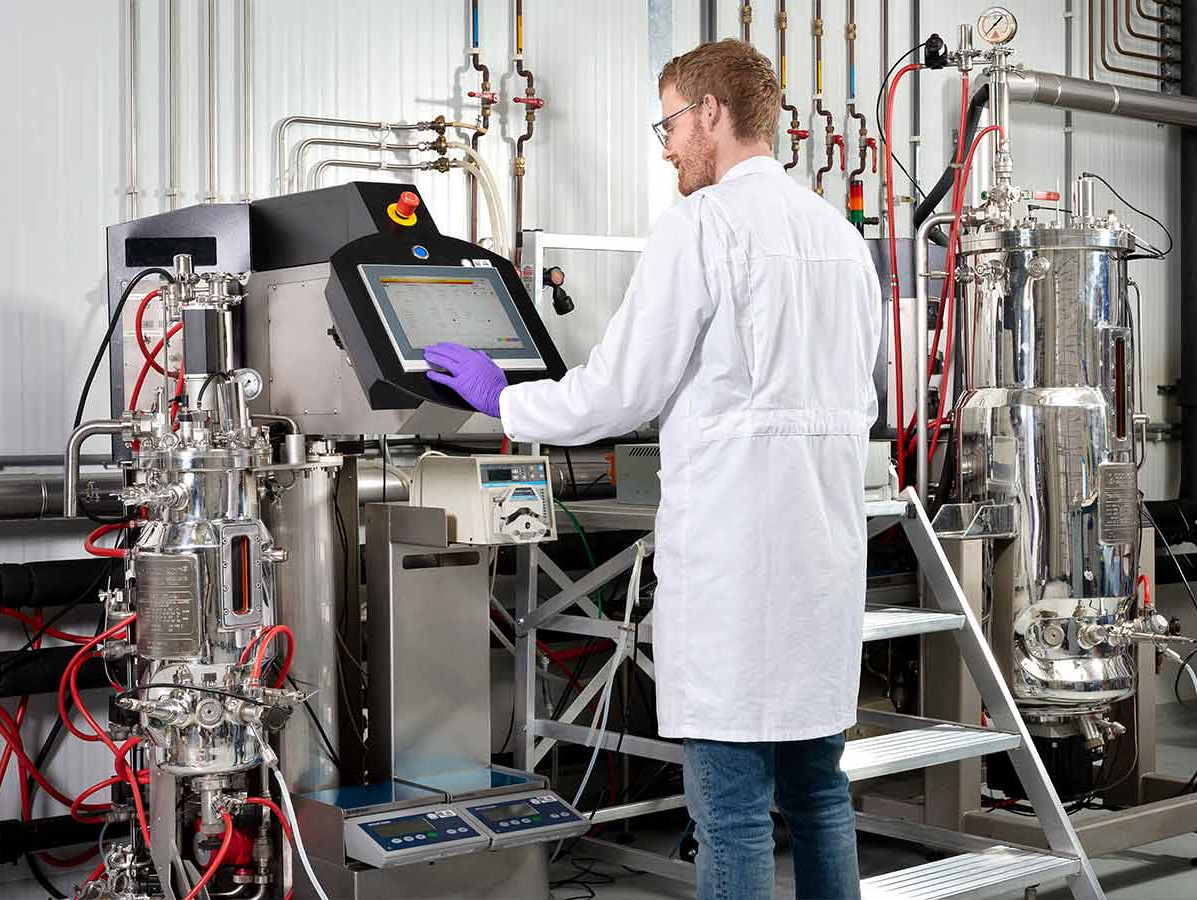
At WFBR, the precision fermentation approach to protein production is driven by a focus on achieving the optimal balance between cost and functionality for industrial processes. Optimising fermentation is essential to improve both protein quality and yield. By fine-tuning fermentation conditions—such as pH, temperature and nutrient levels—protein degradation can be reduced. Adjustments to feed strategies, co-substrates and oxygen supply can further boost output.
Protein yield and efficiency can also be improved through genetic engineering of the Pichia pastoris strain. These optimisation strategies are often interconnected—temperature adjustments, for example, can affect both protein integrity and yield. Still, even once lab-scale precision fermentation processes are in place, scaling up to industrial levels remains one of the most complex steps in developing alternative proteins. Processes that perform well at small scale may behave very differently when scaled up, due to non-linear effects in mixing, oxygen transfer and temperature gradients. That’s why reproducibility and process control are critical.
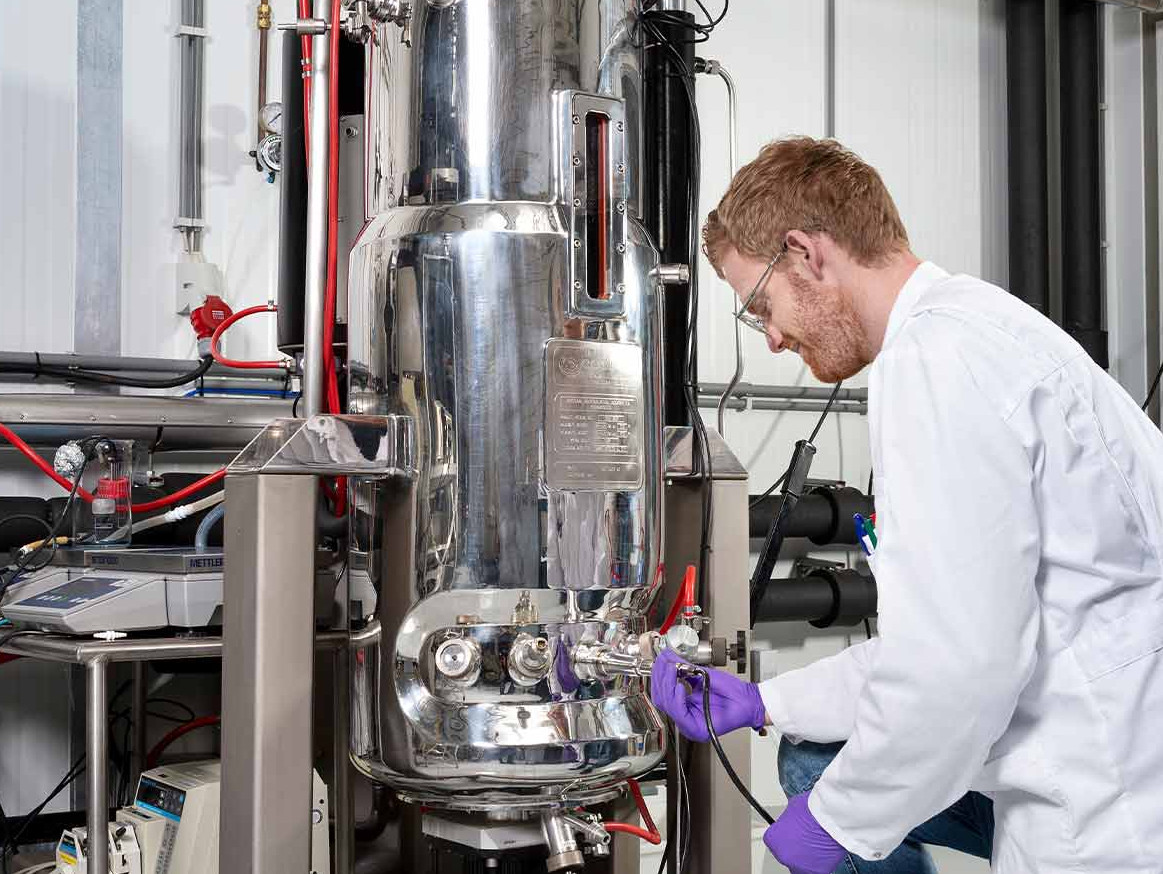
One technology gaining ground is Raman spectroscopy. This non-invasive analysis method provides real-time molecular information about the fermentation broth—without the need for sampling. Raman spectroscopy can be used to monitor parameters such as substrate consumption (e.g. glucose, methanol), metabolite formation (such as organic acids), and in some cases even target protein production. At WFBR, Raman spectroscopy is integrated into both laboratory fermenters and pilot systems up to 100 litres. WFBR also collaborates with scale-up facilities like NIZO in Ede to enable application at volumes up to 10,000 litres.
Continuous data collection during fermentation offers researchers deeper insight into process dynamics and enables timely adjustments. This improves reproducibility and supports smoother scale transitions.
One practical application is in fermentation with Pichia pastoris, a widely used host in precision fermentation. In these systems, methanol is often used both as a carbon source and as an inducer for protein expression. Accurate dosing is key: too little methanol reduces protein yield, while too much can be toxic to the cells. Raman spectroscopy allows continuous methanol monitoring, enabling precise feed control. Better control over feed and aeration keeps the target protein in the extracellular medium while reducing unwanted by-products. This simplifies downstream purification and helps lower production costs.
Transitioning to more sustainable and innovative food systems presents significant challenges. Still, the opportunities offered by animal-free proteins—alongside plant-based and other alternative proteins—are considerable. By leveraging precision fermentation and exploring the potential of protein blends, we’re paving the way for a more sustainable food industry.
*Nationale Wetenschapsagenda
www.wur.nl
Photo's© WUR/Verse Beeldwaren
Source: Vakblad Voedingsindustrie 2025
Magazine Voedingsindustrie has been made possible in part by:



© COPYRIGHT 2026 VOEDINGSINDUSTRIE | ALLE RECHTEN VOORBEHOUDEN
Powered by Wallbrink Crossmedia © 2026