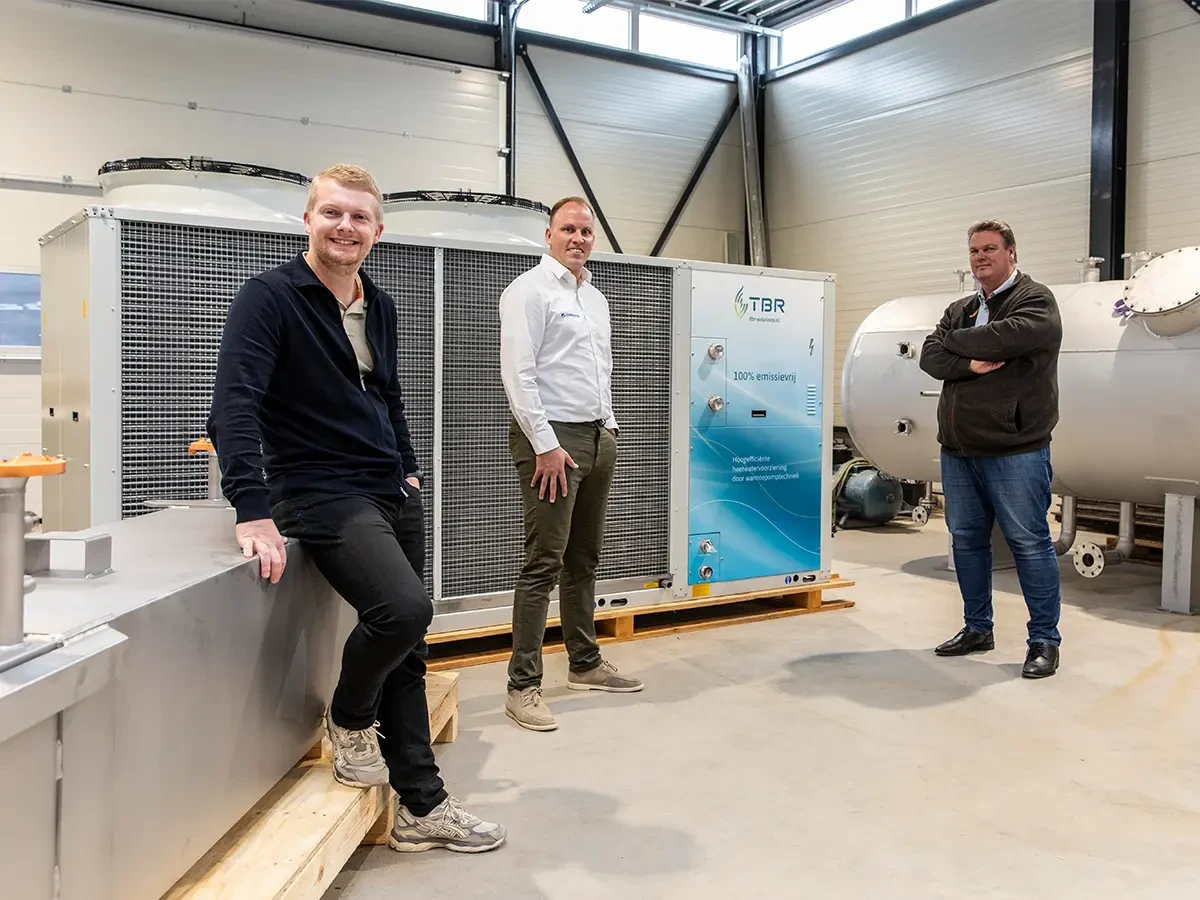
High energy costs and limited access to water and electricity are making it essential for companies to cut consumption. How do you keep production running under those conditions? Christeyns and TBR Solutions are pooling their expertise to help. Jaap Reinders, Sjoerd Ruijter, and Foppe Prevo explain how they help companies move forward.
Jaap Reinders, CEO of TBR Solutions, had known Christeyns for 30 years before the Gieten-based engineering firm joined the Christeyns Group three years ago. “It was time to join forces because together we have a lot to offer companies.” Alongside Sjoerd Ruijter, Sales Engineering Manager at TBR, and Foppe Prevo, Food Hygiene Sales Manager at Christeyns, he wants to bring that expertise to more food manufacturers. “Our role goes beyond supplying cleaning agents and disinfectants,” says Foppe. “We want to help the industry move forward by working with companies to find ways to make production more cost-effective and sustainable.”
Christeyns provides comprehensive hygiene solutions and helps food companies optimize and control their cleaning processes. Employees receive support in using those solutions. “We train the team and explain what to use, when to use it, and how,” says Foppe. “Food safety is the foundation for all of that.” TBR complements that knowledge with expertise in how water and energy flow through a facility, and designs and implements engineering solutions. Together, they assess what can be improved now and which investments make sense down the road.
“High energy costs affect the cost of production. At the same time, you can no longer count on having enough water and electricity to keep production running. That changes what sustainability means in practice. Cutting consumption used to be a side benefit,” Jaap says. “Now it’s essential. If you don’t have enough water or energy, production grinds to a halt. Water reuse and heat recovery help companies rely less on outside supplies,” he continues. “Sustainability is becoming essential to keeping operations running. We talk with companies about how to make that shift and which steps make sense for them.”
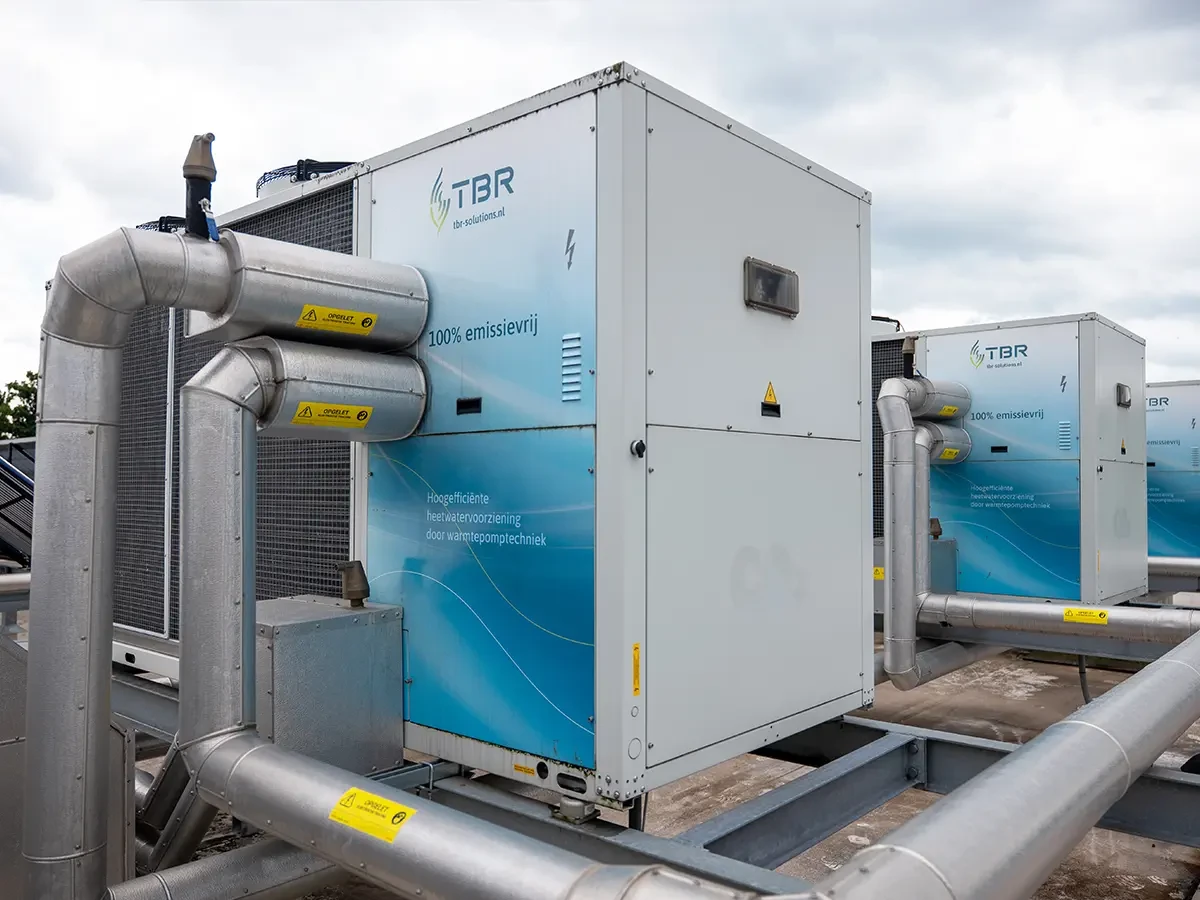
TBR has experience with steam systems, heat recovery, and heat pumps. For example, heat recovered from wastewater can be used to warm process water. “We already have laundries operating without gas for the washing process,” says Jaap. Food manufacturers can draw on that experience. “You have to look at the entire process,” Sjoerd emphasizes. “It comes down to recovering the heat efficiently and putting it back to work where it’s needed in the process.” Water reuse also offers opportunities. Sjoerd describes HydRO, which treats wastewater biologically before further purifying it with membranes and reverse osmosis. “You can reuse 80 percent of your wastewater as clean process water. The water also retains its heat.” Using this technology in food manufacturing requires discussion about water quality, intended use, and food safety. “Food safety has to be taken care of every time,” says Foppe.
“A lot of companies know they need a different approach, but they’re still taking a wait-and-see approach,” says Jaap. “That’s understandable. Change always brings uncertainty. Will the system fit? What will it mean for production? How do you validate the modified process?” Foppe sees those questions as an opening. “Let’s talk about what’s possible. We’ll identify the options together and help companies and their employees through the changes by explaining what’s changing and providing training.” Support continues after handover. “If a customer wants to fine-tune something, we can log in remotely and take a look,” says Sjoerd. “We do that with the customer’s permission. It lets us keep working together to improve the process.”
TBR monitors system performance and uses measurements to verify savings. “We have to prove ourselves every day,” says Jaap. He points to a tank cleaning project where heat recovery cut gas consumption by 30% and reduced CO₂ emissions by around 50 metric tons per year. “Our systems deliver savings. Exactly how much? That’s hard to say. Every company is different. The figures will vary from one company to the next.”
Over the next few years, the three aim to deliver projects that food manufacturers can look to as examples. “Above all, we want to show companies what we can do for them, how the systems perform, what a different way of working involves, and, of course, how much they can save,” says Jaap. “We do this as part of the Christeyns family,” Sjoerd explains. “Christeyns brings hygiene solutions and expertise, and we add our engineering knowledge and experience. Together, we deliver something that makes a real difference for the customer.”
“And we’re proud of that,” adds Foppe. “When we see the results we set out to achieve with the customer, it’s rewarding for us, too. I see plenty of opportunities for customers to experience what this broader partnership can do for them.”
www.tbr-solutions.nl
www.christeyns.com/nl
Main photo: From left to right, Sjoerd Ruijter, Foppe Prevo, and Jaap Reinders
Photos ©Anne van der Woude
Source: Vakblad Voedingsindustrie 2026
Magazine Voedingsindustrie has been made possible in part by:



© COPYRIGHT 2026 VOEDINGSINDUSTRIE | ALLE RECHTEN VOORBEHOUDEN
Powered by Wallbrink Crossmedia © 2026