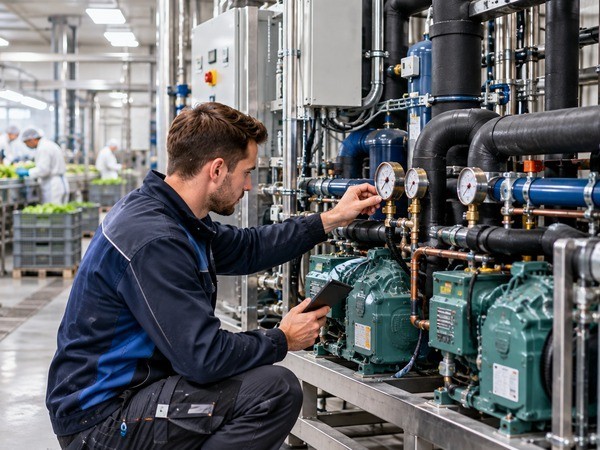
In the food industry, consistent quality and food safety are essential. Refrigeration and freezing systems play a major role in both. These systems also consume a lot of energy. How do you keep costs under control and comply with increasingly strict environmental regulations? Proper maintenance and skilled refrigeration technicians make the difference.
A refrigeration system that operates efficiently uses less energy. Dirty heat exchangers, incorrect settings, or small leaks increase energy consumption. Regular maintenance and timely inspections keep systems reliable. This also reduces the risk of breakdowns and unplanned production downtime.
The European F-gas Regulation restricts the use of refrigerants with a high climate impact. As a result, more companies are switching to alternatives such as CO₂ and ammonia. These refrigerants require specific technical knowledge and careful attention to safety.
For food industry companies, this means technicians need to keep developing their expertise. They work with new technologies, stricter requirements, and increasingly complex systems.
Well-trained refrigeration technicians identify irregularities early, carry out maintenance thoroughly, and understand how to make systems run more efficiently.
ROVC is the Netherlands’ leading technical training provider, offering courses in areas including industrial refrigeration and climate control technology. The refrigeration course at ROVC teaches entry-level technicians and operators the basics of refrigeration systems, maintenance, and fault identification.
ROVC also offers opportunities for further technical development. View ROVC’s training programs and invest in the knowledge needed to keep refrigeration systems operating safely, reliably, and efficiently.
Refrigeration and freezing systems are essential in the food industry, but they consume a lot of energy. At the same time, European F-gas regulations are introducing new requirements for refrigerants and technical expertise. Well-trained refrigeration technicians help prevent breakdowns, maintain systems, and save energy. Find out why investing in technical expertise is becoming increasingly important.
Source: ROVC
Magazine Voedingsindustrie has been made possible in part by:



© COPYRIGHT 2026 VOEDINGSINDUSTRIE | ALLE RECHTEN VOORBEHOUDEN
Powered by Wallbrink Crossmedia © 2026