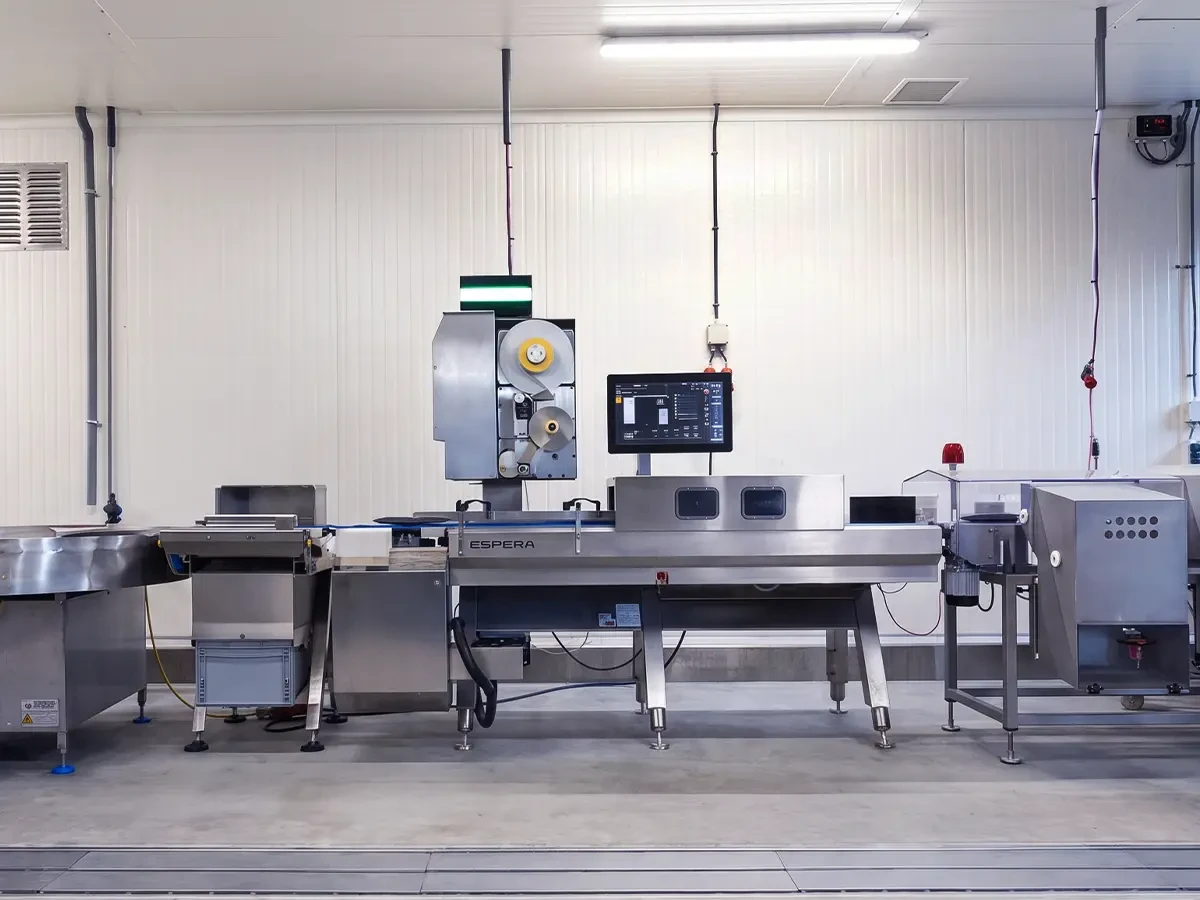
Mooijer, a seafood supplier in Volendam, is replacing its weighing and labeling system. The new line from ESPERA connects to the ERP system and prints the exact weight and all variable data on each label.
Replacing the weighing and labeling line gave Mooijer a chance to link that data to order information in its SAP ERP system. The German family-owned company ESPERA offered an all-in-one solution, the ES-R 1011. Erik Bogert, Area Manager at ESPERA Nederland, says the two companies worked together to select the ES-R 1011. “Mooijer specifically wanted rejected packages to be removed downstream of both the metal detector and the weighing station. The R in ES-R stands for ROBOTIC. That means each new order automatically tells the machine where to apply the top and bottom labels. Operators no longer have to set up the machine manually for each order.”
The line is connected to the ERP system. Mooijer uses SAP. “It was exactly what we needed for order-driven production,” says Fred Plat, who is responsible for IT at Mooijer. SAP exports the order information to a CSV file. From there, all labeling data, including label position and item number, is sent to the ES-R 1011. “We label both fixed-weight and variable-weight products,” he explains. “If a product is supposed to weigh 150 grams and comes in at 149 grams, for example, it’s rejected. For variable-weight products, the machine weighs each product and prints the exact weight directly on the label. That took a lot more work on our old line.” Mooijer is now building a record of its orders and how they were processed on the line.
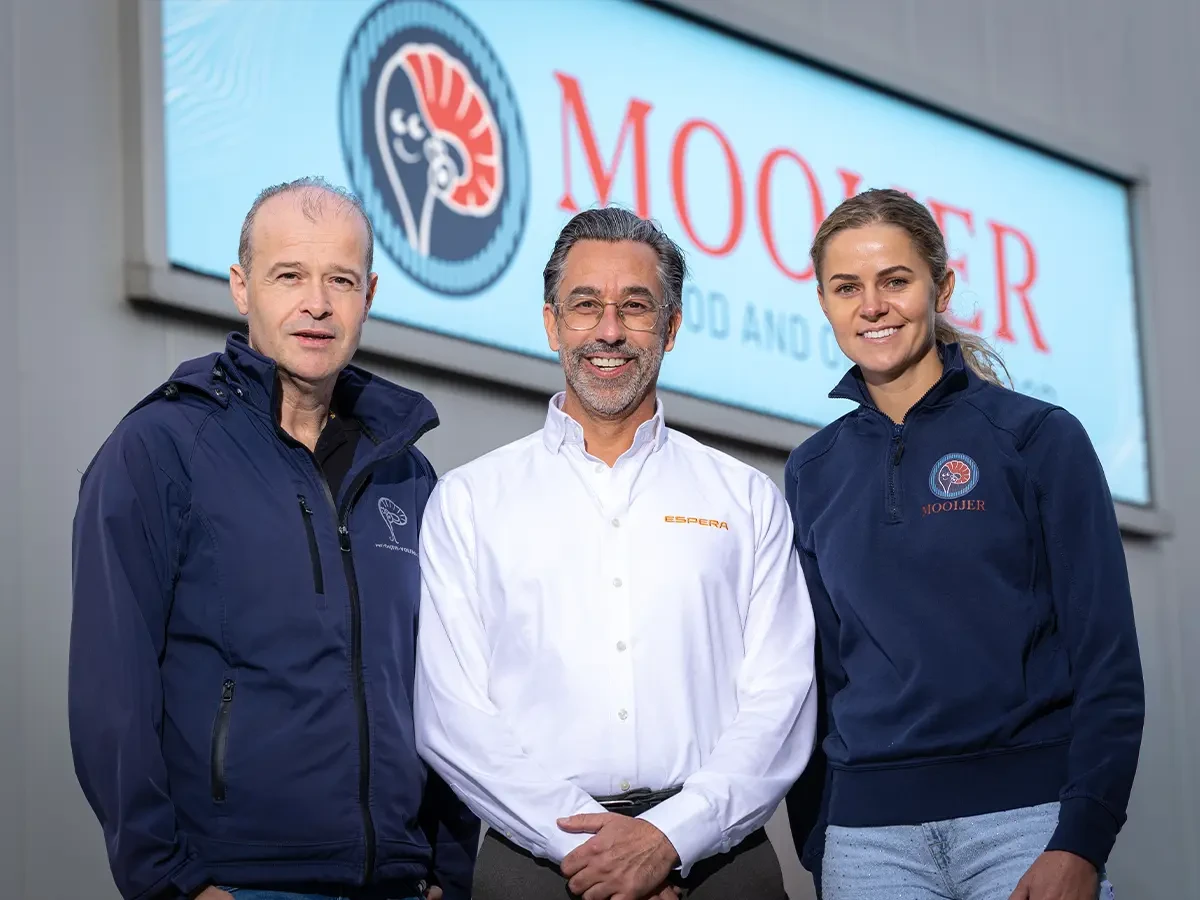
From left to right Fred Plat, Erik Bogert and Shirley Leliveld.
The new line also changes the sequence of operations. “We used to label the packages first, then run them over a standalone checkweigher and through the metal detector,” says Shirley Leliveld, QA manager at Mooijer. “If a package was rejected, it already had a label on it. On the new line, the scale is built into the labeling machine, and the metal detector is connected to the ES-R. Both checks take place before the label goes on. Rejected packages are automatically removed from the line without a label. That saves labels, but what matters most to us is that the checks are tied to labeling,” she explains. “A package only gets a label if it passes both checks. That gives us an extra safeguard in the process.” Mooijer found that combination in one system from ESPERA, which recommends and supplies the line to seafood processors as well as producers of meat, chicken, game, deli meats, prepared meals, cheese, and other foods. Erik says, “We specialize in weighing and labeling and in connecting that equipment to higher-level systems.”
The operators went along to ESPERA’s Eindhoven site to help choose the new line. Shirley says, “What made up our minds? Quite a few things! The SAP connection, the linked metal detector and built-in checkweighing, the ease of use, the quick label roll changes, and the automatic label positioning for each product. To change the bottom label roll, the operator just presses a button. The lower printer slides out and tilts for easy access to the roll. The operator no longer has to get down on their knees to change it.”
“With automatic liner take-up and automatic tensioning at the roll core, we lose one or two labels at most,” Fred adds. “With the old machine, we’d often end up with a long strip of labels in our hands before the roll started feeding properly.”
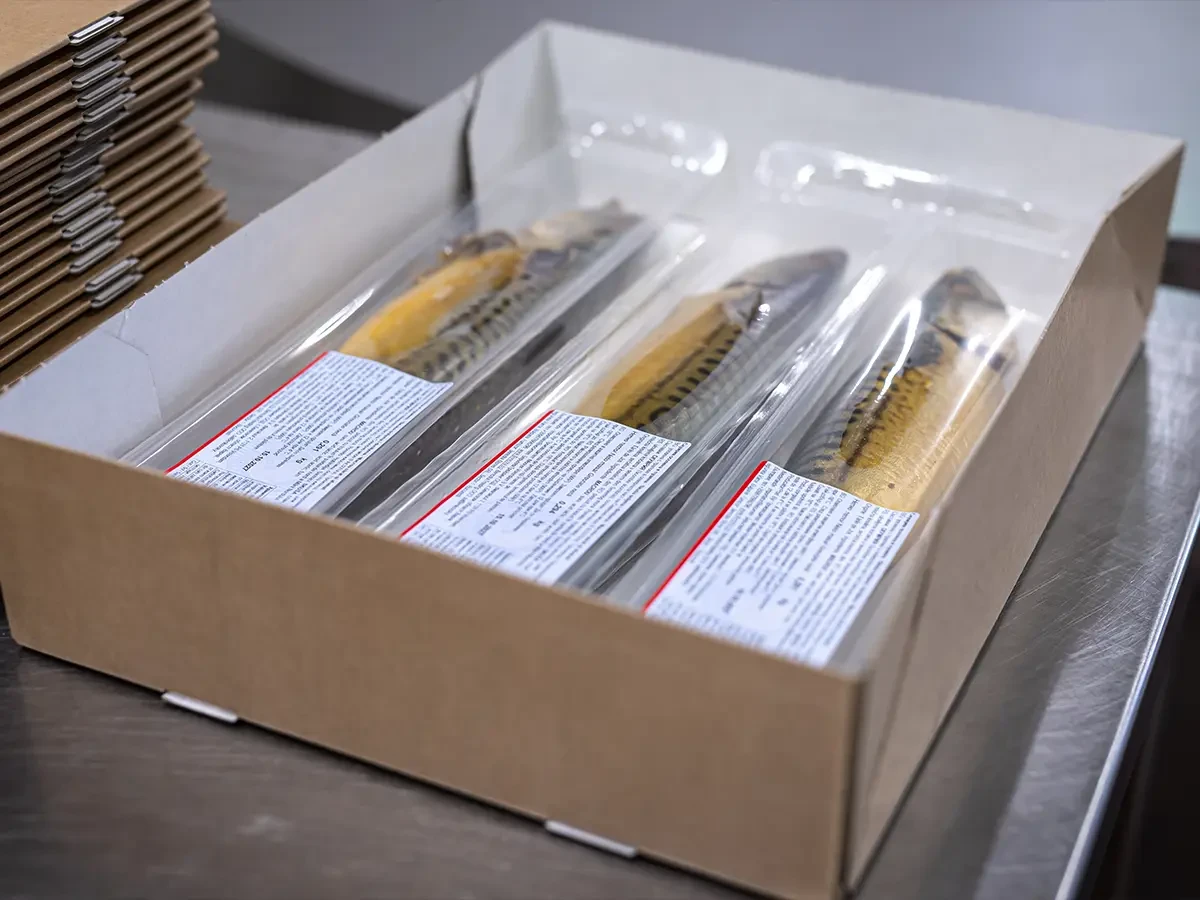
The new line handles a good 40% more packages per minute than the old one. “We used to do all of that manually,” Fred says. “Now our system handles it, and we have better visibility into what’s happening.” Erik adds, “The ES-R can handle a lot more packages per minute. Quick label changes and automatic setup suit the way Mooijer handles many different orders in a short time.” The old line is still off to one side and has been out of use since December 2025. Fred says, “We don’t need it with the new equipment. We’ve set up most of our standard products in the system now, so things usually run smoothly.”
ESPERA continues to update the software for its weighing and labeling systems. At the end of 2027, the traditional EAN-13 barcode will be phased out and the GS1 QR code will become mandatory (Sunrise 2027). The ES-R is ready for that change, too.
Source: Vakblad Voedingsindustrie 2026
Magazine Voedingsindustrie has been made possible in part by:



© COPYRIGHT 2026 VOEDINGSINDUSTRIE | ALLE RECHTEN VOORBEHOUDEN
Powered by Wallbrink Crossmedia © 2026