
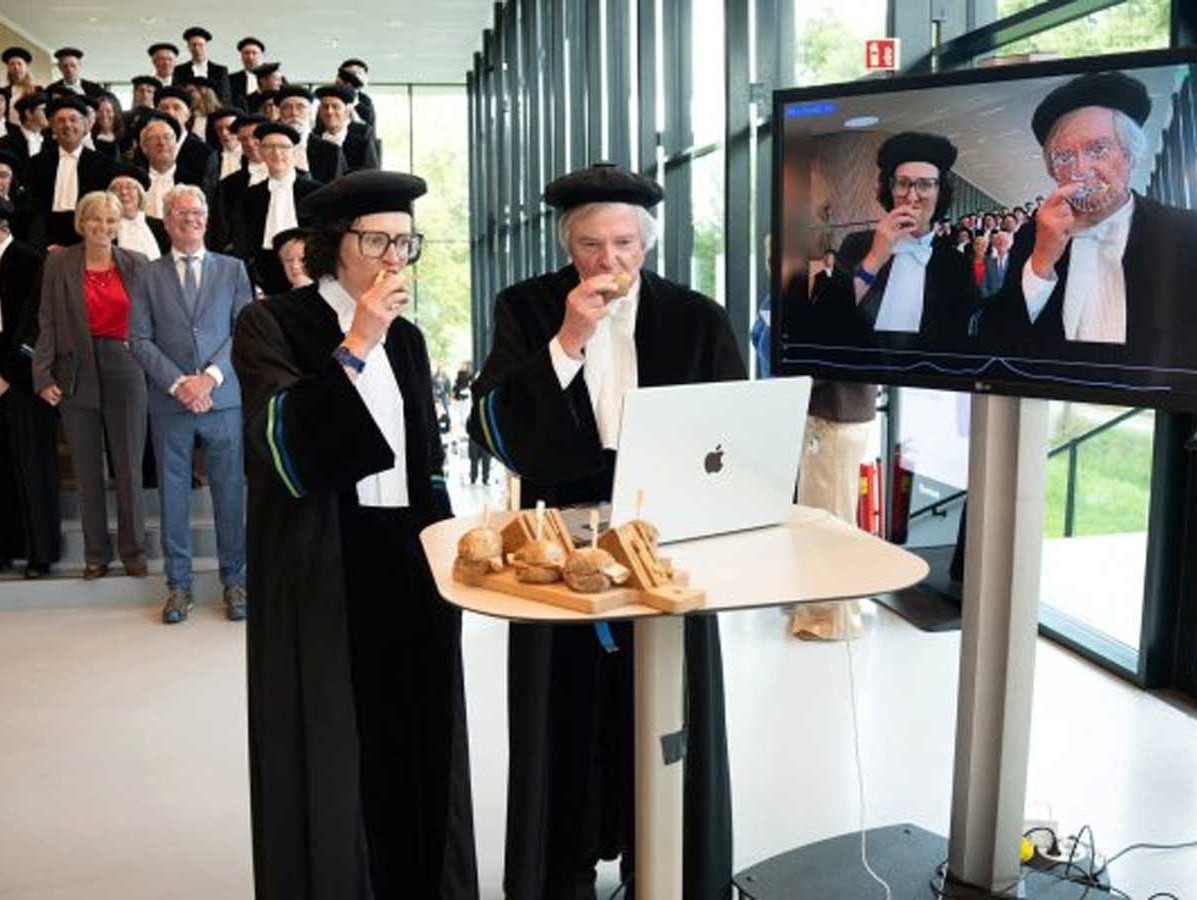
Wageningen University & Research opened its 2025–2026 academic year with the theme Food for health, what really works. Researchers presented practical ways to improve diets, reduce overeating, and support better food choices.
Board president Sjoukje Heimovaara reflected on WUR’s long-standing focus on food research. Yet major challenges remain: from obesity and malnutrition to food insecurity caused by conflict. “In some regions, hunger is even used as a weapon,” she said. Heimovaara announced the launch of the Gerrit Grijns Fund, aiming to raise two million euros within four years to support innovative food science. The fund is named after a Wageningen professor who helped discover vitamin B and shaped modern nutrition science.
Maartje Poelman showed how our food environment strongly affects public health. In the Netherlands, over 80% of food in supermarkets and restaurants does not support a healthy diet. Regulatory interventions, such as limiting salt in bread, prove more effective than targeting individuals. “We need to make the healthy choice the easy choice,” Poelman stated.
Traditional food tracking methods often lack context and accuracy, said Guido Camps. To address this, WUR and OnePlanet are developing technologies like the SnackBox and sensor trays, which automatically track when and how much someone eats. These tools also gather insights into the social side of eating, creating a complete sensor ecosystem for real-world dietary research.
Ciarán Forde discussed how texture and eating speed affect calorie intake. In the RESTRUCTURE project, participants consistently consumed fewer calories when food required more chewing—without feeling less full. This shows how sensory factors like texture influence eating behaviour and long-term intake. Such findings open up opportunities for food design that helps prevent overeating.
Finally, rector Carolien Kroeze thanked outgoing dean Arnold Bregt for his work over the past eight years. Dick de Ridder will take over his position. Kroeze also welcomed Peter Ploegsma to the Executive Board, where he will manage Finance, Business & Services.
Read full article: wur.nl
Source: WUR
Magazine Voedingsindustrie has been made possible in part by:



© COPYRIGHT 2026 VOEDINGSINDUSTRIE | ALLE RECHTEN VOORBEHOUDEN
Powered by Wallbrink Crossmedia © 2026