Surface water in the Netherlands has been measured and assessed for years. Yet the quality shows little improvement. New research by the Algemene Rekenkamer indicates that the concentration of harmful industrial substances has in many cases hardly declined. That is striking, because under European agreements the water must meet the standards by 2027 at the latest.
The Rekenkamer examined fifteen harmful substances often linked to industrial discharges. These include PAHs, PFOS, heavy metals such as lead and mercury, and also dioxins. Substances known for their risks to health and the environment. Data from 61 monitoring points in Dutch national waters were used for the study. The measurement series runs from 2012 through 2024. This provides a clear picture of developments over a longer period.
That development appears limited. Only one substance shows a positive trend in most locations. Three substances are developing in an unfavorable direction. For nine substances, little has changed; stagnation is the dominant pattern. For two substances, there are simply too few measurements to establish a clear trend. The picture also remains concerning when assessed against the standards. Twelve of the fifteen substances still fail to meet European limits in all locations.
Under the European Water Framework Directive, a simple rule applies: once a single substance exceeds the standard, the water is classified as ‘insufficient’. In theory, all monitoring points should therefore fully comply with the standards by 2027. In practice, that appears difficult to achieve. At nearly all locations examined, at least one exceedance occurs.
Pinpointing the exact source of that pollution is not always straightforward. Industrial discharges play a role, but other sources also contribute. Agriculture, traffic, atmospheric deposition, and pollution entering through rivers from abroad are all part of the picture.
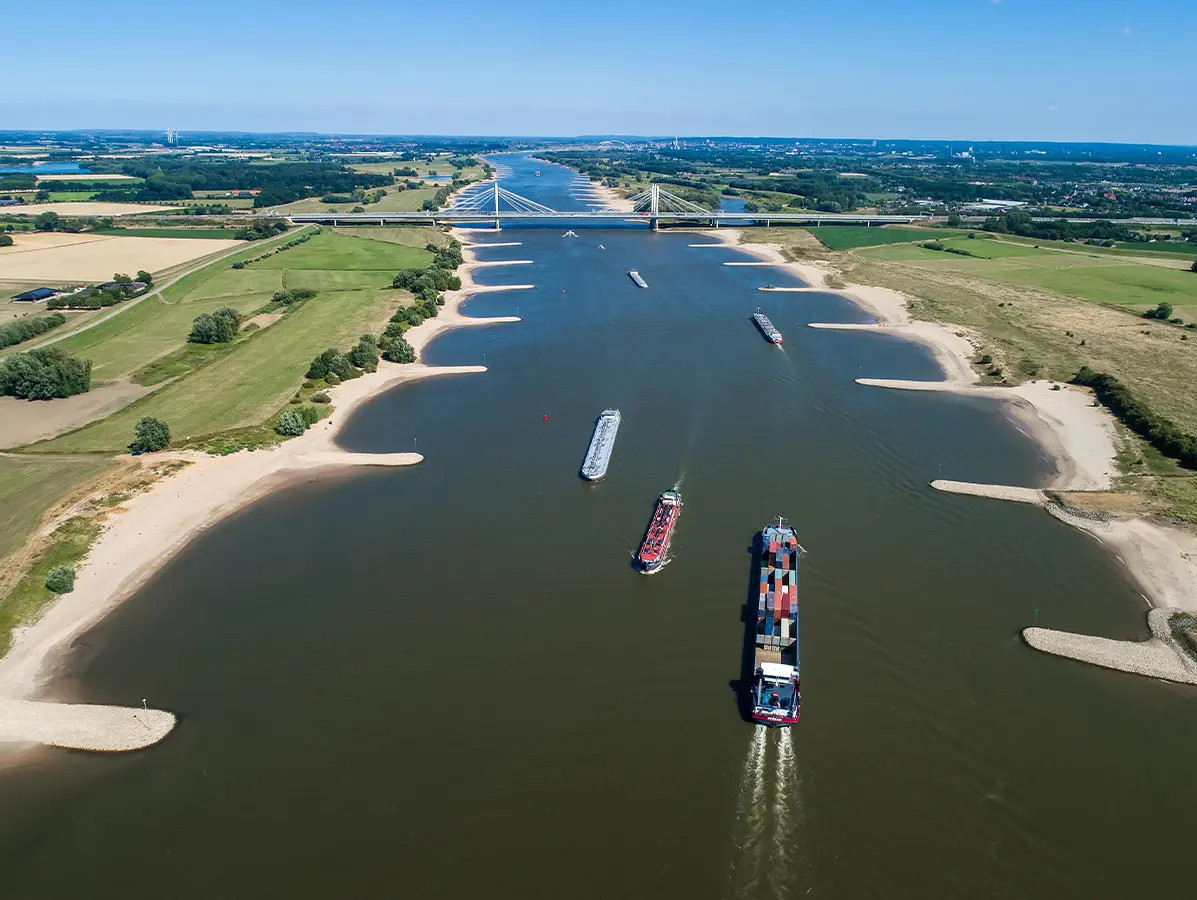
The quality of surface water affects more than nature and the environment. It is also closely linked to drinking water. About 40 percent of Dutch drinking water comes from surface water, including the Rhine, the Meuse, and Lake IJsselmeer.
The consequences sometimes become visible right away. In recent years, water intake from the Meuse had to be halted several times because of poor water quality. Costs are another factor. Additional purification is expensive and can run into the billions. According to a 2025 estimate, industrial pollution costs the Netherlands at least €7 billion each year.
Source: Algemene Rekenkamer
Magazine Voedingsindustrie has been made possible in part by:



© COPYRIGHT 2026 VOEDINGSINDUSTRIE | ALLE RECHTEN VOORBEHOUDEN
Powered by Wallbrink Crossmedia © 2026