
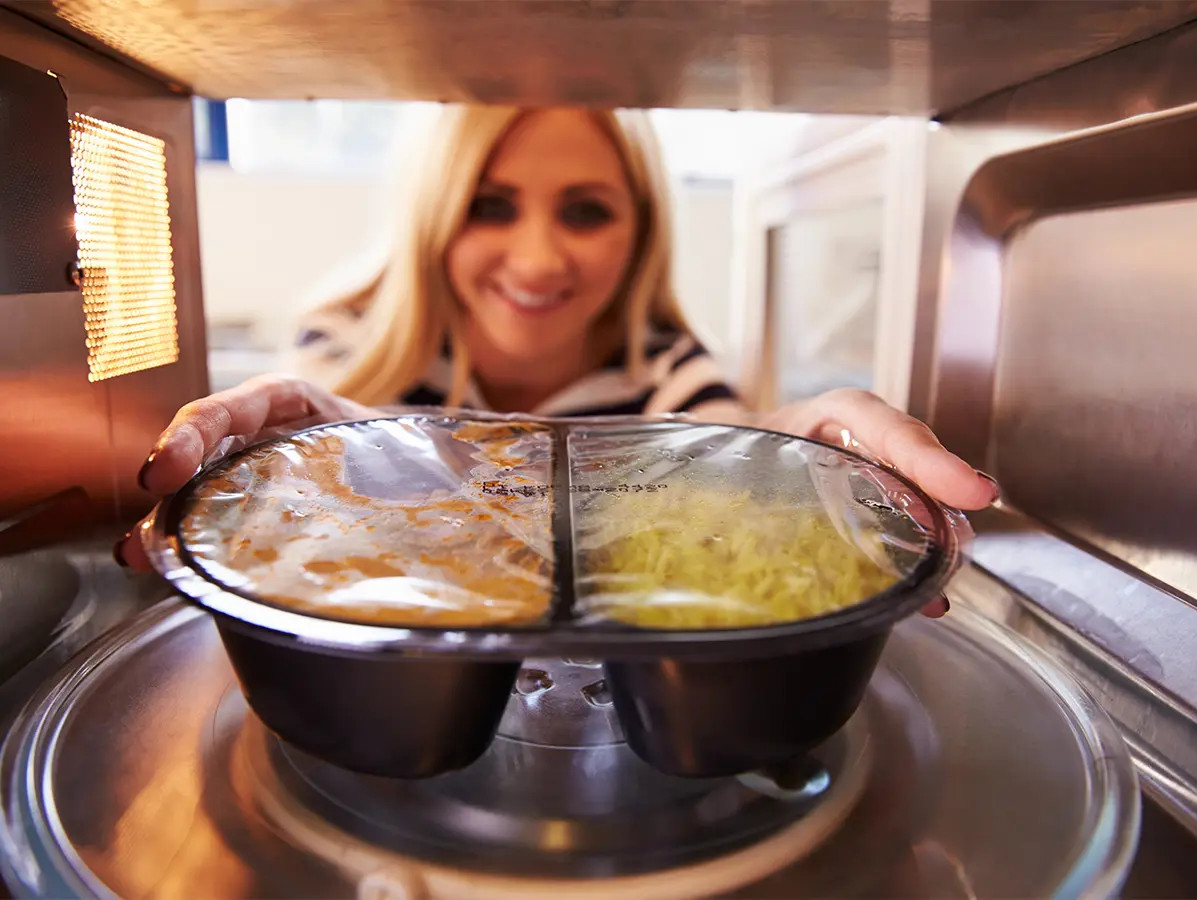
Ready meals stand for convenience and speed. Yet a new Greenpeace report raises questions about the safety of plastic packaging when heated. According to the analysis, heating meals in plastic trays can release micro- and nanoplastics as well as chemical substances into the food. The report Are We Cooked? reviews 24 recent, peer-reviewed studies.
The analysis shows that heating in a microwave or oven increases migration. One study recorded between 326,000 and 534,000 microplastics after five minutes of microwave use. That was four to seven times higher than with oven heating.
Chemical migration also appears to be structural, according to the report. In laboratory tests, microwave packaging released at least 42 intentionally added substances (IAS) and more than 100 non-intentionally added substances (NIAS). Migration occurred in all tested samples of polypropylene and polystyrene.
Of the 24 studies reviewed, only two used actual food; the remaining studies worked with simulants such as water, acetic acid, or ethanol.
The report indicates that both new and damaged packaging can release substances. Polyethylene packaging showed the highest migration of antioxidants during first use. Old or scratched trays released nearly twice as many microplastics as new ones.
The report identifies PET, PE, PP, and PS as commonly used materials for microwave packaging. According to the analysis, there is no specific regulation addressing microplastics released from food contact materials.
Greenpeace calls on companies to remove “microwave safe” and “oven safe” claims and to phase out plastic-packaged ready meals intended for reheating. The food safety debate is therefore shifting increasingly toward packaging.
Source: Greenpeace
Magazine Voedingsindustrie has been made possible in part by:



© COPYRIGHT 2026 VOEDINGSINDUSTRIE | ALLE RECHTEN VOORBEHOUDEN
Powered by Wallbrink Crossmedia © 2026