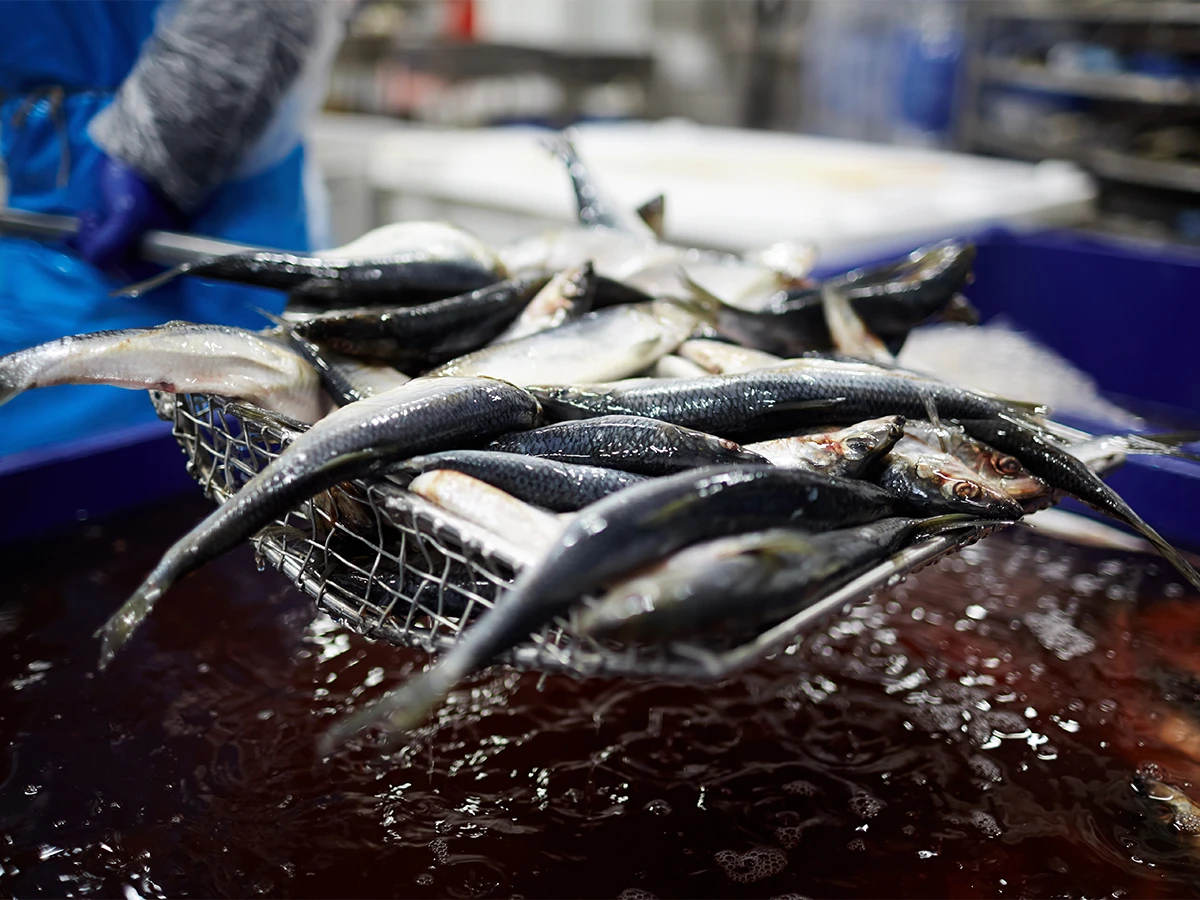
Fish processors use almost everything that enters their production facilities. Yet low food waste does not automatically mean raw materials are used for the highest-value applications possible. The 2025 Food Waste Monitor highlights this distinction. Many side streams go into fishmeal and pet food. Some of this material may be suitable for processing into food for people. This presents further opportunities for the sector.
Eleven companies supplied data on their own operations in the Netherlands. Processing abroad, such as shrimp peeling, falls outside the study’s scope. Samen Tegen Voedselverspilling, Wageningen University & Research and the Visfederatie launched the initiative. The Ministry of Agriculture, Fisheries, Food Security and Nature supports the food waste monitor.
On average, side streams account for 40% of the incoming volume in fish processing. These mainly consist of bones, trimmings and heads. The amount depends on the fish species companies process.
About a quarter of these side streams are destined for human consumption. Around 75% consists of Category 3 material, which companies sell to other processors. According to participants, these processors generally turn it into fishmeal and pet food. The monitor does not count these uses as food waste. Of the usable incoming volume, 0.3% remains for incineration.
In the crustacean and shellfish sector, side streams account for 6.6% of the incoming volume. These mainly consist of shells, sand and other material. This material is released during the cleaning and processing of products such as mussels.
Most is returned to sea, where it provides a substrate for further cultivation. A small proportion is suitable for processing into fishmeal. According to the monitor, food waste accounts for 0.4% of the incoming volume.
Not every side stream is readily suitable for human consumption. Companies can assess which portions may qualify for this use. To do so, they need to know the composition and destination of their side streams.
Together with side stream processors, they can track the destinations of the material they sell more accurately. This provides a clearer picture of how much ultimately ends up as food waste. It also helps identify which streams could serve higher-value applications.
Source: Stichting Samen Tegen Voedselverspilling
Magazine Voedingsindustrie has been made possible in part by:



© COPYRIGHT 2026 VOEDINGSINDUSTRIE | ALLE RECHTEN VOORBEHOUDEN
Powered by Wallbrink Crossmedia © 2026