
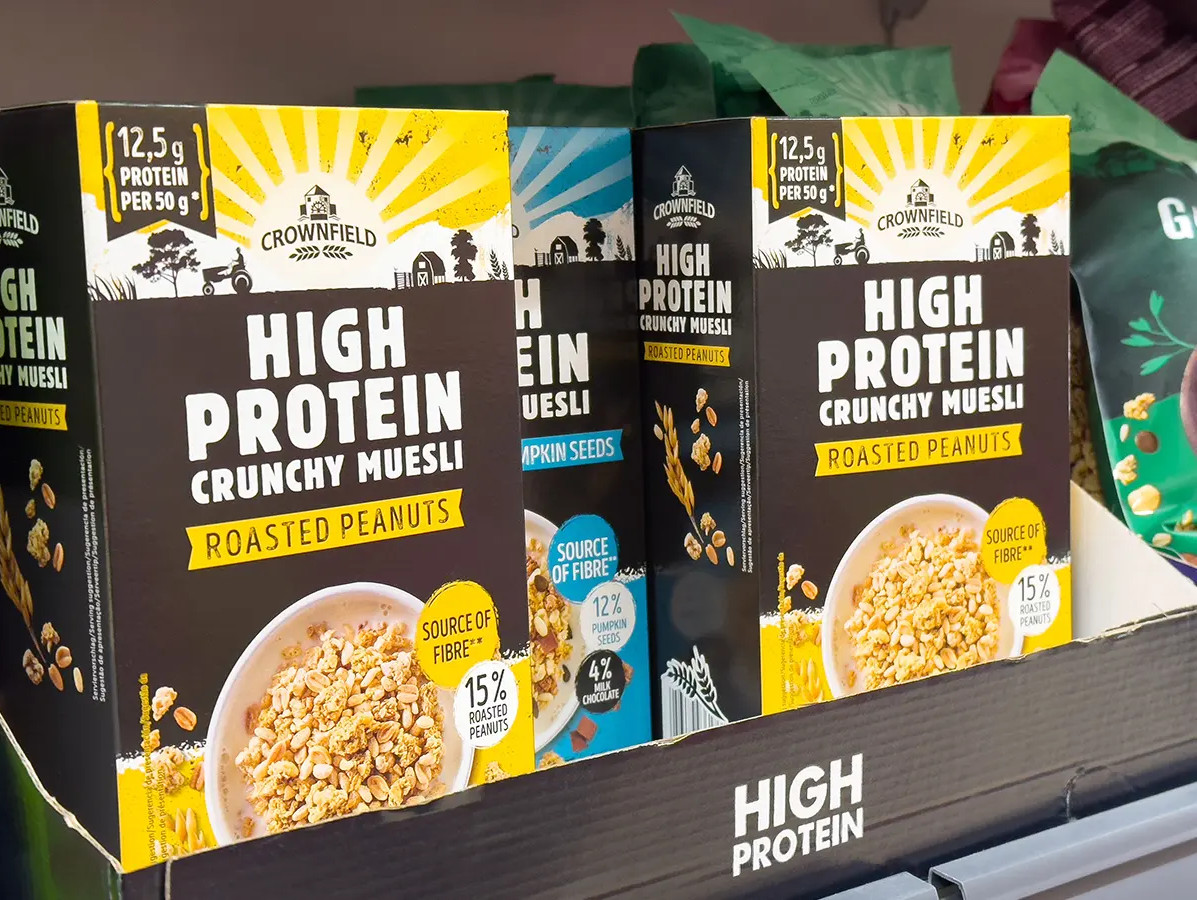
The Dutch Consumers Association observes that added protein is now appearing almost everywhere. Not only in sports nutrition, but also in desserts, chips, ice cream, beer, and even coffee. Manufacturers prominently put protein on display. It is presented as beneficial for athletes and supportive of muscle building. That message resonates. At the same time, it raises the question of what these protein claims actually add.
According to the organization, people who eat a normal diet already consume sufficient protein. This also applies to people who exercise. Additional protein therefore does not automatically make a product healthier. Prices, however, are often higher.
That difference is clearly visible in the supermarket. Koopmans sells a protein pancake mix with '11 grams of protein per pancake'.” This mix is half again as expensive as the regular white version in a shaker bottle. Compared with the wholegrain mix in a box, the price difference is even three times higher. This is notable, as wholegrain products are a source of fiber. Many consumers fall short precisely on that nutrient.
The same pattern appears across more products. Protein tortillas from Albert Heijn cost €1.69. The wholegrain tortillas are priced at €0.95. The difference is also visible with knäckebröd. Bolletje charges €2.20 for the version with 22% protein. The wholegrain crackers cost €2.
According to the association, some manufacturers are riding the protein hype without adding extra protein. A can of Protein tuna from John West states “33 grams of protein per can.” That is barely more than in a regular can of tuna. The ingredients list shows only tuna, water, and salt. Protein is also prominently highlighted in cheese. Maaslander 30+ features “33 grams of protein” in large text. Lindahls and Philadelphia position their cottage cheese as protein-rich. But nothing extra has been added. Cheese naturally contains a high amount of protein.
The organization points out that under the Commodities Act, it is misleading to emphasize a nutrient when all comparable products share the same characteristic.
Source: Consumentenbond
Magazine Voedingsindustrie has been made possible in part by:



© COPYRIGHT 2026 VOEDINGSINDUSTRIE | ALLE RECHTEN VOORBEHOUDEN
Powered by Wallbrink Crossmedia © 2026