
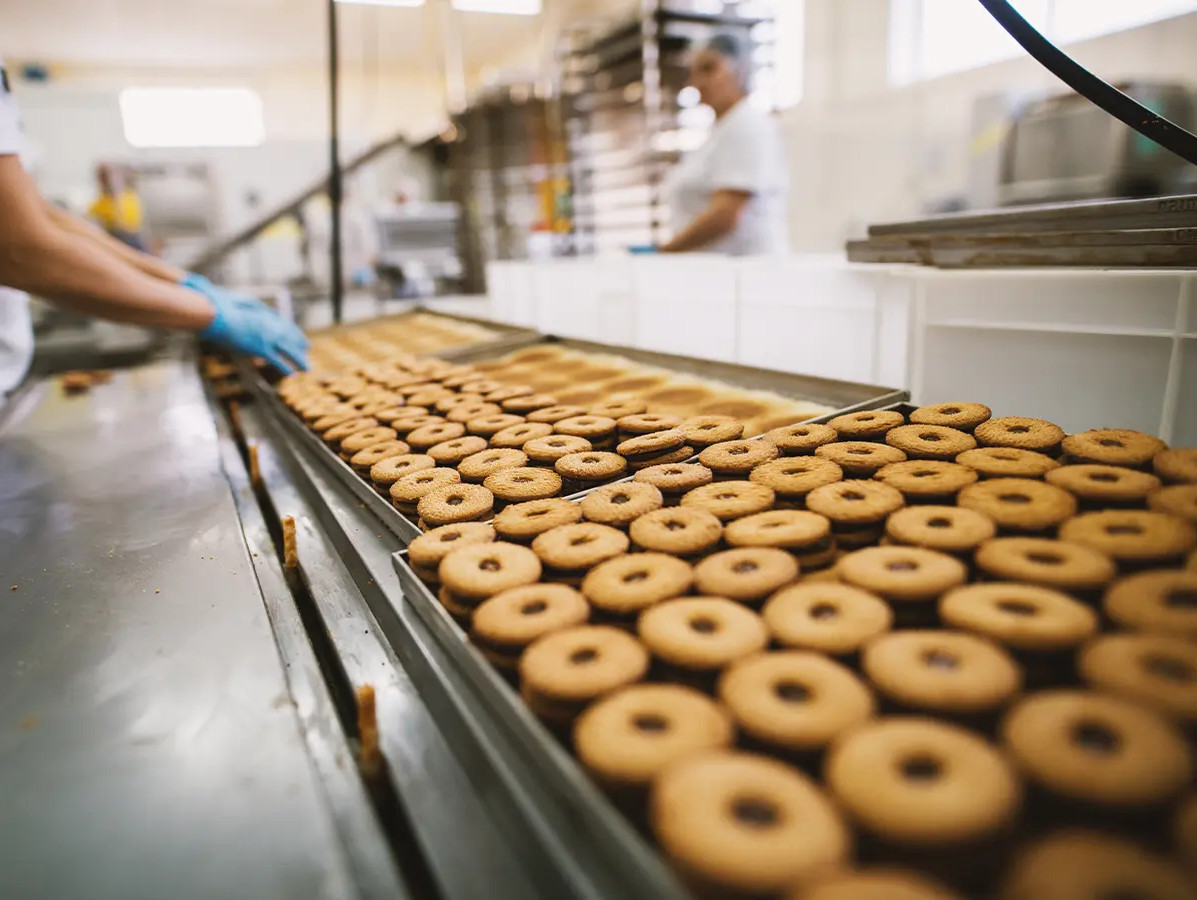
On paper, the Belgian food industry remains a strong player, but underlying signals are becoming more concerning. Behind stable figures, pressure on costs, demand, and competitiveness is rising. Industry association Fevia is sounding the alarm and pointing to structural bottlenecks that are becoming increasingly visible. These include stagnating domestic demand, rising costs, and growing international competition. This places the sector at a point where decisions will determine the future of production and employment.
In 2025, the sector recorded a turnover of €85.1 billion. Exports reached €42.4 billion and the sector employs 102,779 people. This keeps food the largest industrial sector in Belgium.
However, domestic demand is leveling off. Cross-border purchases remain structurally high at €705 million. Foreign products are gaining ground on supermarket shelves. Of these, 16.1% originate from the Netherlands. Growth is also slowing internationally. Exports outside the European Union are stagnating. In key markets, including the United States, momentum is weakening.
After a positive start to 2025, a clear decline followed in the fourth quarter. Business confidence continues to fall, and job growth has dropped to its lowest level since 2015. According to Fevia, this is not a temporary dip. The signals point to a structural weakening of the sector.
At the same time, costs are rising due to geopolitical tensions. The war in the Middle East is driving up prices for energy, transport, packaging, and raw materials. Companies are, for now, absorbing these increases themselves.
Fevia is calling for intervention to protect the sector. CEO Ann Wurman states: “If we want to protect and anchor our Belgian food industry, we must act today, not tomorrow.”
The organization points to labor costs, which are more than 23% higher than in neighboring countries. Fevia also advocates for lower charges and affordable energy. Without measures, the sector warns that the anchoring of the food industry in Belgium will come under pressure.
Source: Fevia
Magazine Voedingsindustrie has been made possible in part by:



© COPYRIGHT 2026 VOEDINGSINDUSTRIE | ALLE RECHTEN VOORBEHOUDEN
Powered by Wallbrink Crossmedia © 2026