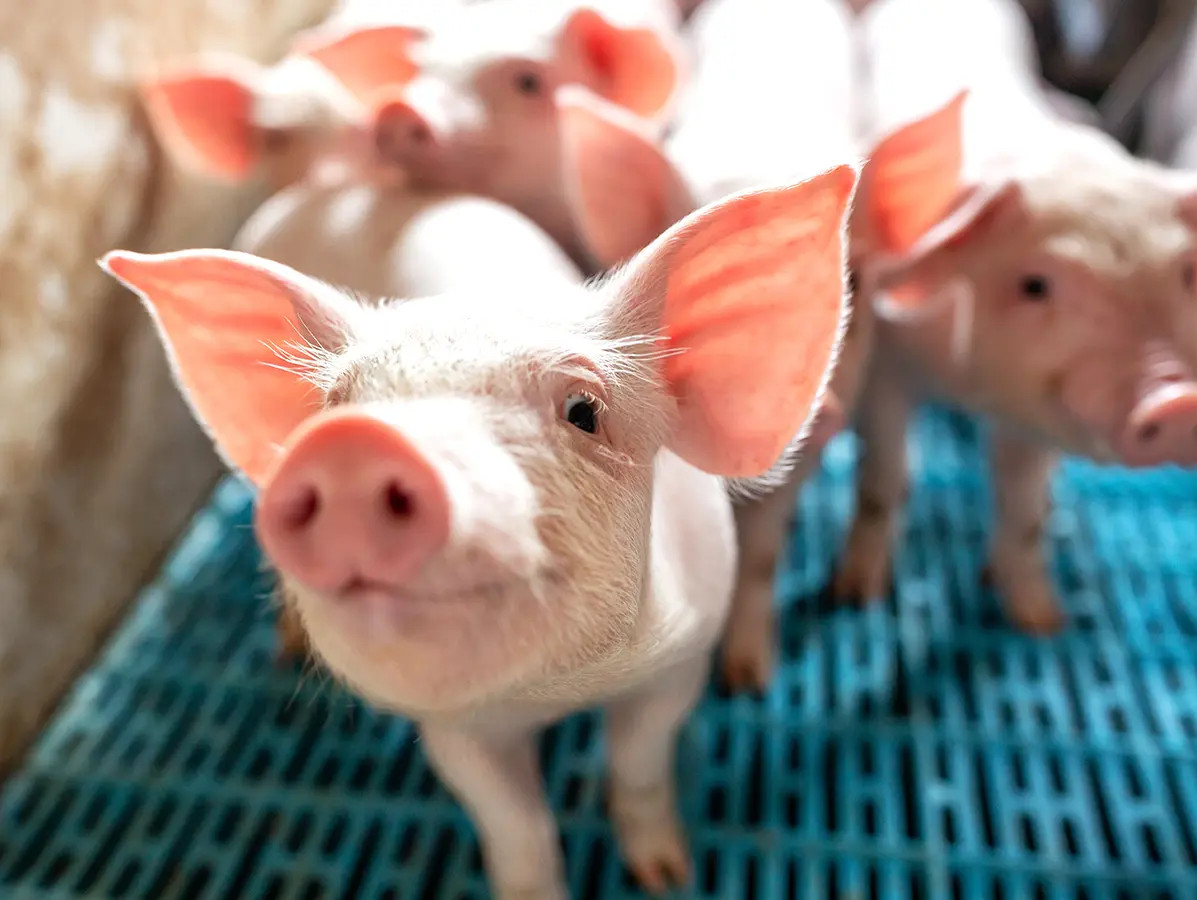
The Dutch pig farming sector will change significantly over the next fifteen years. Environmental limits, animal welfare and market structure increasingly shape how the sector develops. In a future outlook for 2040, Rabobank outlines a pig farming sector that has become smaller, yet operates with advanced technology and is fully circular.
By 2040, pig farming operates entirely within the available environmental usage space. This has consequences for both the number of farms and the number of animals. Compared with 2023, the pig herd has declined by 35 percent. The number of pig farmers has fallen by more than half. Farms in or near vulnerable areas, such as Natura 2000 sites, have ceased operations or relocated, or have made substantial investments in emission-reducing technologies.
The farms that remain have grown larger on average. Farm size has doubled, and more entrepreneurs keep animals at multiple locations. To meet nitrogen requirements, many farms work with closed housing systems and full manure treatment or processing. Emissions are measured in real time, allowing immediate adjustments when needed.
By 2040, animal welfare has improved further. Standard farrowing crates are a thing of the past, and tail docking no longer takes place. Antibiotic use is low, and pigs have more space. The export of live animals no longer occurs over distances greater than 800 kilometers.
The sector is climate neutral and causes little odor nuisance. Societal demand for more open systems is addressed by the organic segment of pig farming.
Despite the contraction, the Netherlands remains strong in knowledge development and innovation. The sector processes residual streams from the food industry and supermarkets on a large scale and also supplies green energy and green fertilizers. This firmly positions pig farming within the circular economy.
By 2040, ‘Holland Varken’ is an important quality label, making the origin of meat and animals fully traceable. Due to lower supply and higher production costs, exports outside the EU decline. Within the Netherlands and the EU, new sales markets emerge instead, where quality, animal welfare and a low CO₂ footprint are central. “Thanks to the high quality of production, new sales markets emerge in the Netherlands and the rest of the EU.”
Source: Rabobank
Magazine Voedingsindustrie has been made possible in part by:


© COPYRIGHT 2026 VOEDINGSINDUSTRIE | ALLE RECHTEN VOORBEHOUDEN
Powered by Wallbrink Crossmedia © 2026