
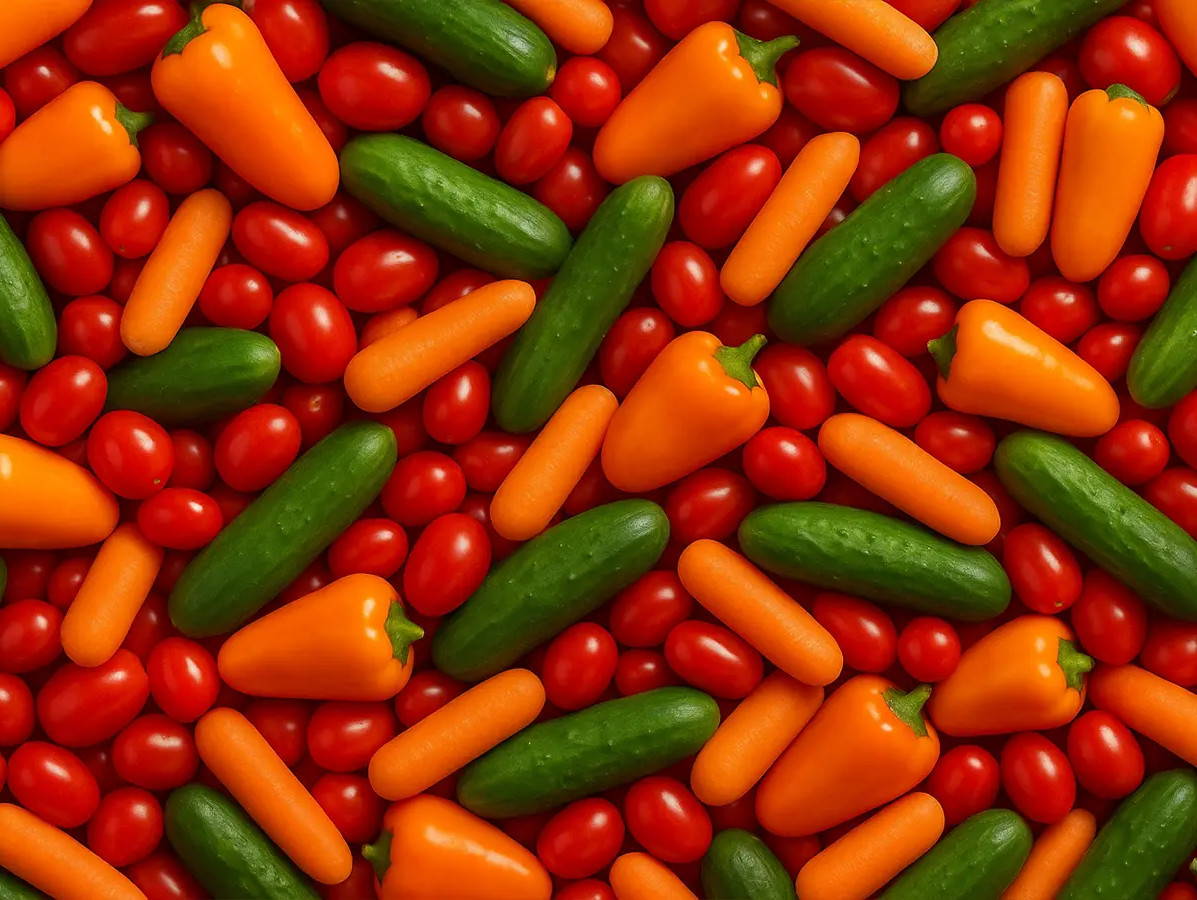
In snack vegetables intended for young children, Pesticide Action Network Netherlands (PAN-NL) found traces of eight different pesticides. Two of these were PFAS-based pesticides, and two others were hormone-disrupting. Four out of twenty products would have failed inspection if they were classified as baby or toddler food. There is, however, some good news: sixteen products were completely free of pesticide residues. “That’s better than expected,” said PAN-NL.
The test was conducted at the five largest supermarket chains: Albert Heijn, Jumbo, Lidl, Aldi and Plus. The certified laboratory TLR in Ridderkerk examined twenty snack vegetables, ranging from cherry tomatoes and carrots to peppers and cucumbers.
At Albert Heijn, three pesticides were found on mini peppers, including one PFAS-based pesticide and one Candidate for Substitution. Aldi’s snack cucumbers contained three substances: one PFAS pesticide, two hormone-disrupting agents and two Candidates for Substitution. Lidl’s mini peppers contained spirotetramat, a pesticide that is not approved for pepper cultivation in the Netherlands. Jumbo performed slightly better, with a single pesticide found on snack carrots. And Plus? All four of its tested products were completely clean.
PAN-NL calls the difference in regulation incomprehensible. For jarred baby food, the maximum residue limit is 0.01 mg/kg, yet this standard does not apply to fresh vegetables. “PAN-NL wants the same safety standard for fresh products such as snack vegetables aimed at young children, like toddlers, as for jarred baby food,” says chair Margriet Mantingh. “You don’t want to be selling children’s products with PFAS as a supermarket.” According to her, this research shows that it is possible to meet that standard — supermarkets simply need to raise the bar.
The fact that most snack vegetables contained no residues is a positive sign, though PAN-NL warns it remains a snapshot. The results may depend on the season, country of origin or even coincidence. Peppers and cucumbers, after all, rank among the top five vegetables with the highest pesticide residues in PAN-NL’s own Pesticide Guide. The organisation stresses that children should continue eating plenty of vegetables — preferably organic or untreated — since vegetables remain essential, with or without a lab report.
Source: PAN Netherlands
Magazine Voedingsindustrie has been made possible in part by:



© COPYRIGHT 2026 VOEDINGSINDUSTRIE | ALLE RECHTEN VOORBEHOUDEN
Powered by Wallbrink Crossmedia © 2026