
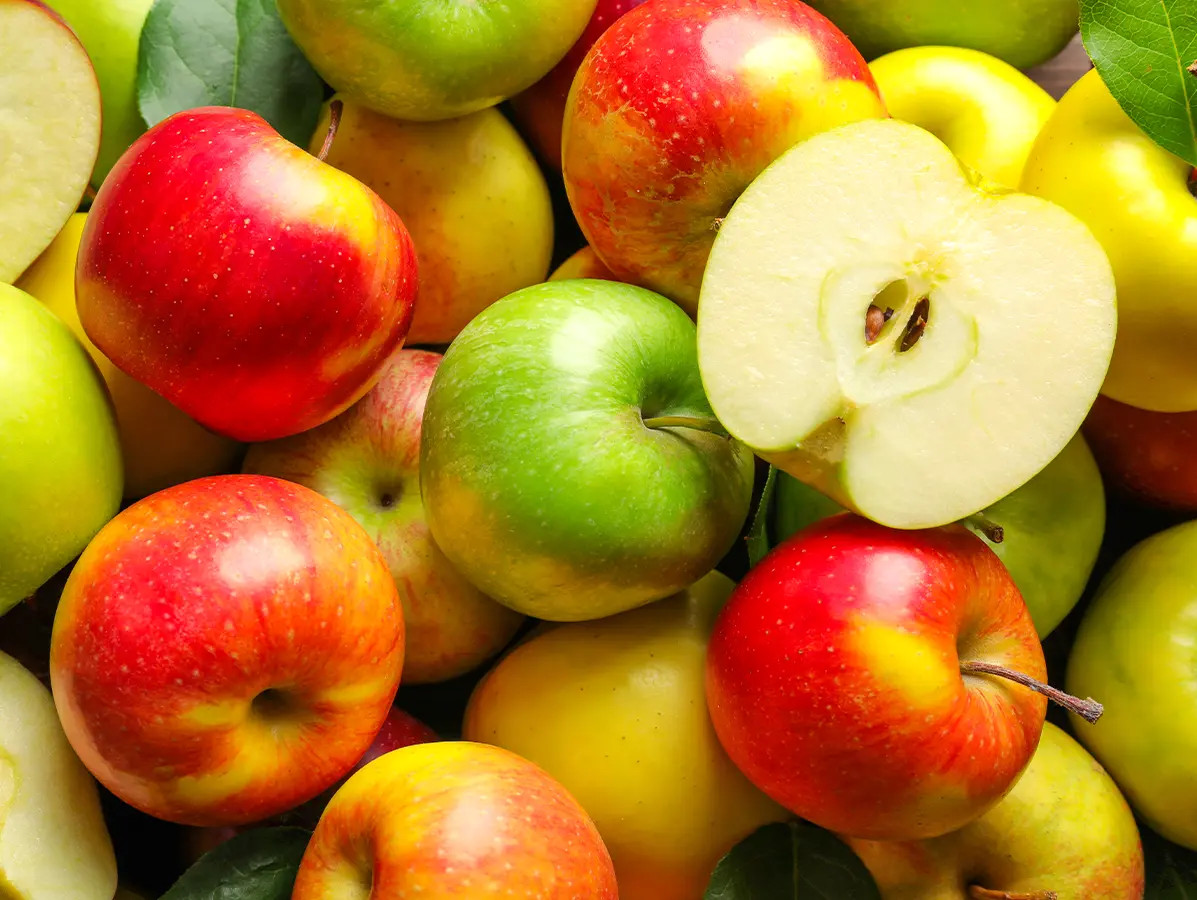
Apples are the most widely consumed fruit in Europe. They are also a commonly used raw material within the food industry. New research by Pesticide Action Network (PAN) shows that conventionally grown apples often contain multiple pesticides. In doing so, limits are exceeded that apply to baby and toddler food. Apples of Dutch origin stand out in particular.
PAN tested 59 apples from 13 European countries. On average, more than three different pesticides were found per apple. In 64 percent of the samples, PFAS pesticides were involved. Overall, 93 percent of the apples contained pesticide residues. In 85 percent of cases, a combination of multiple substances was identified.
The five apples of Dutch origin that were tested showed above-average contamination. On average, 3.4 pesticides per apple were measured. Two of these apples contained cyprodinil and fludioxonil. These substances are classified by the European Commission as “candidates for substitution.” Both substances are classified by the Commission as endocrine-disrupting.
Pesticides are assessed individually for risks. The potential effects of combinations of substances are not tested and remain uncertain.
For baby and toddler food, a maximum limit of 0.01 mg/kg of pesticide residues applies in Europe. The study shows that 93 percent of the apples tested exceed this limit. When conventionally grown, non-organic apples are used for fresh fruit purées, this threshold is almost always exceeded.
According to PAN-NL, pesticide use in agriculture is declining overall, but increasing in fruit and vegetables. For apples, an increase of 33 percent was measured between 2020 and 2024. Pesticide residues on fruit and vegetables in stores are also increasing.
Sjoerd van de Wouw, campaigner at PAN-NL, says: “Snow White was poisoned by a contaminated apple. That will not happen with today’s apples, and eating enough fruit is healthy and necessary. But you naturally do not want to give PFAS and endocrine-disrupting pesticides to your children, or consume them yourself during pregnancy.”
PAN-NL advises choosing organic fruit for children and pregnant women. In addition, peeling and cooking can remove part of the pesticides.
Source: Pesticide Action Network
Magazine Voedingsindustrie has been made possible in part by:



© COPYRIGHT 2026 VOEDINGSINDUSTRIE | ALLE RECHTEN VOORBEHOUDEN
Powered by Wallbrink Crossmedia © 2026





