
The pressure on Dutch industry remains tangible. Nearly two-thirds of companies face staff shortages, and according to Statistics Netherlands (CBS), automation is the most commonly cited way to address them¹. Food manufacturers face an additional challenge: traceability, short shelf lives, quality checks, and audits leave little room for error. As a result, digitalization is becoming less of an IT issue and increasingly part of day-to-day production.
What happens when a batch fails to meet specifications, a rush order comes in, or production and office teams are not working with the same up-to-date information? These situations demonstrate the importance of having information that is readily available, reliable, and immediately usable. These practical challenges will be the focus of the online ERP event for the food industry on Tuesday, October 6.
A food manufacturer must be able to quickly identify which raw materials were used in a product, which batch was involved, and where the finished product was delivered. At the same time, best-before dates, recipes, quality records, inventory, and cost prices must be accurate.
During the event, you will see how ERP Food Suite in Exact brings this information together. This creates a digital chain that connects raw materials and recipes with production, inventory, and delivery. In the event of a deviation or recall, information no longer needs to be collected from separate systems and files. Instead, affected products and batches can be identified more quickly.
Up-to-date information is also essential on the production floor. With Digitale Fabriek, operators receive work orders and instructions digitally. Production and quality data are recorded immediately during the process. This allows office and production teams to work with the same current information and prevents important data from being entered only after production is completed.
Production planning in the food industry is rarely static. Short shelf lives, fluctuating capacity, changeover times, and rush orders constantly affect one another. Limis provides insight into how these factors come together in the production schedule and how schedules can be revised when circumstances change.
Dashboards can also provide current information on areas such as inventory and delivery performance, while repetitive administrative tasks are automated. This allows employees to spend more time on situations that genuinely require attention.
Ultimately, the strength of this approach lies in the integration. When information from administration, planning, and production flows through the same digital chain, it provides an up-to-date picture of operations. Data from the production floor can be used immediately for planning, quality control, and reporting. This makes it easier to identify deviations in time, make targeted adjustments, and maintain control over quality and delivery reliability.
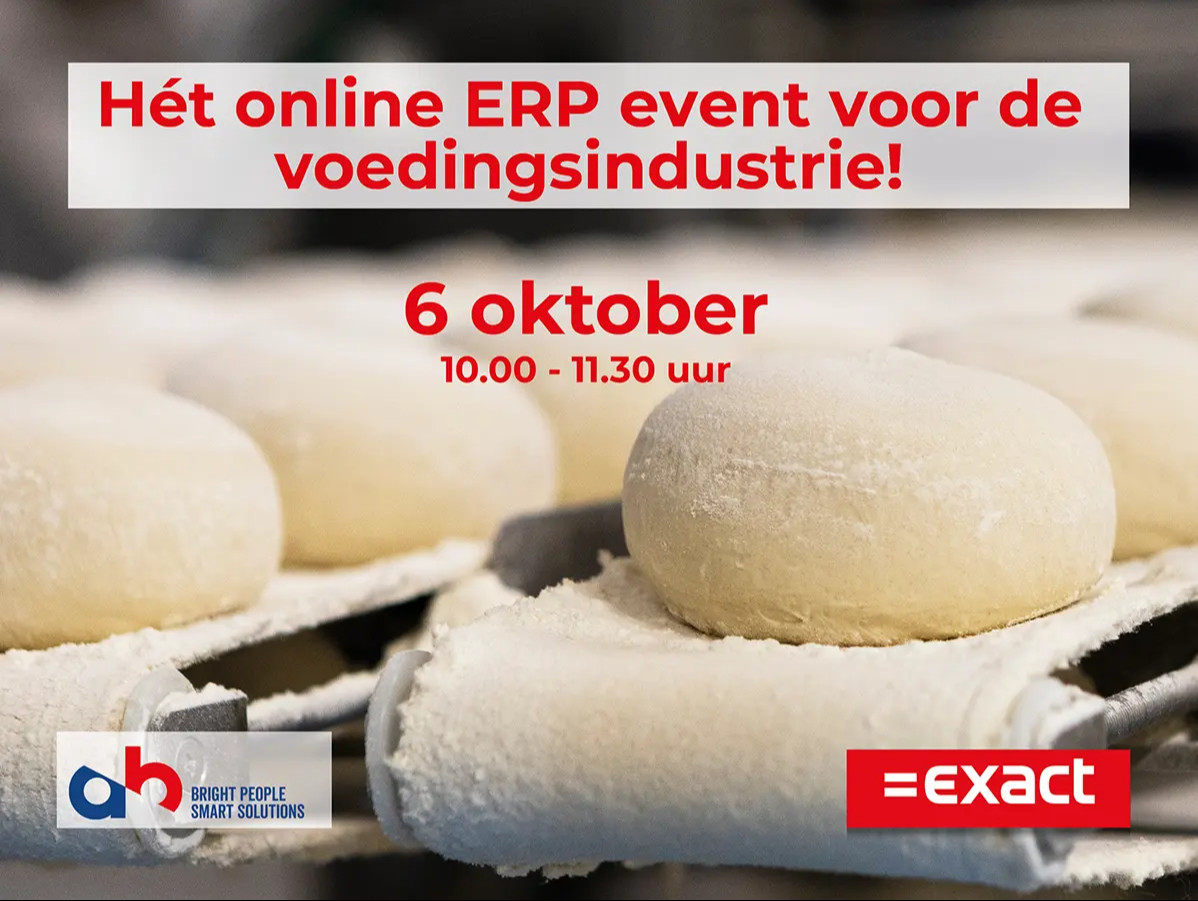
The online ERP event for the food industry will take place on Tuesday, October 6, 2026, from 10:00 to 11:30 a.m. Live demonstrations will show how ERP Food Suite, Digitale Fabriek, Smart Solutions, and Limis can work together within a single production environment.
Would you like to see how this approach can help you maintain control over traceability, quality, planning, and production? Register for the online ERP event.
¹ Source: Statistics Netherlands (CBS), Companies increase automation in response to staff shortages, June 3, 2026.
Source: AB
Magazine Voedingsindustrie has been made possible in part by:



© COPYRIGHT 2026 VOEDINGSINDUSTRIE | ALLE RECHTEN VOORBEHOUDEN
Powered by Wallbrink Crossmedia © 2026





