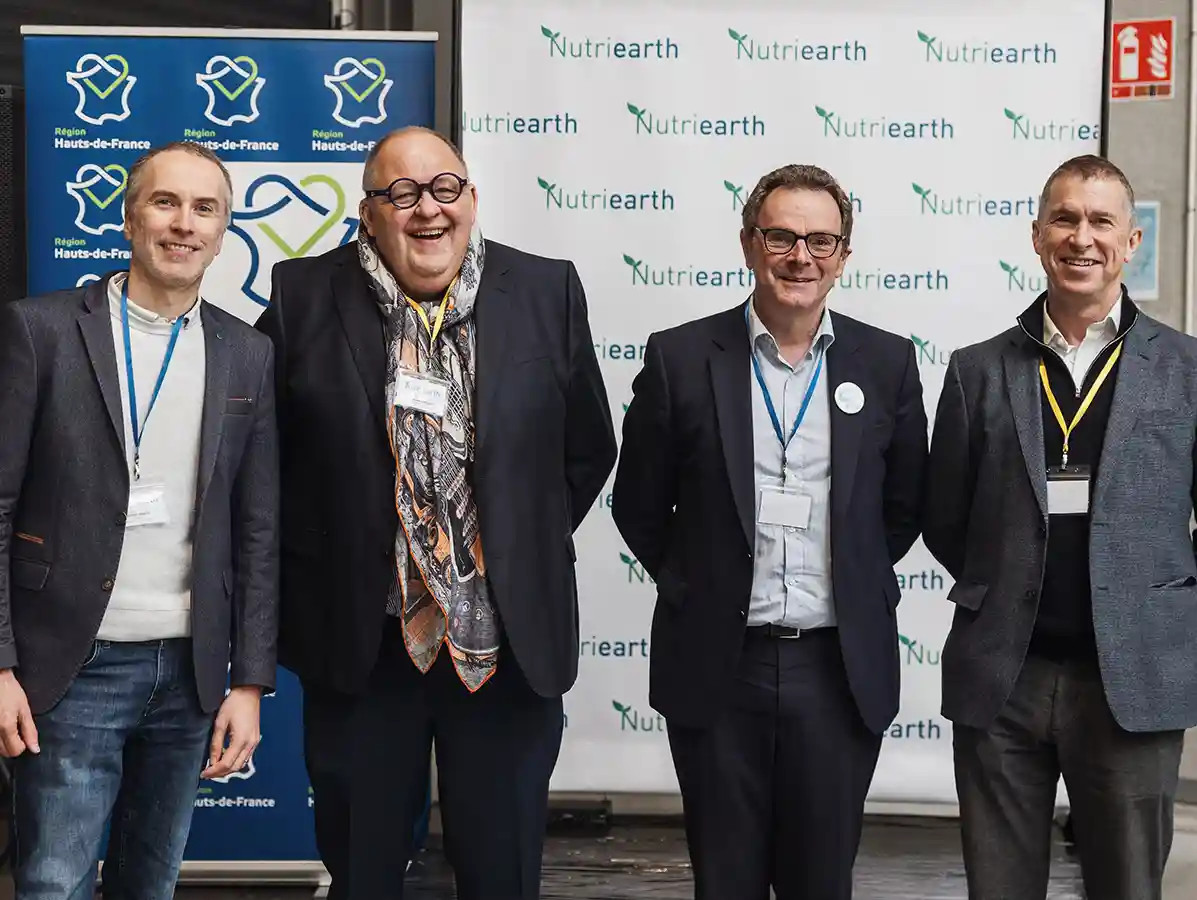
In Carvin, northern France, the moment has arrived: Nutriearth has opened its first commercial production site. The company produces natural vitamin D3 from edible insects — a first that aims to make the European market far less dependent on imports from Asia.
Following a €7.45 million funding round, the facility is now fully operational. Research, quality control, and production all take place under one roof, in accordance with pharmaceutical standards. Manufacturing takes place in cleanrooms, with separate production lines for two product forms: an oil and a powder.
The oil, Nutra-oil, has already been approved for use in supplements and functional foods in North America. The functional flour N-utra received approval from the European Commission in February 2025, paving the way for its use in nutritional supplements and fortified foods.
Up to now, nearly all vitamin D3 has come from China and India. Nutriearth aims to change that. The Carvin facility has the capacity to meet the vitamin D3 needs of more than 50 million people.
“Our process delivers the world’s only natural, sustainable and highly bioavailable vitamin D3, setting new standards for human nutrition and planetary health,” says CEO Jeremy Burks.
An independent life cycle analysis shows that Nutriearth’s production emits 76.8 percent fewer greenhouse gases than lanolin-derived vitamin D3. The overall environmental impact is also eight times lower.
At the heart of Nutriearth’s technology is Tenebrio molitor, better known as the mealworm. The flour made from this insect naturally contains a vitamin D3 precursor identical to that found in human skin. When exposed to a specific type of light, it converts into bioactive vitamin D3 — without chemical extraction or solvents.
Research shows that this vitamin is absorbed up to three times more effectively than lanolin-based variants and twice as effectively as those derived from lichen. With this approach, Nutriearth brings a new, natural alternative to the market.
Source: Nutriearth
Magazine Voedingsindustrie has been made possible in part by:



© COPYRIGHT 2026 VOEDINGSINDUSTRIE | ALLE RECHTEN VOORBEHOUDEN
Powered by Wallbrink Crossmedia © 2026