
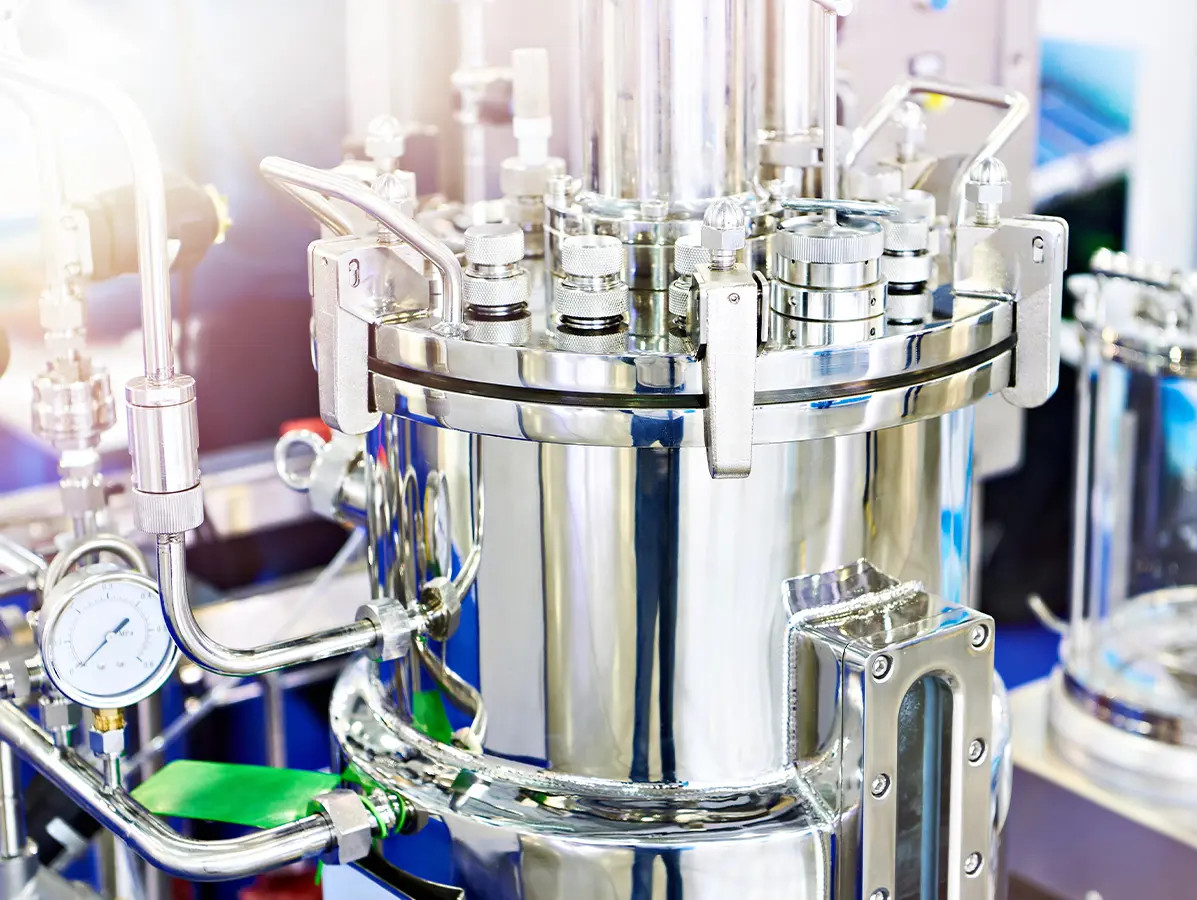
CO₂ as a raw material for proteins. It sounds futuristic, yet concrete research is already underway. In the European project UNICO2RN, ten partners are working together on technology that converts biogenic CO₂ into microbial proteins and biodegradable biopolymers. NIZO Food Research in Ede is one of the participants. Applications are aimed at food, feed, and materials.
The project is coordinated by VITO. In total, ten European partners are involved. The approach is to combine CO₂ capture with industrial gas fermentation. This creates an integrated process chain in which biogenic CO₂ is converted into microbial biomass rich in protein. Not a series of separate steps, but one continuous chain.
Microbial proteins derived from CO₂ are seen as a promising and sustainable protein category. Still, the real challenge does not lie in production alone. Turning fermentation output into a functional ingredient for food and feed requires specific expertise in processing and application.
Within UNICO2RN, NIZO focuses precisely on that part of the process. The microbial biomass is processed into functional protein ingredients. Processing strategies are optimized to obtain high-quality protein fractions while improving overall process efficiency. The next step is practical validation: how do these proteins perform in relevant food and feed systems?
“Microbial proteins derived from CO₂ offer significant potential to contribute to a more circular and resilient food system. At NIZO, we ensure that these proteins are not only produced sustainably, but also meet the functional and nutritional requirements needed for real-world applications.” This is according to Dr. Emma Teuling, project manager at NIZO and expert in novel proteins.
Within the project, CO₂ capture technologies, including advanced purification systems, are combined with aerobic gas fermentation using hydrogen-oxidizing bacteria. The resulting microbial proteins and polyhydroxyalkanoates (PHA) are then validated under near-commercial conditions.
The consortium also looks beyond technology alone. Life cycle analyses are carried out, alongside techno-economic and safety assessments. These efforts are intended to support responsible scale-up and align with emerging European sustainability frameworks for CO₂-based products. UNICO2RN is funded by the European Union under Grant Agreement No. 10121426.
Source: NIZO
Magazine Voedingsindustrie has been made possible in part by:



© COPYRIGHT 2026 VOEDINGSINDUSTRIE | ALLE RECHTEN VOORBEHOUDEN
Powered by Wallbrink Crossmedia © 2026