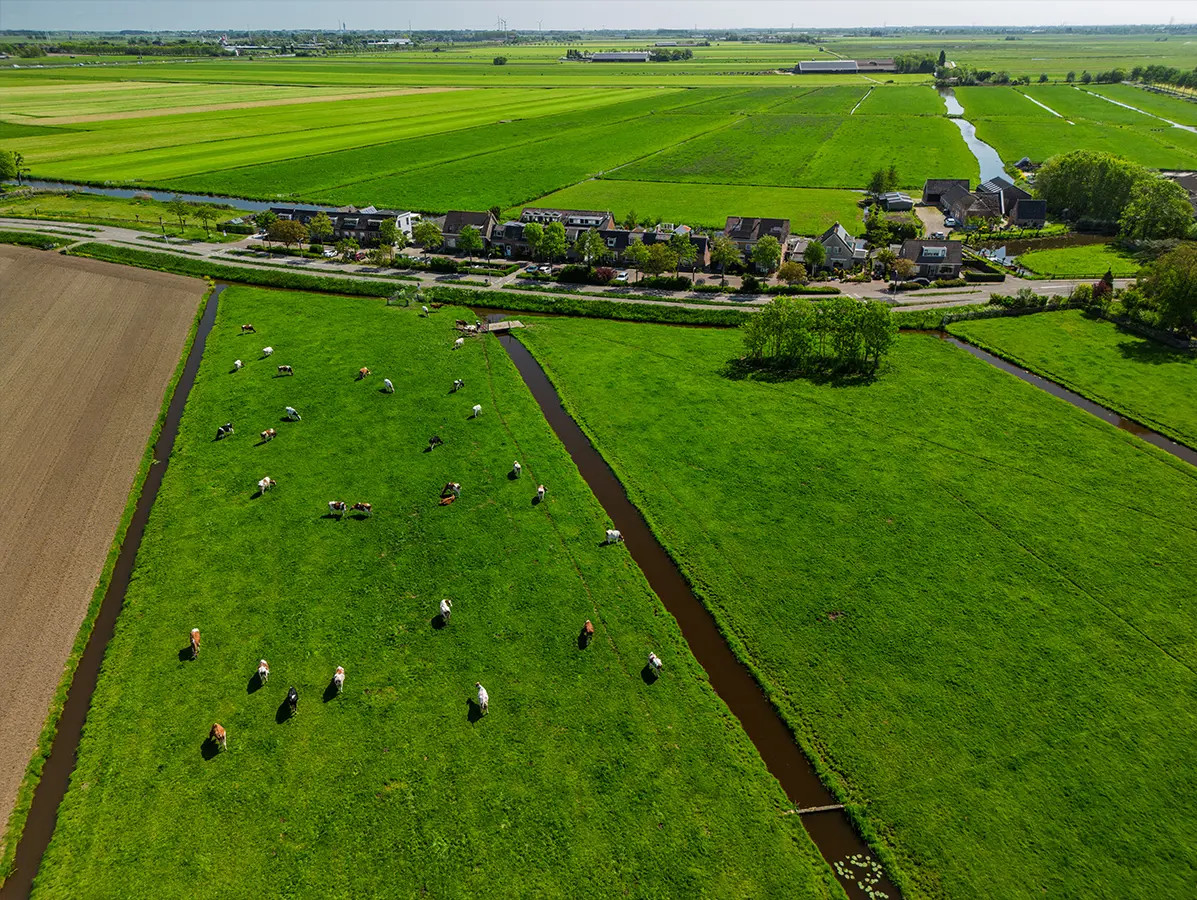
Agriculture versus nature. That is how the debate is often framed. Drought, nitrogen, limited space; the divide seems fixed. Yet five years of research in three farming regions paint a different picture. Cooperation is possible. Provided the parties are willing to connect.
The so-called Living Labs study, funded by the Nationale Wetenschapsagenda, took place in Ooijpolder-Groesbeek, the Alblasserwaard, and the Bollenstreek. These are regions where biodiversity restoration was already on the agenda. Researchers examined what makes successful collaboration possible there.
According to Hans de Kroon, professor of plant ecology at Radboud University, the contrast is mainly amplified at the national level. “But locally, cooperation between different parties, such as farmers, nature organizations, municipalities and water boards, runs much more smoothly.”
In these areas, stakeholders already knew one another. That helps. There is a shared connection to the landscape and to each other. Still, cooperation does not emerge automatically. Someone has to take the lead. In the Ooijpolder, Tiny Wigman did just that. Not by telling farmers what to do, but by asking questions. What are you proud of? Where do you want to go? Is there interest in nature restoration? That is how trust began to grow.
The measures are implemented on farmers’ land. It makes sense, then, that their knowledge is included. In consultation, it was decided where hedgerows could be planted, which unused corners were suitable for ponds, and where flower strips would fit. In the Ooijpolder, a total of sixty kilometers of hedgerow has now been established.
The effects are visible quickly, De Kroon says. Insect populations rebound. Structures of plants and food sources emerge, allowing insects to move around and live less in isolation. If pollinators and natural pest controllers are among them, that can benefit crops.
A trial with herb-rich grassland is also underway. This creates flower-rich fields and is less taxing. Over time, it could reduce the need for synthetic fertilizers.
Funding remains an issue. “Finding a party willing to finance projects is a recurring challenge.” At the same time, De Kroon does not consider it unusual to compensate farmers for nature maintenance and restoration, just as municipalities and water boards receive funding for management tasks.
The project has concluded, but the momentum has not. At the closing symposium, aldermen from Nijmegen and Wijchen were seated in the front row. Farmers in the Land van Maas en Waal are also showing interest. As De Kroon puts it: “Start with something small and let others come and see.”
Source: Radboud Universiteit
Magazine Voedingsindustrie has been made possible in part by:


© COPYRIGHT 2026 VOEDINGSINDUSTRIE | ALLE RECHTEN VOORBEHOUDEN
Powered by Wallbrink Crossmedia © 2026