
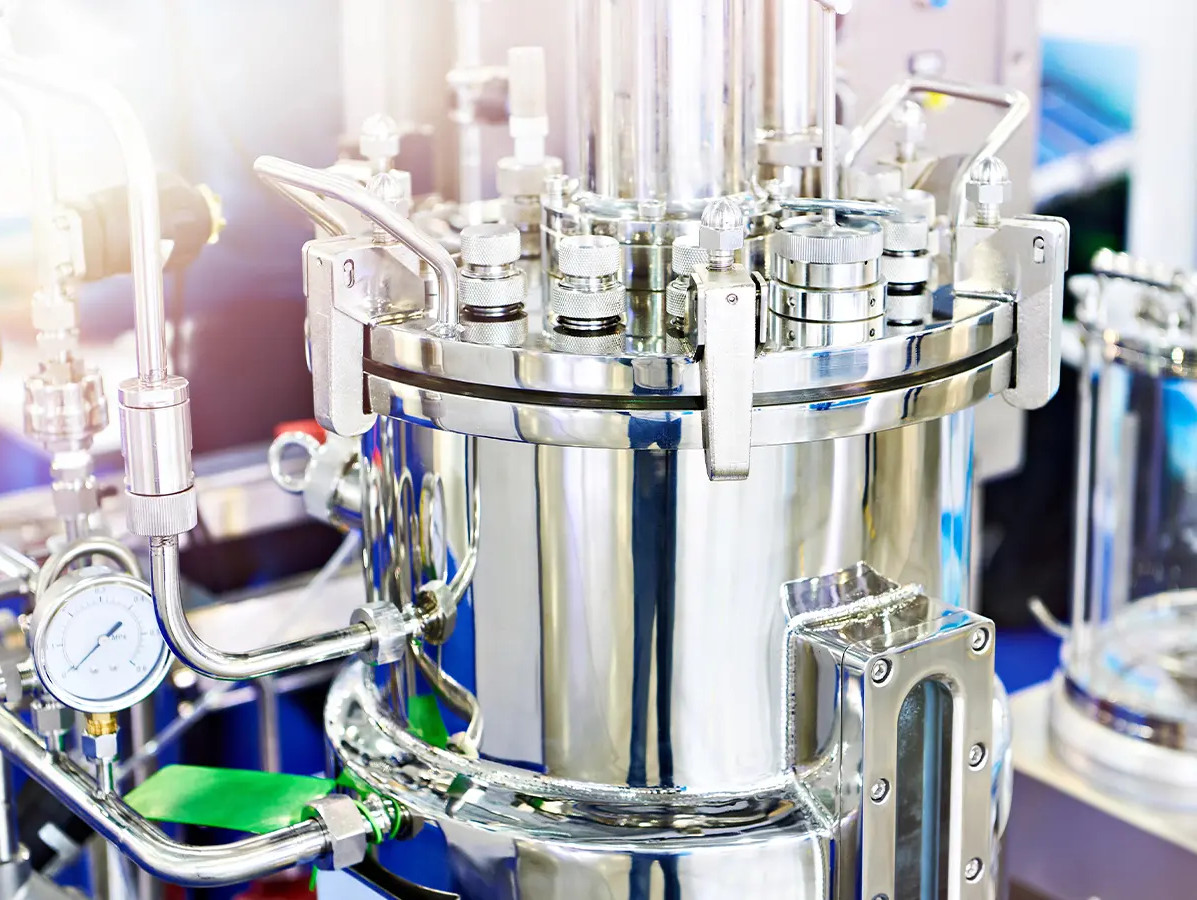
ECOFERM is investigating how continuous fermentation can reduce the cost of producing alternative proteins. The new consortium aims to retain microorganisms in the reactor. This should increase productivity and reduce energy and raw material consumption.
High costs and substantial energy and raw material consumption hinder commercial adoption of precision fermentation. NIZO Food Research, BFF, DAB.bio, Vivici, and dsm-firmenich are collaborating with Hogeschool Van Hall Larenstein. The public-private research consortium launched on October 1, 2026. TKI Agri & Food provides financial support for the project.
Conventional continuous systems lose microorganisms and nutrients in the outgoing process stream. ECOFERM is investigating how controlled cell agglomeration can keep cells in the reactor. The product could then be harvested continuously while the microorganisms remain in the reactor. This approach is intended to eliminate the need for energy-intensive separation using membranes or centrifuges.
Through continuous production, the partners aim to make better use of reactor capacity. They also aim to reduce downtime between production runs. Fed-batch processes involve interruptions for emptying, cleaning, filling, sterilizing, and restarting.
During extended production runs, contamination and genetic instability can cause problems. Process performance can also decline. The researchers are studying how to maintain stable cell agglomeration. They also aim to optimize DAB.bio’s FAST reactor for this process. They are examining process robustness and strategies for industrial scale-up.
The consortium aims to demonstrate the technology using proteins produced through precision fermentation. Beta-lactoglobulin is one of the proteins the researchers will work with. The findings should also be useful for other fermentation-derived ingredients.
Source: NIZO
Magazine Voedingsindustrie has been made possible in part by:



© COPYRIGHT 2026 VOEDINGSINDUSTRIE | ALLE RECHTEN VOORBEHOUDEN
Powered by Wallbrink Crossmedia © 2026





