
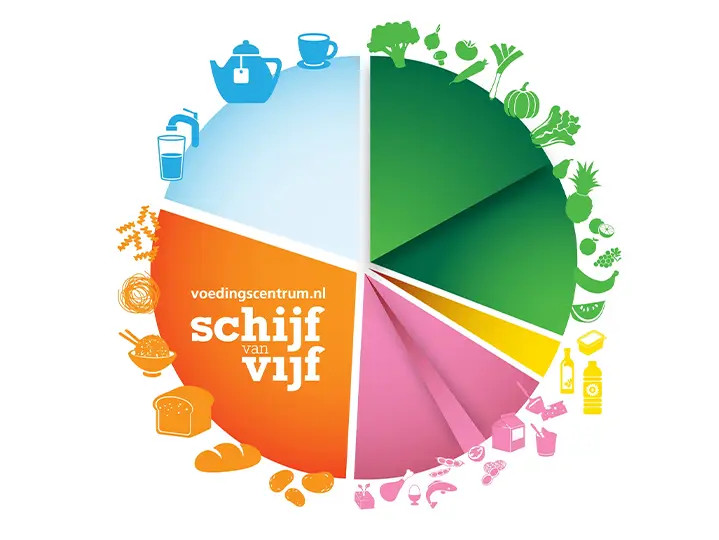
The Dutch Health Council has tightened its recommendations for protein sources, and that immediately sets things in motion at the Dutch Food Center (Voedingscentrum). The organization is working on an updated version of the Five Basic Food Groups, scheduled for completion in April 2026. It will bring noticeable changes, even though the foundation remains intact.
Where the advice once said “eat legumes every week,” it now specifies 250 grams per week. That provides clearer direction, experts say. The same applies to meat. The new recommendation is: “eat no more than 200 grams of red meat per week” and “as little processed meat as possible.” With this, the Health Council places greater emphasis on plant-forward eating. Not only for personal health, but also for the planet. Guidelines for other product groups will follow later. Those will be incorporated into the Five Basic Food Groups when needed.
Although the current Five Basic Food Groups already leave plenty of room for plant-based eating, some changes are coming. The Voedingscentrum is integrating the new recommendations into the ongoing development process. Sustainability and food safety now play a more prominent role, simply because far more scientific data is available. Thanks to the collaboration with RIVM, health, sustainability and food safety are brought together in a way that is considered quite unique internationally.
The Five Basic Food Groups will remain recognizable, with the familiar five sections. But those sections will more clearly show the wide range of options, making it easier for people to find choices that fit their way of living.
The Five Basic Food Groups have existed since 1953, and they evolve with the times, perhaps more than ever today. There is a lot going on: climate change, concerns about harmful substances, misinformation and a food environment that is becoming increasingly unhealthy. Everything is interconnected and contributes to major health issues and added pressure on the planet.
Still, much can change when we adjust our eating habits collectively. The Voedingscentrum emphasizes that this responsibility does not rest solely on consumers. The Five Basic Food Groups also support providers and producers in taking steps for both people and the environment, and that is what makes this development process so important.
Source: Voedingscentrum
Magazine Voedingsindustrie has been made possible in part by:


© COPYRIGHT 2026 VOEDINGSINDUSTRIE | ALLE RECHTEN VOORBEHOUDEN
Powered by Wallbrink Crossmedia © 2026