
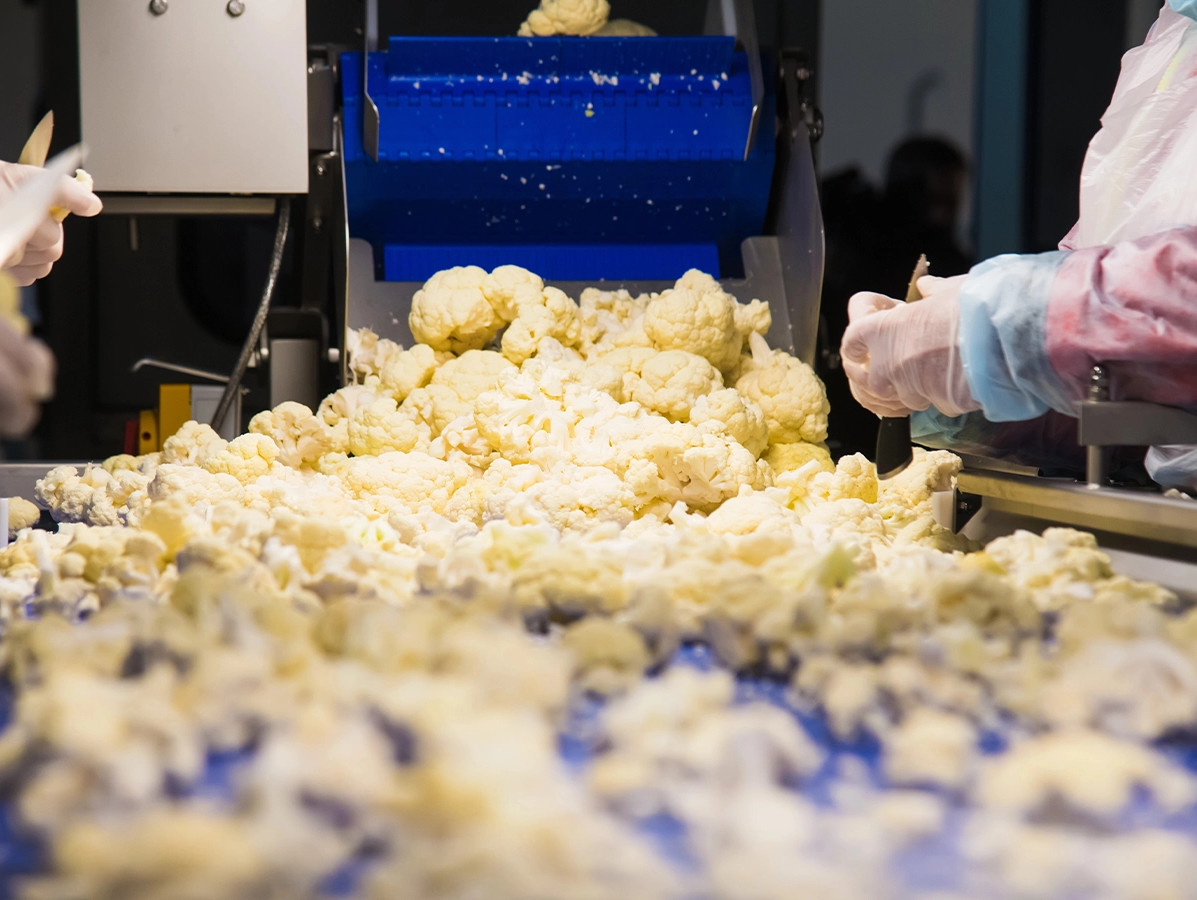
The food waste monitor in the AGF sector is gaining another layer. For the first time, processing companies have been included as a separate subsector. This makes it clearer where losses occur. Not because there is suddenly more waste, but because it takes place earlier in the chain.
The third measurement was carried out by Wageningen University & Research. In 2024, 97.1% of all traded fruit and vegetables found a destination as food or animal feed. The remaining 2.9% was recorded as food waste.
In total, fifteen entities from fourteen companies took part. Together, they represent over 1.2 million tonnes of incoming AGF. These include trading companies such as Best Fresh Group, Combilo and The Greenery. But also processors, such as Heemskerk fresh & easy, Postuma and Vezet.
At company level, the differences are clear. Trading companies allocate an average of 99.0% of their volume to human consumption. Only 0.9% is recorded as waste. With processors, the picture is different. There, an average of 83.8% goes to consumption. The remainder, 16.2%, is classified as residual streams. Of that share, 8.8% is considered food waste. A smaller portion is still used for animal feed or biomaterials.
That difference is not surprising. Cutting and processing inevitably create residuals. Think of peels, ends, or tougher parts. What would normally happen at the consumer level is now shifting earlier in the chain.
Since 2020, members of GroentenFruit Huis have voluntarily tracked their waste. Not just to measure, but also to adjust. Companies use the data to refine processes and improve planning. There is also a growing focus on new applications for residual streams. For example, companies produce sauces, purees or juices from surplus products.
“The reduction of food residual streams is a high priority within Koninklijke Vezet. We recognize the importance of having as many companies in the sector as possible contribute to this monitor. This creates a useful benchmark for all participants and helps increase the opportunity to reduce food losses. That is more sustainable and it saves money,” said Joline Zandbergen, Sustainability Manager at Koninklijke Vezet B.V.
Source: Samen Tegen Voedselverspilling
Magazine Voedingsindustrie has been made possible in part by:



© COPYRIGHT 2026 VOEDINGSINDUSTRIE | ALLE RECHTEN VOORBEHOUDEN
Powered by Wallbrink Crossmedia © 2026