
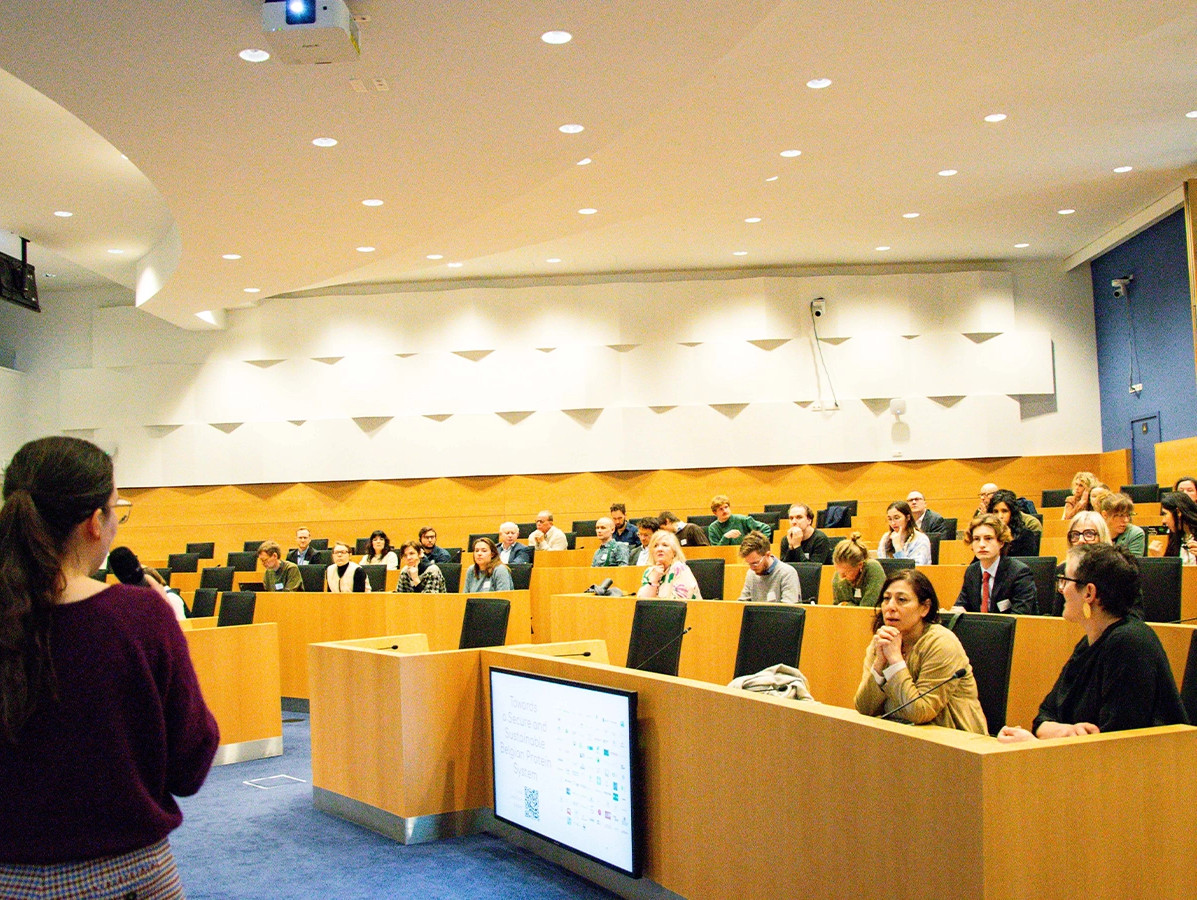
More than 100 organizations across the Belgian food chain have issued a joint call to the federal parliament. From agricultural groups to companies and knowledge institutions: they are calling for a resilient and sustainable protein system. Proteins are seen as a key lever for building a future-proof food system.
The position paper was presented by, among others, Bond Beter Leefmilieu and ProVeg Belgium. The initiators advocate for a national protein plan that better aligns existing regional initiatives. Flanders already has a protein strategy, and in Wallonia initiatives such as Protewin are underway. Alongside NGOs and knowledge institutions, major companies are also represented in the coalition, including Danone, Nestlé and Carrefour.
“To translate this potential into practice, coherent policy is essential,” says Nicolas Vamvas Ferrandez of ProVeg Belgium. According to the coalition, stronger alignment is needed between federal and regional policy levels.
A central principle is increasing the diversity of protein sources. In addition to animal-based proteins, more room is needed for plant-based and alternative sources. This includes products such as legumes, nuts and tofu, as well as hybrid products and new protein sources currently in development.
“Products of animal origin contain proteins, but it is important to also give those of plant origin every opportunity,” says Karolien Byttebier of Bond Beter Leefmilieu. The call is linked to broader challenges such as geopolitical uncertainty, climate change and biodiversity loss.
The coalition emphasizes the importance of collaboration across the entire food chain. According to stakeholders, local production and processing can contribute to economic opportunities for farmers. Thierry Van Hentenryk of UNAB states: “If production and processing take place locally, and ideally are organic, this type of cultivation is agronomically and economically advantageous.”
It also highlights the importance of a coordinated policy framework. Sami Hemdane of Danone Benelux says: “By finding synergies between such a federal action plan and the regional strategies, we achieve far more than the sum of individual actions.”
Source: Bond Beter Leefmilieu
Magazine Voedingsindustrie has been made possible in part by:


© COPYRIGHT 2026 VOEDINGSINDUSTRIE | ALLE RECHTEN VOORBEHOUDEN
Powered by Wallbrink Crossmedia © 2026