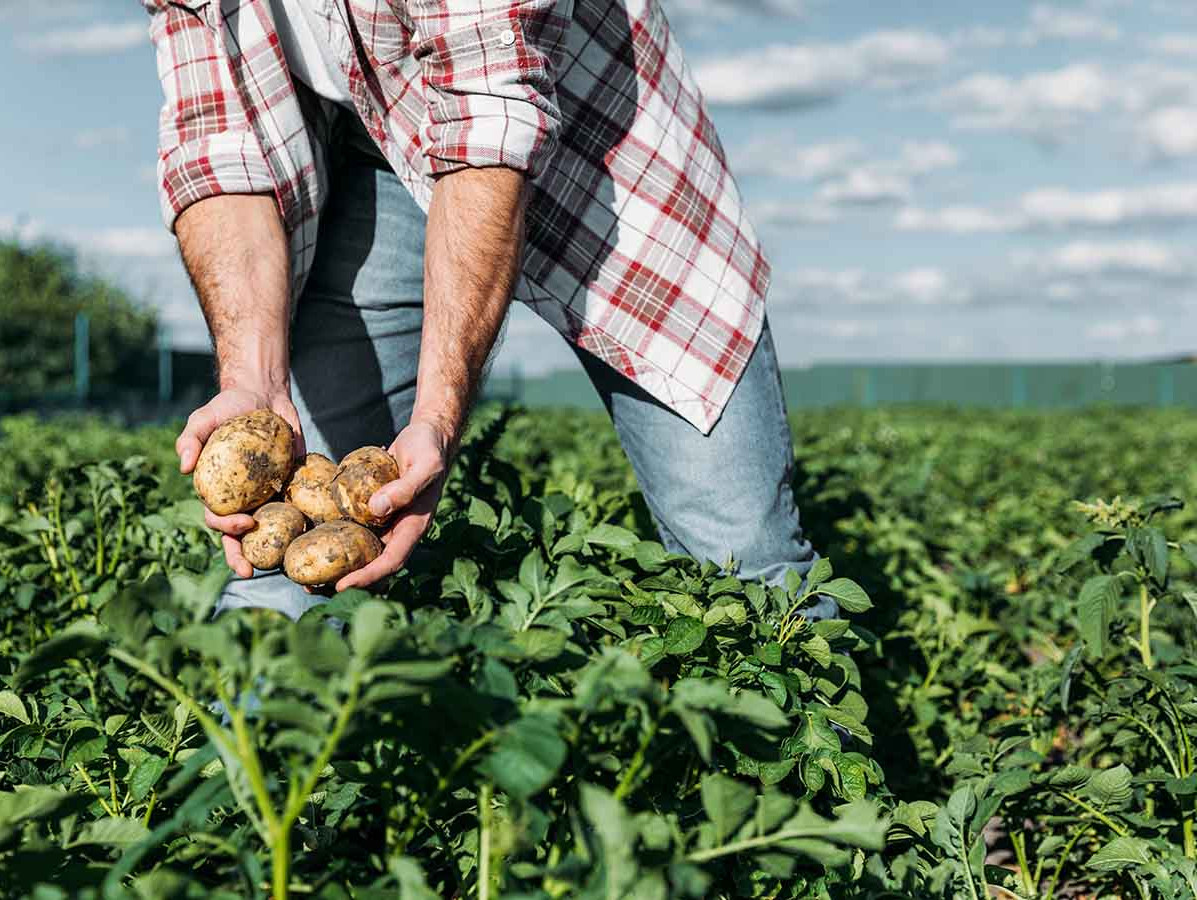
Lidl is taking a new approach once again. In a two-year pilot, the supermarket, together with strawberry, potato and apple growers, aims to significantly reduce the use of chemical crop protection agents. Not just by tightening policy on paper, but through hands-on action in the fields.
For years, Lidl has enforced stricter standards than the law requires. Only a third of the legal residue limit is allowed, and some substances are banned from the chain altogether. Now, the retailer is going further. With support from Natuur & Milieu, CLM and the Ministry of Agriculture, Fisheries, Food Security and Nature, the pilot explores how farming can become more sustainable.
And it’s Lidl taking the initiative. “We want to show that sustainable farming isn’t just necessary, but also achievable and scalable,” says Esmée van Veen, sustainability manager. “This investment in knowledge, innovation and soil health directly contributes to a livable future for the next generations.”
The focus isn’t only on reducing pesticides, it’s also about what replaces them. Think UV light to tackle mildew. Or mechanical mowing instead of chemical weed control. Even the plough gets an upgrade: an eco-version that protects soil life.
According to Berthe Brouwer of Natuur & Milieu, the urgency is clear. “The use of pesticides in the Netherlands is still far too high. It harms nature, pollutes our water and affects our health.” In her view, cooperation between growers, government and buyers is crucial.
Each of the three crops comes with its own set of challenges. That’s why everything is being monitored: from yield to biodiversity, from water quality to soil health. “Thanks to expert guidance and Lidl’s support, we’re able to test new methods,” says Jan Ham of Gebroeders Ham.
At the end of each harvest season, the results are analysed. The first findings will be shared during a knowledge session in November 2025, with growers, policymakers, NGOs and research institutes at the table.
Source: Lidl
Magazine Voedingsindustrie has been made possible in part by:



© COPYRIGHT 2026 VOEDINGSINDUSTRIE | ALLE RECHTEN VOORBEHOUDEN
Powered by Wallbrink Crossmedia © 2026