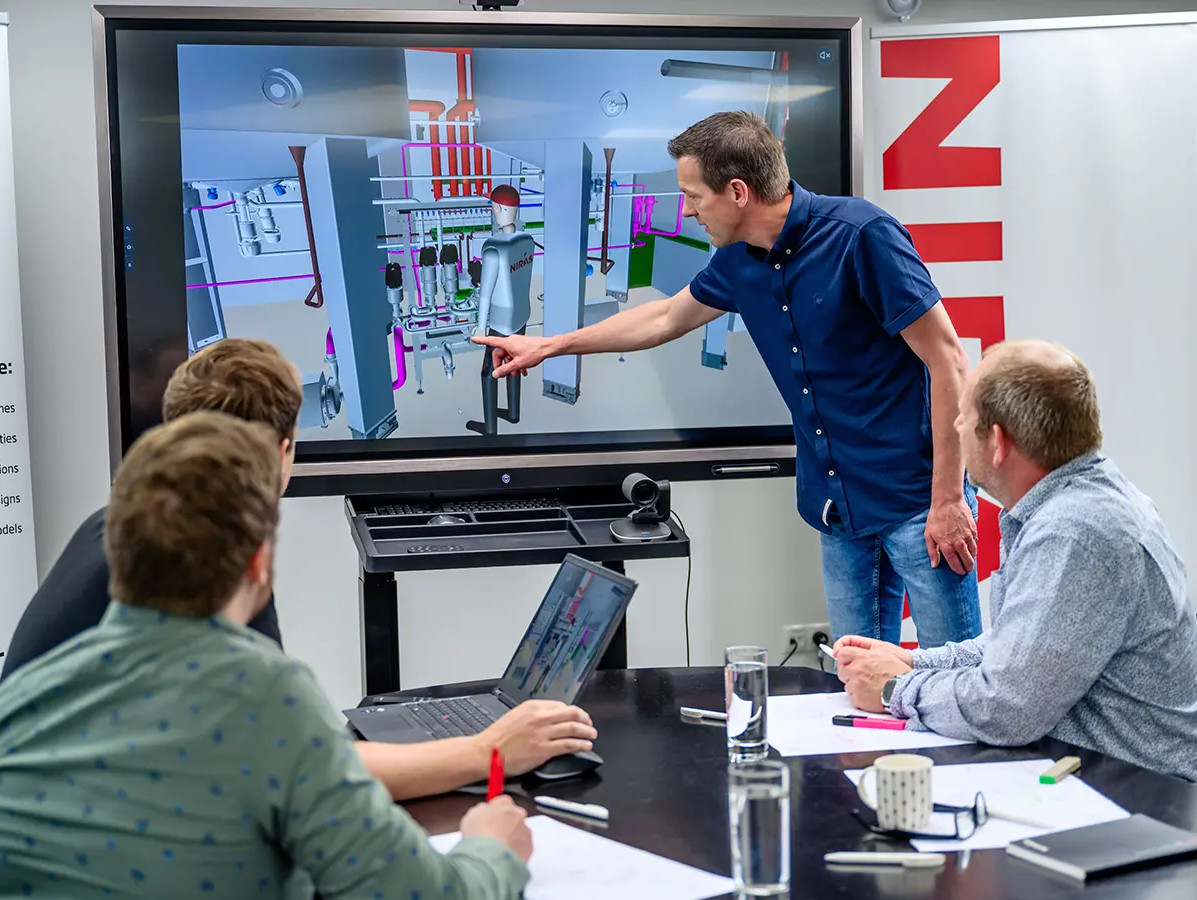
NIRAS addresses a range of topics at the Food Tech Event. Production environments and the external factors influencing them are becoming increasingly complex. As a result, the need for clarity, cohesion, and proven, future-proof solutions continues to grow. Requirements around food safety, efficiency, and flexibility are also increasing. This not only makes investment projects larger in scope, but also more risky. What is the right course of action?
Generic challenges:
As an independent consulting and engineering firm, NIRAS supports producers in solving these engineering challenges. From conceptual process design and hygienic 3D design to CIP optimization, decarbonization, water management, and automation. From process installations, utilities, and packaging lines to intra-logistics and the associated buildings and building systems.
The combination of expertise in food technology, mechanical engineering, project management, and construction enables work across various sectors within the food and beverage industry. This expertise is applied in sectors such as dairy and ingredients, fruit processing, and seeds.
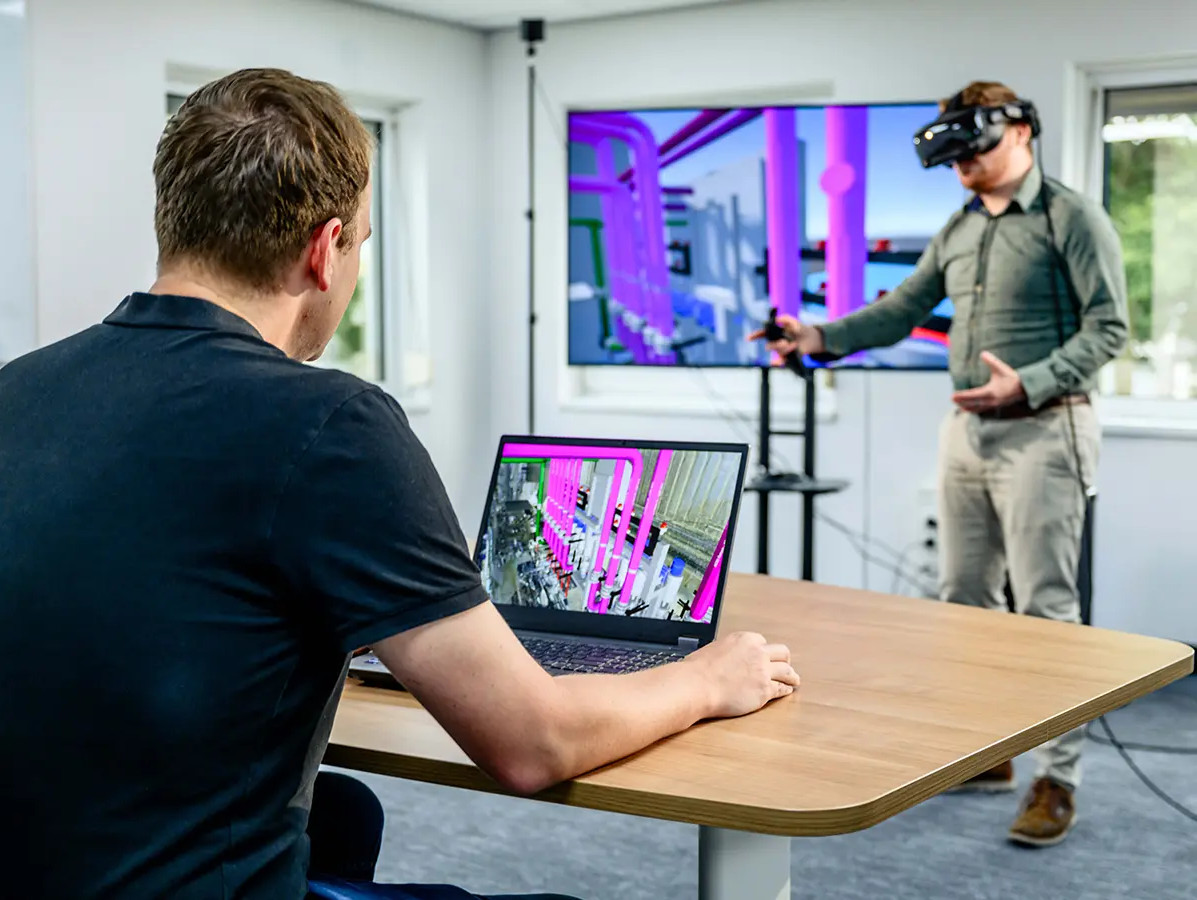
Making the right decisions is not easy. Insight and overview can be achieved through Value Stream Mapping and data analysis. Additional approaches include developing as-built P&IDs, laser scanning a factory, and collecting production data, as well as water and energy consumption data. This creates a solid foundation for production optimization, future-oriented digital factory design, realistic design reviews, or even simulation models that can, with or without the use of AI, test different scenarios.
BIM (Building Information Modeling) can be used to integrate and manage a wide range of construction and technical installation data. This ensures better alignment between disciplines. This applies both to NIRAS’s services and to the producer’s stakeholders and other parties involved in engineering projects.
NIRAS uses the Stage Gate method to efficiently manage all project phases. The strength of this approach lies in the integration of the various disciplines involved. Where projects traditionally become fragmented, perspectives on processes, installations, lines, and facilities come together in one cohesive design or plan through this methodology. This results in smoother execution, minimal downtime, and greater control over costs and performance.
During the Food Tech Event in ’s-Hertogenbosch, NIRAS can be found at booth 43. Curious already? Visit www.niras.nl
Food Tech Event 20 and 21 May 2026 | Brabanthallen Hall 3 Booth 43
Source: NIRAS
Magazine Voedingsindustrie has been made possible in part by:


© COPYRIGHT 2026 VOEDINGSINDUSTRIE | ALLE RECHTEN VOORBEHOUDEN
Powered by Wallbrink Crossmedia © 2026