
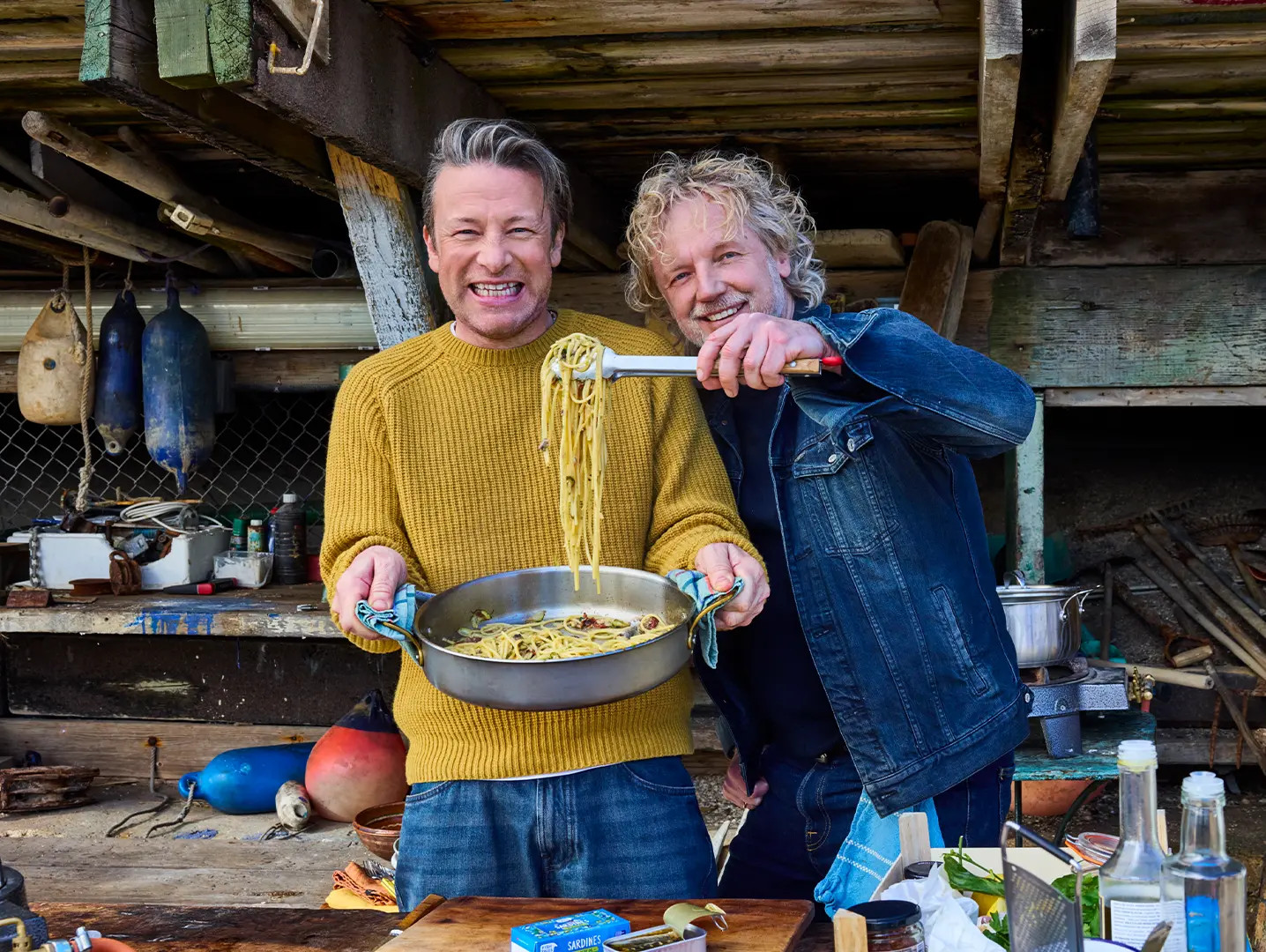
Sustainable fishing has gained a high-profile ambassador. Jamie Oliver is partnering with Dutch company Fish Tales to bring greater international attention to sustainably sourced seafood. Through the collaboration, both parties aim to reach more consumers while encouraging more conscious choices around fish.
The timing is no coincidence. Fish stocks around the world are facing growing pressure. According to Fish Tales, more than 90 percent of global fish stocks are now either fully exploited or overfished. That not only puts ecosystems under strain, but also affects the long-term availability of fish on consumers’ plates.
For Bart van Olphen, the partnership feels like a natural continuation of a relationship built over many years. The founder of Fish Tales previously worked with Jamie Oliver as a seafood expert on television programs. According to Van Olphen, Oliver immediately supported the mission behind Fish Tales when approached about the collaboration.
“Jamie Oliver is a global icon when it comes to the movement toward sustainable and great-tasting food. I’m incredibly proud that, through our long-standing friendship, Jamie is supporting our mission to take concrete steps toward making the fishing industry more sustainable.”
Oliver also directly connects the partnership to wider developments within the food industry. “I support Bart's Seafood Revolution because it represents everything I believe in and fight for within the broader food industry: honest food, sustainable choices, and a system that safeguards food security for future generations.”
The first joint series will launch on June 8 during World Ocean Day. The Seafood Revolution will go live through the online channels of Jamie Oliver and Fish Tales. In the series, Oliver and Van Olphen travel along the English coast, focusing on sustainable fisheries, fishing communities, and the origins of seafood. The episodes feature tuna from Indonesia, sardines from Cornwall, and wild salmon from Alaska, among others.
They also address questions consumers often have about sustainability and sourcing. After all, how can consumers really tell whether fish has been caught sustainably? Through accessible recipes, both parties want to show that making conscious choices does not have to be complicated.
Source: Fish Tales
Magazine Voedingsindustrie has been made possible in part by:



© COPYRIGHT 2026 VOEDINGSINDUSTRIE | ALLE RECHTEN VOORBEHOUDEN
Powered by Wallbrink Crossmedia © 2026