
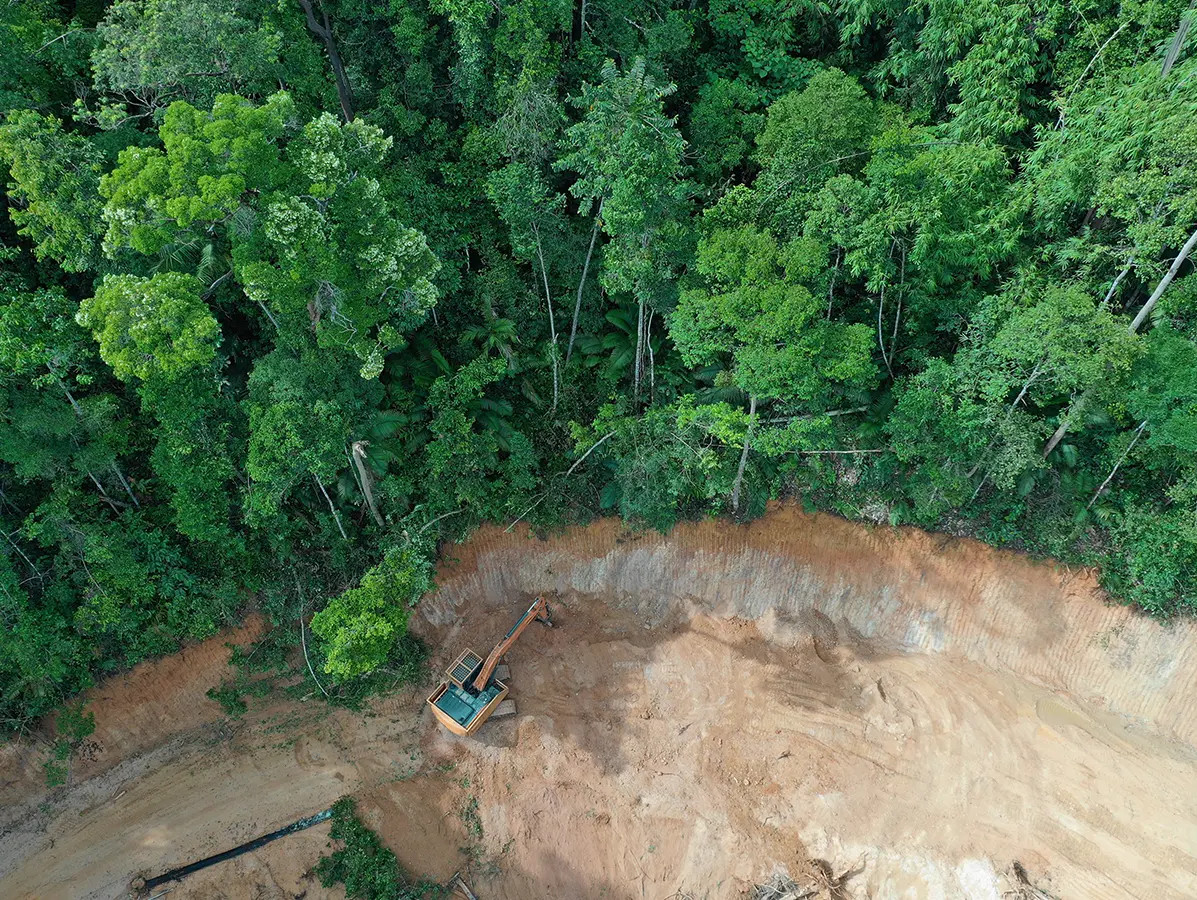
It seemed so close: at the end of this year, the European Deforestation Law would finally take effect. But once again, a delay is looming. For the food industry, where soy, cocoa, and coffee are essential raw materials, uncertainty remains high.
At first, there was confidence that December would mark the real start. Now the European Commission threatens to push the law forward yet another year. This time, IT systems supposedly cannot handle the massive flow of data. It may sound technical, but the consequences are political. Last year, the introduction was also postponed. And this despite the fact that 1.2 million Europeans made it clear in 2022 that they want this law.
Waiting even longer means that products linked to illegal deforestation will remain on the shelves. Soy for animal feed, meat, coffee, chocolate. Since the previous delay, more than 23 million trees are estimated to have been lost. Companies that already invested heavily in cleaning up their supply chains are left empty-handed. Their costs keep piling up, while laggards and their lobby seem to be rewarded in the meantime.
“There is an unprecedented wave of erosion of nature protection laws underway, and it is unacceptable,” says food and forest expert Seline Meijer of WWF-NL. According to her, pointing to a technical obstacle is not only a sign of incompetence but also of a glaring lack of political will. Earlier this month, mass protest was still visible: nearly 200,000 Dutch citizens supported the #HandsOffNature campaign. WWF stresses that the fight against postponement will continue.
In short, the European Deforestation Law requires companies to ensure that their products do not contribute to deforestation. It applies to meat, chocolate, coffee, and soy for animal feed. The EUDR is the first law worldwide to tackle the issue at such a broad scale. Once it is in place, it should significantly reduce Europe’s footprint on nature.
Source: WWF
Magazine Voedingsindustrie has been made possible in part by:



© COPYRIGHT 2026 VOEDINGSINDUSTRIE | ALLE RECHTEN VOORBEHOUDEN
Powered by Wallbrink Crossmedia © 2026