
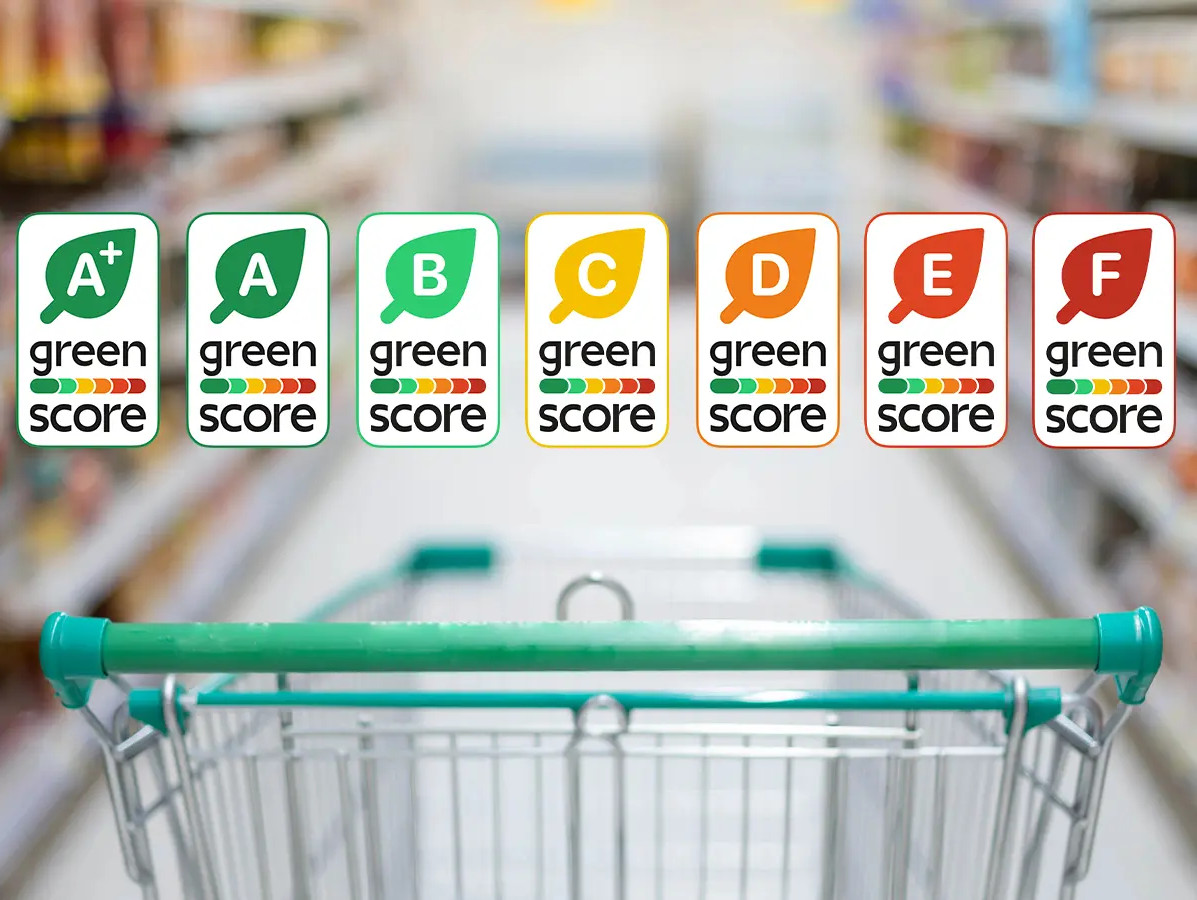
The Eco-score is getting a new name. From this autumn it will be Green-score. Customers of Colruyt Group will see the new name across stores, apps and communication channels. The label itself remains the same at its core, but the scale has been refined to make the environmental impact of products even clearer.
The French consortium behind the Eco-score decided on the name change. The reason: in some countries the word ‘eco’ could be mistaken for organic food. Colruyt Group, a partner of the label since 2021, is joining this shift. “We have worked with the French consortium since the very beginning and we continue to believe in the value of the label. We see that it really works, also in our country,” says Veerle Poppe, responsible for the Green-score at Colruyt Group. Their own market research shows that the score now has brand awareness of 51% and consumer trust of 72%. This puts it right behind the Nutri-score.
Not everything stays the same. The scale is moving from five to six colours and letters. A dark red F is added for products with a poor score. At the other end of the scale an extra level is introduced: A+. This highlights products with the lowest environmental impact. According to Poppe, this makes the differences between products even more visible.
Colruyt Group has been using the score for years not only to inform, but also to encourage customers to take action. Anyone choosing a product with Green-score A+ or A earns points in the Xtra app. These points can be exchanged for charitable donations, free products or participation in webinars organised by Colruyt Group Academy. From 1 November the Green-score will appear in the app, online and in-store communication. By the end of October all references to the Eco-score will have disappeared. The first 940 Boni products already carry the label, and the transition to the new name and scale will be phased in over two years.
Source: Colruyt
Magazine Voedingsindustrie has been made possible in part by:



© COPYRIGHT 2026 VOEDINGSINDUSTRIE | ALLE RECHTEN VOORBEHOUDEN
Powered by Wallbrink Crossmedia © 2026