
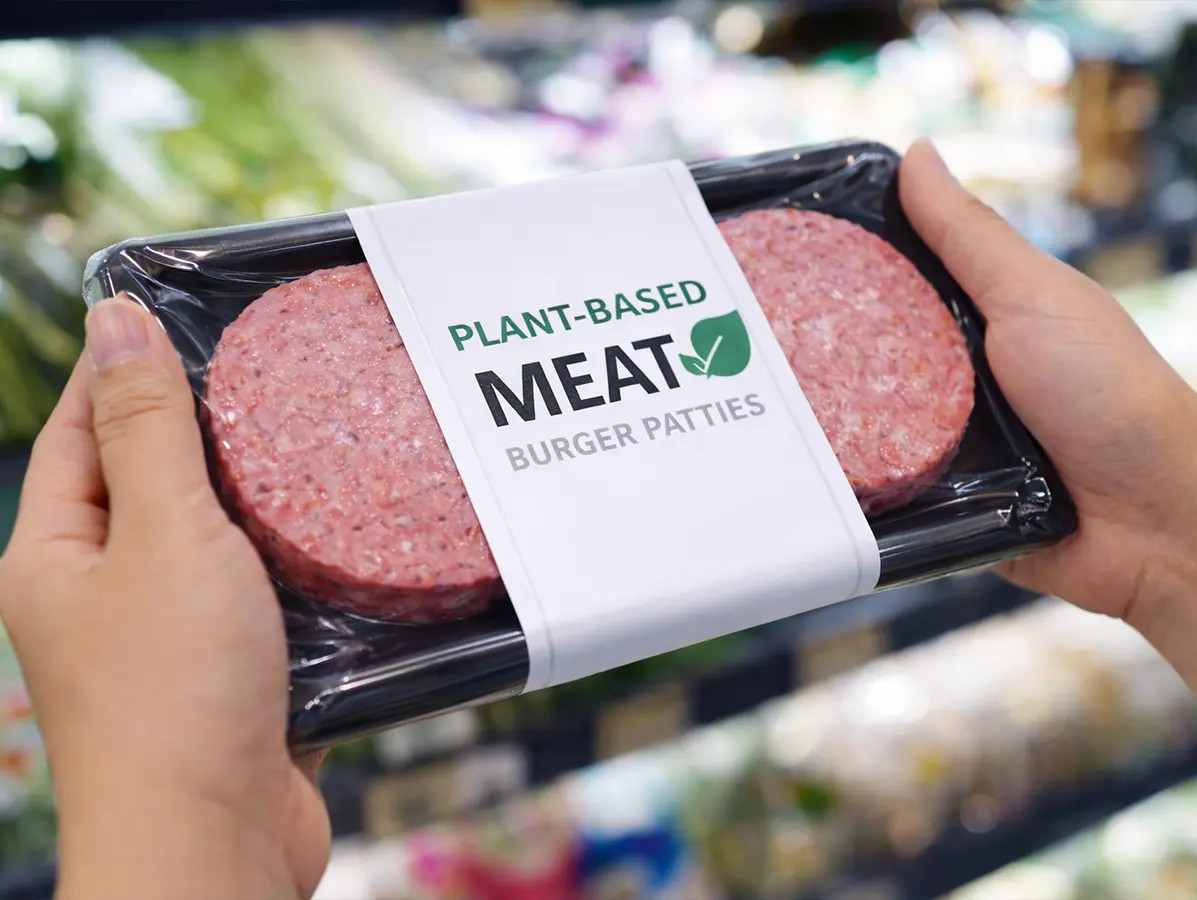
Beef, chicken, steak or bacon on plant-based packaging? In the EU, that will soon no longer be allowed. The European Parliament and the member states have reached an agreement on the matter. Producers of meat substitutes and hybrid products fear additional costs and more complexity across the supply chain.
In Brussels, it has been agreed that animal names may no longer be used for plant-based alternatives and hybrid meat products. Names referring to parts of animals will also disappear from packaging. Think of terms such as breast, wing or leg. The European Parliament already approved the proposal in October 2025. During earlier trilogue negotiations in December, Parliament, the Commission and the member states had not yet reached an agreement.
For producers, the measure has a wide-ranging impact. “Brussels is banning words that consumers have understood for years,” says Rutger Rozendaal, CEO of De Vegetarian Butcher. “This affects not only producers of plant-based products, but also meat companies that increasingly work with burgers and sausages made from plant proteins. The law was supposedly designed to support farmers. But in reality it helps absolutely no one: not the consumer, not the retailer, and not the livestock farmers either.”
Alongside the naming rules, a new definition of ‘meat products’ will also be introduced. As a result, hybrid products will fall outside that category.
In the Netherlands, this segment is actually gaining ground. According to Rozendaal, hybrid products are now widely accepted. “Hybrid is inmiddels mainstream in Nederland. Zo zetten supermarkten als Lidl, Albert Heijn en Jumbo actief in op hybride producten om plantaardig eten laagdrempelig te stimuleren.” According to him, the ban could therefore also slow innovation among meat companies and supermarkets.
According to producers, the name changes will require a great deal of extra work. Labels will need to be adjusted, and possibly packaging lines as well. Legal registrations will also have to change. “Het aanpassen van duizenden etiketten, verpakkingslijnen en juridische registraties vraagt investeringen in de gehele keten”, aldus Rozendaal. And that is not all. The new names will also have to be communicated to consumers. That requires additional marketing and communication efforts.
According to producers, these adjustments will not affect only large companies. Smaller and medium-sized producers will also face the consequences. In the end, those costs will be reflected in food prices. All this at a time when food prices are already under pressure due to geopolitical tensions, disruptions in agriculture and rising energy prices.
Source: The Vegetarian Butcher Collective
Magazine Voedingsindustrie has been made possible in part by:



© COPYRIGHT 2026 VOEDINGSINDUSTRIE | ALLE RECHTEN VOORBEHOUDEN
Powered by Wallbrink Crossmedia © 2026