
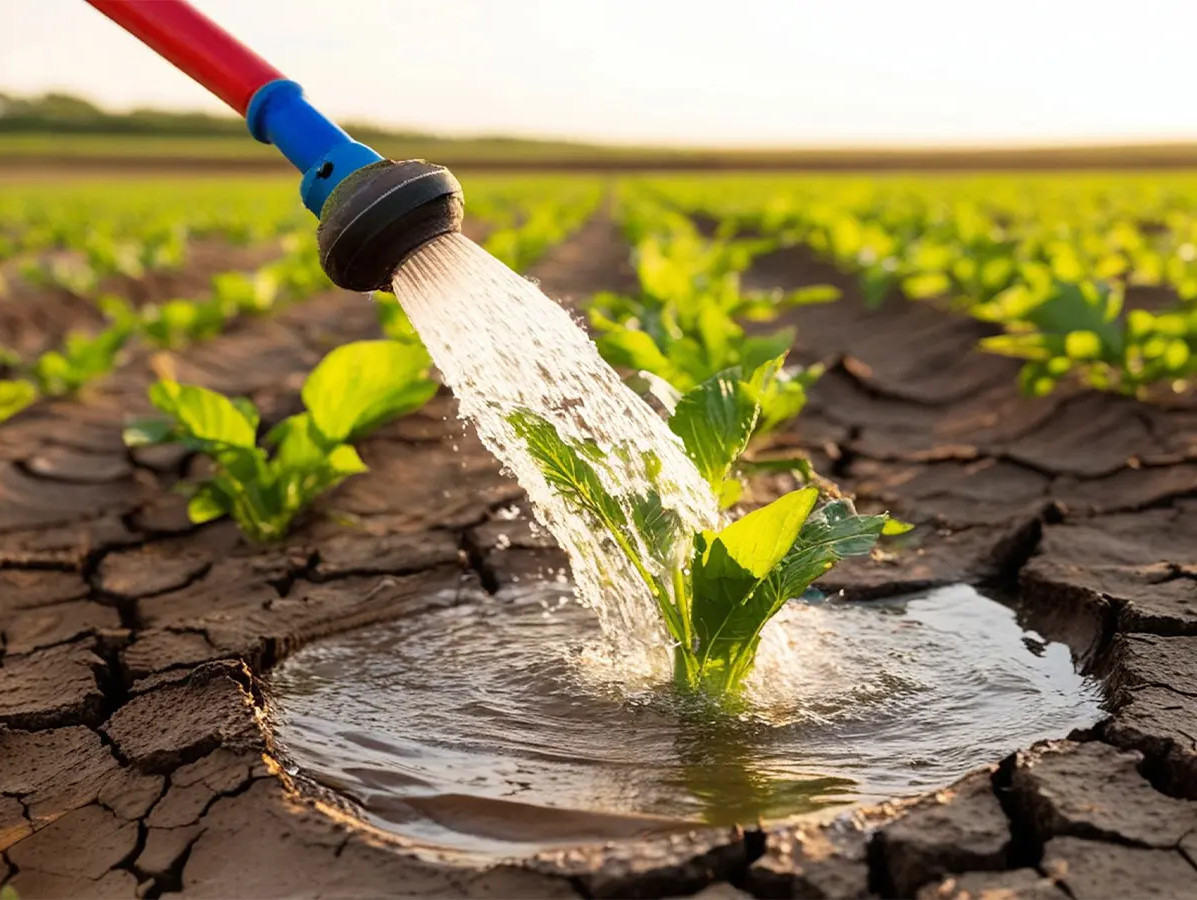
Climate change remains high on the international agenda. During COP30 in Brazil, the focus was on supporting developing countries and the transition to clean energy. At the same time, it became clear that current efforts are insufficient to limit global warming. For the food industry, this is not a theoretical debate, but a development that directly affects the sector.
Climate change arises from long-term shifts in temperature and weather patterns. Human activities play a decisive role in this process. Industrialization, intensive agriculture, and the use of fossil fuels have increased greenhouse gas emissions. These gases intensify the greenhouse effect and lead to rising global temperatures. According to the World Meteorological Society, 2025 ranks among the warmest years ever recorded.
Food systems are responsible for approximately one third of global greenhouse gas emissions. The largest share comes from agriculture and land use. The remaining emissions occur further along the chain, including processing, transport, retail, packaging, and waste management.
Within agriculture, emissions vary significantly by product. The highest emissions per kilogram of product come from beef, followed by lamb, dairy, and cheese. Demand for agricultural land continues to increase. Models show that additional land will be required to meet food demand toward 2050. Without mitigation measures, this could lead to a sharp rise in emissions.
Food waste also contributes to climate change. Worldwide, more than one third of food is lost or wasted. This accounts for 8 to 10 percent of annual greenhouse gas emissions.
The effects of climate change feed back into the food chain. UNEP points to risks such as drought, heat, flooding, and extreme storms. These threaten agricultural production, livestock, raw materials, and biodiversity. Ocean acidification, wildfires, and the spread of invasive species also pose risks.
The European food authority EFSA sees climate change as a driver of new and evolving risks. These relate to food and feed safety, animal and plant health, and nutritional value. EFSA emphasizes that climate change is “likely to lead to the (re-)emergence of new hazards.”
Source: BRCGS – Industry Spotlight: Climate Change (2025). Author: Alec Kyriakides, Independent Food Safety Consultant.
Source: BRCGS
Magazine Voedingsindustrie has been made possible in part by:



© COPYRIGHT 2026 VOEDINGSINDUSTRIE | ALLE RECHTEN VOORBEHOUDEN
Powered by Wallbrink Crossmedia © 2026