
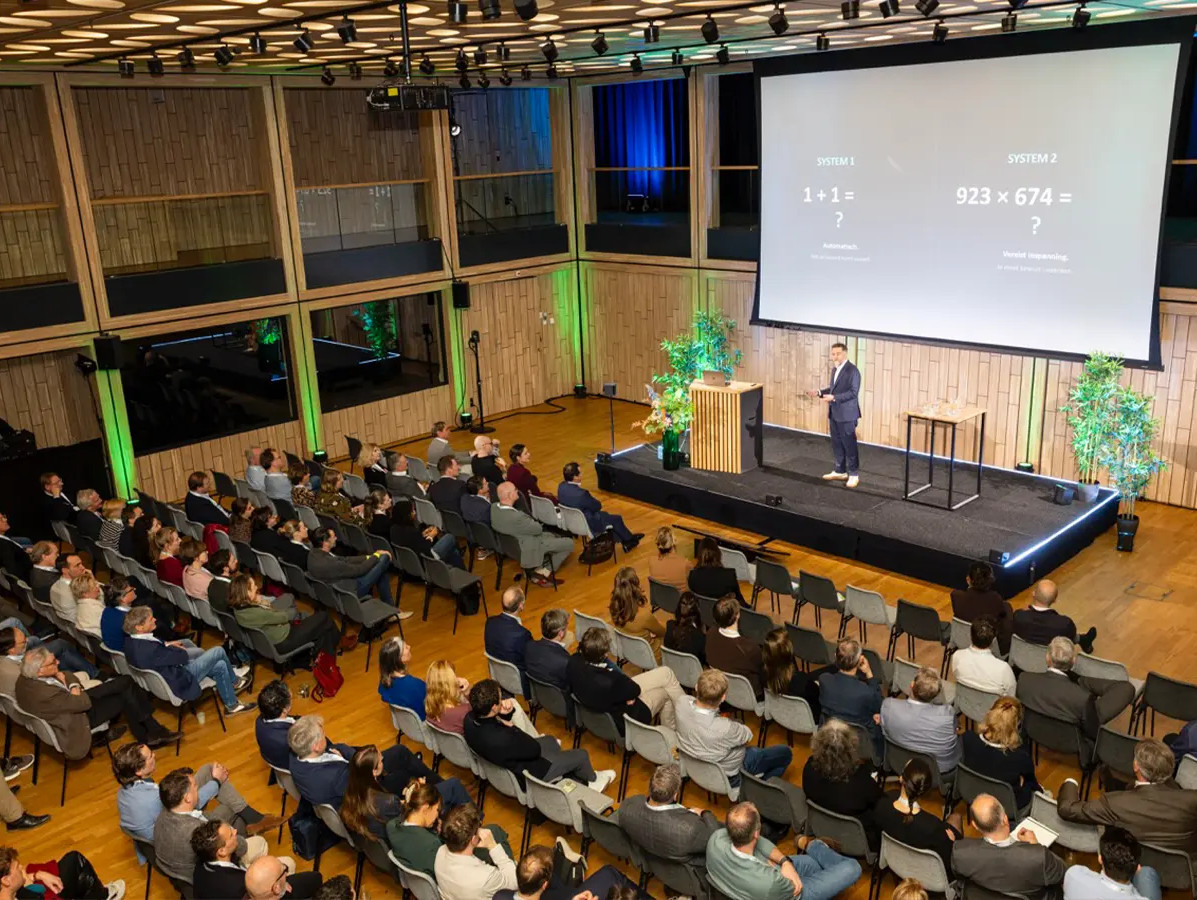
A circular system can be technically flawless. Yet it only works if people participate. That was the central message at PACtalk 2026, organized by Verpact at Naturalis in Leiden. Policymakers, companies, municipalities, and behavioral experts gathered to address one core question: how do you ensure that circular systems are not only well designed, but actually used in practice?
Moderator Donatello Piras opened the event together with Hester Klein Lankhorst, CEO of Verpact. The opening remarks stressed that behavioral change often remains underexposed in circularity policy. Ambition and regulation are necessary, but without attention to how people actually behave, targets remain out of reach.
“We can organize the collection system as well as possible, but without behavioral change, circular targets will remain out of reach. The real question is not what people should do, but how we design the system so they actually want to do it,” said Hester Klein Lankhorst.
For sectors handling large packaging flows, such as the food industry, this directly affects daily practice in waste separation and return systems.
In his keynote, Klaas Dijkhoff emphasized the importance of public support. Rules can steer behavior, but only if people understand them, trust them, and perceive them as fair. Without societal backing, resistance emerges and policy effectiveness declines.
Behavioral expert Tim den Heijer demonstrated how small design and communication choices can significantly influence behavior. People rarely make purely rational decisions. Anyone aiming to encourage desired behavior must design systems so that the easiest choice is also the right one.
Four breakout sessions presented concrete case studies. Gemeente Maastricht introduced a new PMD collection system developed in collaboration with residents and the waste collection service, resulting in improved separation quality. L’Oréal shared research insights into consumer behavior around refillable packaging and explained its own model for strategically prioritizing sustainability.
B.R.A.I.N. Creatives provided examples of creative interventions to reduce resistance and reinforce desired behavior. Verpact and Beautiful Lives used the B-COM model to examine how routines, convenience, and beliefs shape waste behavior.
PACtalk 2026 made clear that the circular transition is not only about regulation and technology, but about systems that align with human behavior.
Source: Verpact
Magazine Voedingsindustrie has been made possible in part by:



© COPYRIGHT 2026 VOEDINGSINDUSTRIE | ALLE RECHTEN VOORBEHOUDEN
Powered by Wallbrink Crossmedia © 2026





