
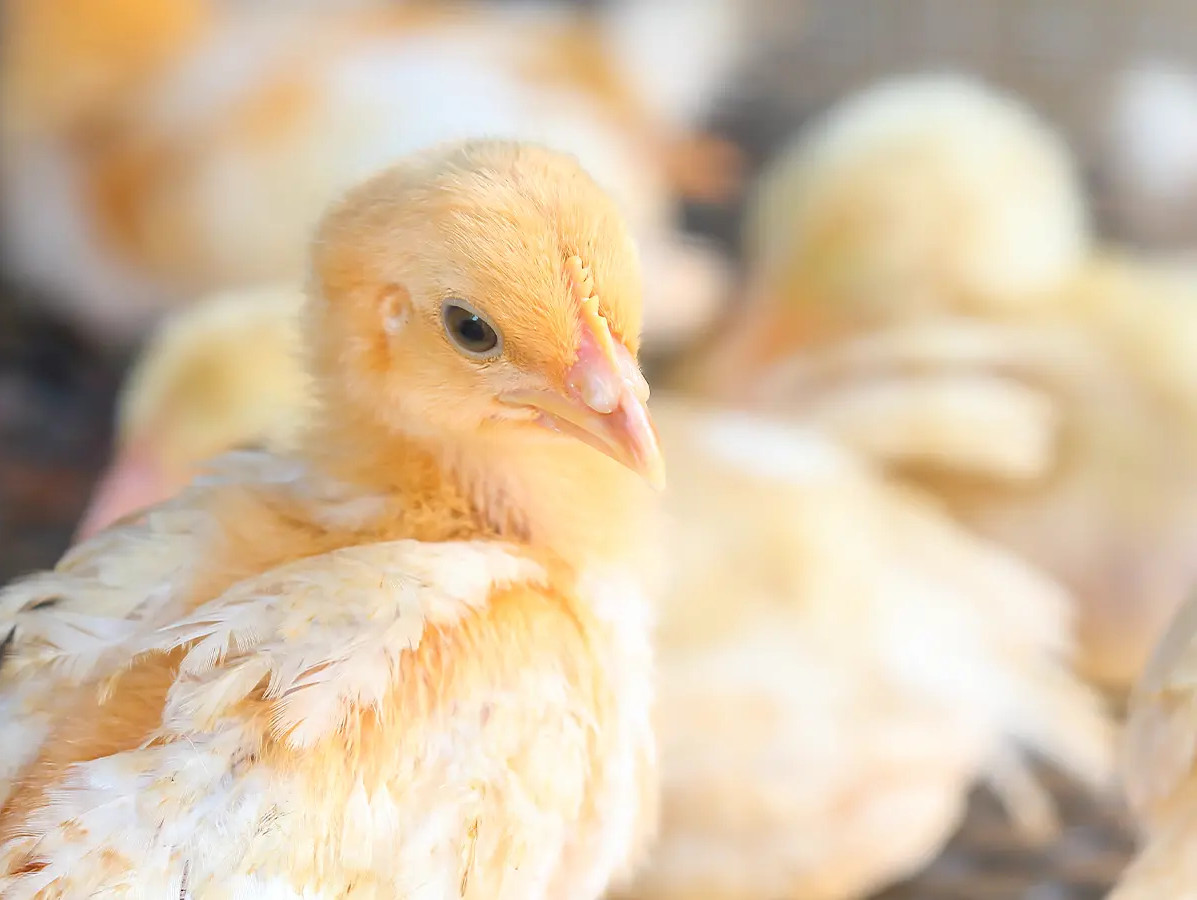
Demand for eggs and poultry meat continues to grow. Even so, production in the Netherlands is set to decline slightly toward 2040. That may sound contradictory, but it is not. Stricter requirements on animal welfare and the environment are reshaping the sector. In a future outlook, Rabobank outlines how Dutch poultry farming is developing within the limits of climate and nature.
By 2040, the Netherlands will have fewer poultry farms. Compared with 2023, there will be 20 percent fewer laying hens and 30 percent fewer broilers. The number of companies will have fallen by more than half. Companies that remain will be larger. Not because more animals are kept per location, but because farmers spread their operations across multiple sites.
Laying hen farming will remain mainly concentrated on sandy soils in Gelderland, North Brabant, and North Limburg. Companies located close to Natura 2000 areas will face major restructuring. Broiler farming will remain, as it does today, more widely spread across the country.
Animal welfare will take on a more prominent role in the sector. Cage-based systems have disappeared in the Netherlands. New poultry houses often include a covered outdoor area, and animals are given more space. Vaccination against avian influenza has been standard practice for some time. As a result, chickens can range freely outdoors. Antibiotic use has declined further and is therefore very limited.
Environmental pressure is also lower. A combination of emission-reducing technologies and lower stocking densities reduces ammonia and fine particulate emissions. The sector is energy neutral. Companies generate their own energy and no longer use biomass for heating. Manure disposal follows a circular approach and no longer poses a constraint.
Production is increasingly focused on the Netherlands and neighboring countries. “The poultry sector produces more than it does today for the Dutch or North-West European market.” Through chain coordination, certification, and demand-driven production, higher costs are recovered. Within these chains, consumers contribute to meeting climate, nature, and animal welfare objectives.
Source: Rabobank
Magazine Voedingsindustrie has been made possible in part by:



© COPYRIGHT 2026 VOEDINGSINDUSTRIE | ALLE RECHTEN VOORBEHOUDEN
Powered by Wallbrink Crossmedia © 2026