
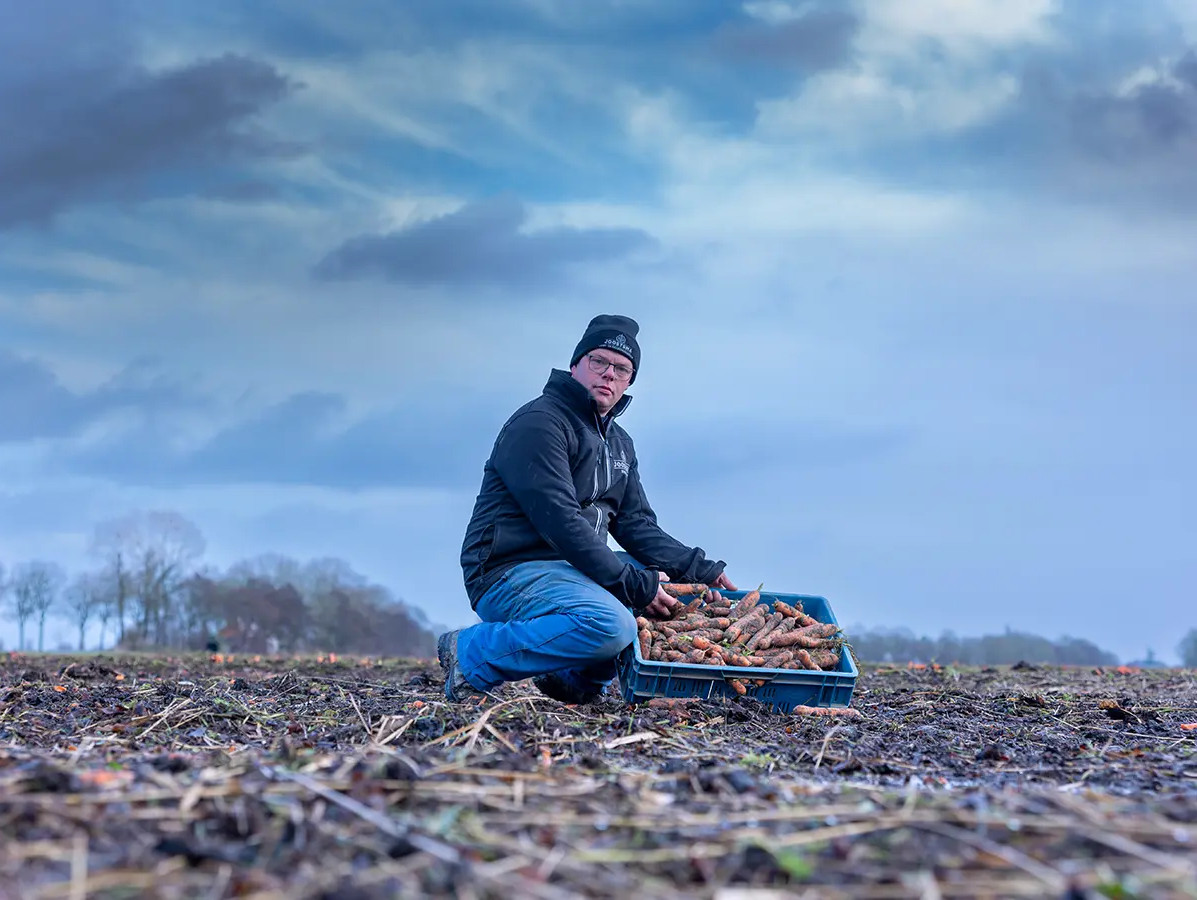
A good growing season is usually something to celebrate. This year, however, it is playing out differently for many vegetable growers. Large harvests, a saturated market, and strict visual selection criteria are leaving Dutch farmers with enormous volumes of vegetables. In total, 913,000 kilos of fresh vegetables are at risk of going to waste. Food collective No Waste Army is therefore taking action to prevent food waste.
The Dutch food market appears to have little room for surpluses. Farmer Bram from Friesland is experiencing this firsthand. He was left with 300,000 kilos of carrots after a supermarket unexpectedly pulled out. The carrots had already been sown and meet the required quality standards. Even so, there was no longer space on the shelf. A similar situation is unfolding in North Brabant. Grower Jan-Willem may be left with as much as 60,000 kilos of organic potatoes. Small blemishes and bumps on the skin make them unsuitable for supermarket sales.
The impact is not limited to growers alone. Further down the supply chain, pressure is also building. Due to the exceptionally strong growing season, processors and wholesalers are already operating at full capacity. As a result, alternative sales channels are scarcely available. Surpluses are difficult to place elsewhere. There is a real risk that good, healthy food will end up as animal feed or not be harvested at all. This is happening even though the products are suitable for human consumption and many people in the Netherlands could make good use of these vegetables.
To prevent this outcome, No Waste Army is launching a nationwide rescue campaign. Consumers can order a bag of vegetables directly from a farmer through a winter promotion. Collection is possible on January 9, 10, 16, and 17. Vegetables can also be donated to the Dutch Food Bank. Once sufficient supply is reached there, the vegetables are sent to the Belgian Food Bank. In addition, No Waste Army purchases part of the surplus itself. These vegetables are processed into shelf-stable products for its anti-food-waste grocery box, which is distributed nationwide every quarter.
Source: No Waste Army
Magazine Voedingsindustrie has been made possible in part by:



© COPYRIGHT 2026 VOEDINGSINDUSTRIE | ALLE RECHTEN VOORBEHOUDEN
Powered by Wallbrink Crossmedia © 2026