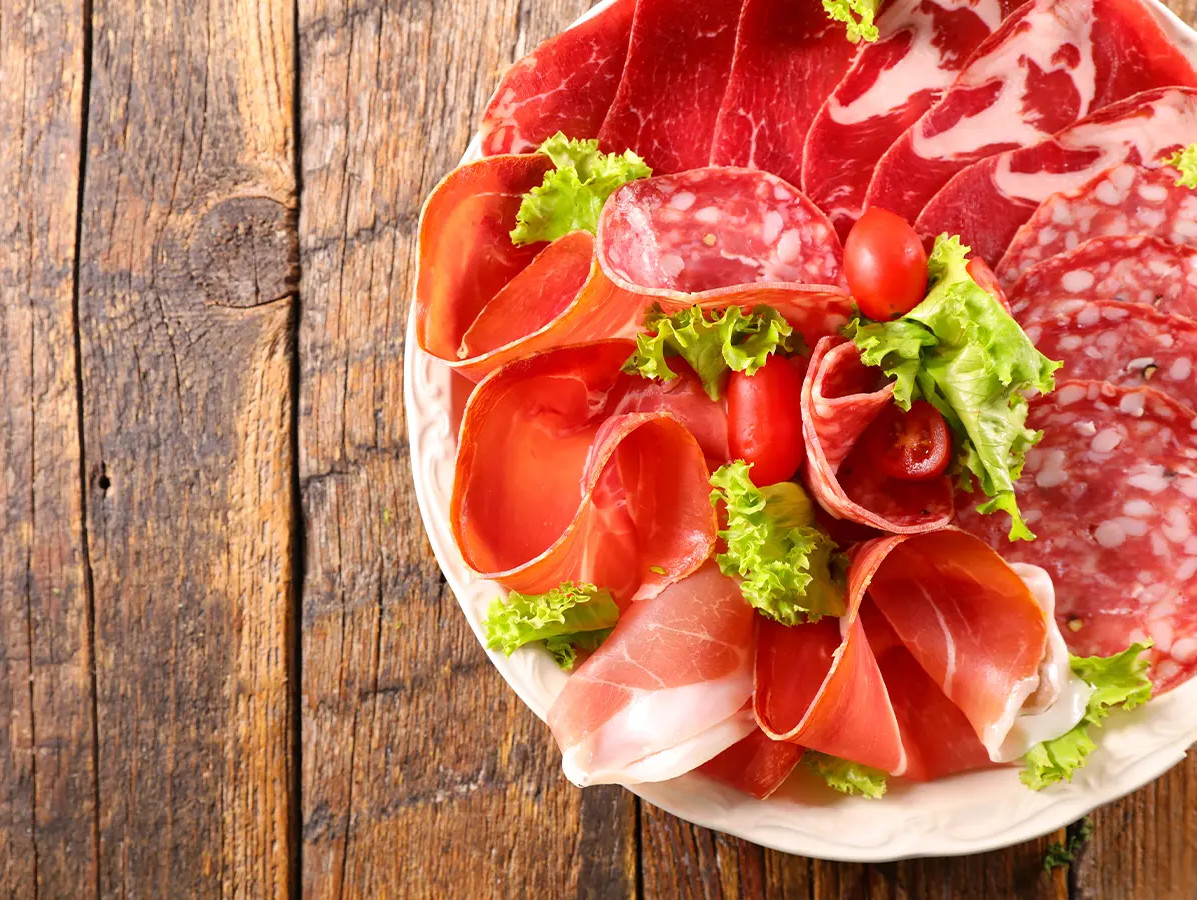
For the first time, Dutch meat product manufacturers have jointly measured how much food is lost during the production process. The first results show that 2.6% of the raw materials used are wasted. The monitoring was carried out by Samen Tegen Voedselverspilling and Wageningen University & Research (WUR), in collaboration with the Vereniging voor de Nederlandse Vleeswarenindustrie (VNV) and supported by the Ministry of Agriculture, Food Security and Nature.
Five companies participated in this first edition: Compaxo, Group of Butchers, Jos Slippens Vleeswaren, Luiten and Zwanenberg Food Group. Together, these frontrunners represent about half of the total production of all VNV members. “They demonstrate that it is possible to gain insight into waste and residual flows in this sector, and they inspire the industry to continue developing in this area,” says Richard van der Kruijk, Secretary of the VNV.
According to Toine Timmermans, Director of Samen Tegen Voedselverspilling, transparent reporting is essential. “Meat products are valuable and contain high-quality nutrients. That’s why it’s important to waste as little as possible.”
During the feedback session, the participating companies exchanged their experiences and tips for reducing waste. “Waste is one of the most important control points in your factory,” says Jeroen van der Post of Compaxo. The discussions brought both inspiration and practical tools to help further reduce waste. Participants also discussed how the monitoring process could better align with different production systems and how data quality could be improved.
The results support companies in calculating their CO₂ footprint and in preparing sustainability reports, including upcoming CSRD requirements. The sector-wide insights also help strengthen collaboration with the government to increase the value of residual streams. The current participants are recognized as important frontrunners, but according to the initiators, broader participation is needed to gain a more complete picture of the sector and to enhance the collective impact.
Source: Samen Tegen Voedselverspilling
Magazine Voedingsindustrie has been made possible in part by:



© COPYRIGHT 2026 VOEDINGSINDUSTRIE | ALLE RECHTEN VOORBEHOUDEN
Powered by Wallbrink Crossmedia © 2026