You want to rely less on fossil fuels, maintain your production capacity (or maybe even expand it!), and keep costs under control. That’s no easy task when there’s no extra capacity available from the grid. Food manufacturers should more often look at their energy supply and production processes together, with an open mind and an independent perspective. “Process first, technology second,” says engineering firm NIRAS.
A heat pump, an electric boiler, or a heat recovery system can help reduce energy use, but choosing the right solution starts with a close look at the production process. Experience from industry leaders confirms there’s no one-size-fits-all solution or standard approach.
Taking the existing process and its energy requirements as a given can mean missing opportunities to improve the process and use energy more efficiently. What temperatures does each step actually require? Where is energy being lost? Can supply and demand be better aligned? A thorough analysis of these factors helps determine which combination of technologies and which approaches to production are best suited to a given site.
Grid congestion and payback periods are key factors in investment decisions. A new approach to energy management also has operational implications, affecting production schedules and established ways of working. Manufacturers can no longer count on drawing large amounts of power from the grid whenever they need it. Staggering process start-ups or running energy-intensive equipment at different times can help reduce peak demand. Manufacturers can also cut costs by scheduling production during hours when electricity prices are lower, where possible. That’s an important consideration when deciding whether to keep a gas-fired energy system. Heat or cold storage can also provide flexibility. Any solution must support the production process and, ultimately, the finished product, which still needs to be safe, meet shelf-life requirements, and be consistent in quality.
Technology, energy prices, laws and regulations, and local grid capacity are all changing quickly. A decision that made sense a few years ago may no longer be the best choice today. A heat pump may now be more efficient, but an electric boiler paired with thermal storage may be more attractive under different conditions.
Decarbonization goes beyond plant utilities. Even so, you can make changes and improvements in stages. Keep the big picture in mind as you go. A flexible, step-by-step approach lets you reduce your environmental impact and rely less on outside energy supplies while keeping production running.
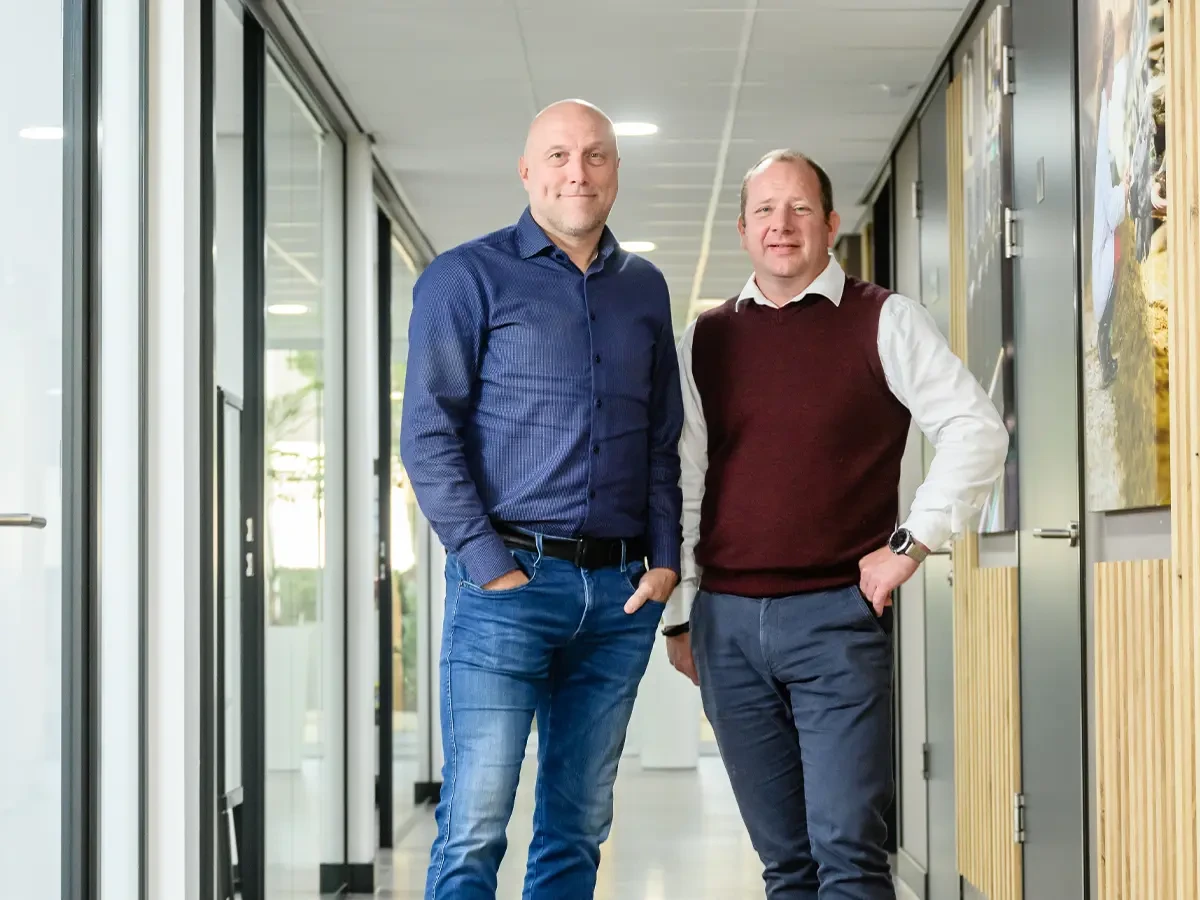
Photo: Jeroen van den Boezem (Senior Market Director) and Jolmer Nieuwkerk (Engineering Expertise Manager)
©Henk Hulshof fotografie
Source: Vakblad Voedingsindustrie 2026
Magazine Voedingsindustrie has been made possible in part by:



© COPYRIGHT 2026 VOEDINGSINDUSTRIE | ALLE RECHTEN VOORBEHOUDEN
Powered by Wallbrink Crossmedia © 2026