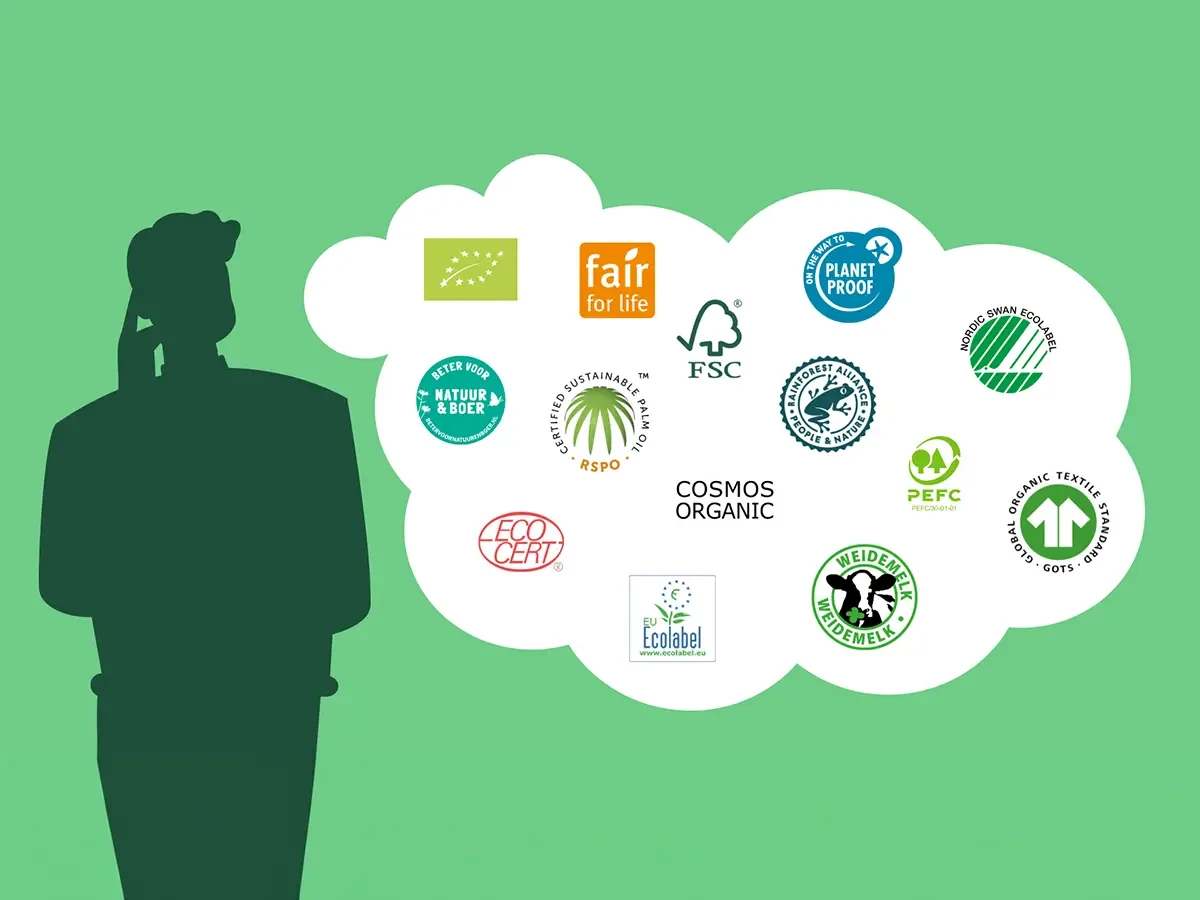
Sustainability requirements vary from one certification label to another. But how are those requirements monitored, and how openly are they communicated? Until now, the Certification Label Guide has provided separate scores for these aspects. Stricter European rules are changing that approach. Kenniscentrum Duurzaam Leven (Sustainable Living Knowledge Center), formerly Milieu Centraal, is therefore updating the guide. The Top Certification Label designation for food certification labels is also being discontinued.
The Empowering Consumers for the Green Transition directive sets stricter requirements for certification labels and sustainability claims. These rules are intended to better protect consumers against greenwashing and other misleading practices.
Certification schemes must publish their requirements and allow participation by any party able to meet them. Experts and stakeholders must be involved in developing those requirements. An independent, qualified body must verify that participants comply. There must also be a sanctions policy allowing the right to use the label to be suspended or revoked.
Some of the criteria for reliability and transparency are now established by law. The Netherlands Authority for Consumers and Markets (ACM) oversees compliance. The knowledge center is therefore removing its ratings and explanations for these aspects.
Certification labels received the Top Certification Label designation if they earned good ratings for reliability and transparency. They also had to score well on at least one aspect of sustainability.
The knowledge center expects weaker labels to disappear or improve their organization and oversight. According to the organization, this reduces the need for a separate list of Top Certification Labels.
The European rules do not specify how ambitious sustainability requirements must be. The knowledge center will therefore continue comparing the level of ambition among certification labels within each product category. The Certification Label Guide provides scores for environmental impact, animal welfare, and people and working conditions.
It will take some time before it becomes clear which certification schemes fully comply. Some are currently adjusting their organization and oversight. The knowledge center is therefore following the ACM’s assessments and enforcement actions. Labels that clearly fail to meet the requirements have already been removed from the Certification Label Guide.
Source: Kenniscentrum Duurzaam Leven
Magazine Voedingsindustrie has been made possible in part by:



© COPYRIGHT 2026 VOEDINGSINDUSTRIE | ALLE RECHTEN VOORBEHOUDEN
Powered by Wallbrink Crossmedia © 2026