
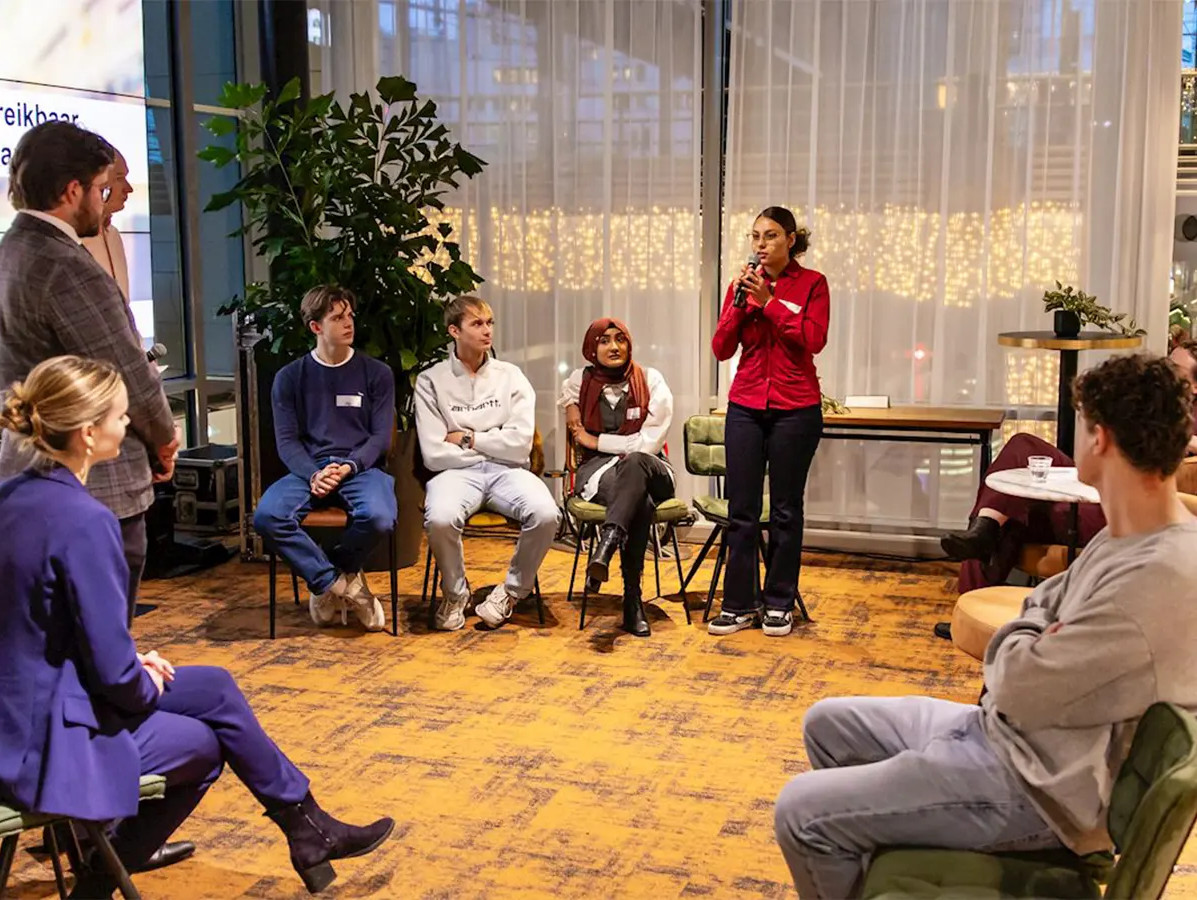
The room filled up quickly at the Meat Café Youth Debate organized by the Centrale Organisatie voor de Vleessector (COV). Young participants sat down with people from business, government, politics, and NGOs. The conversation centered on meat consumption, on framing, and on how influence actually works. Throughout the afternoon, the focus remained on dialogue — with meat, climate, and health always present in the background.
Manon Houben, chair of the COV, opened the event with a brief introduction. After that, Frits Bloemberg from Debatbureau took the floor to introduce seven young debaters. They came from different backgrounds and different fields of study, which naturally brought a mix of viewpoints. Each arrived with personal experiences and the facts they had researched beforehand. Yet those facts didn’t always match what happens in the sector on a daily basis. That contrast sparked sharp, yet surprisingly open conversations.
Professionals in the audience added thoughtful input. No long speeches — more the kind of comments that push a debate forward. It created real interaction. It also showed how broad and nuanced the conversation about meat becomes once everyone gets the room to share their perspective. “We did more than listen today; we understood what matters to young people. We need to have this conversation more often,” Houben said.
The debate produced several clear insights. The value and affordability of meat play an important role for young people. Health ranks high on their list, although their opinions on meat vary widely. Arguments against meat came mainly from concerns about climate impact. Young people who do consider meat important pointed to the nutritional value of animal proteins.
Perception also turned out to be a theme that triggered a lot. The statement about a possible advertising ban showed that framing is recognized, but often happens unconsciously. It’s clear that young people are actively thinking about how influence takes shape.
And then there were the nutrition hypes and social media. Many young people get their information online, but that information often turns out to be incomplete or contradictory. This led to a call from the audience to equip young people with more reliable nutrition knowledge — from the sector as well as from education.
The COV Meat Café 2025 offered young people an accessible and equal setting to speak with the sector, policymakers, and social organizations about meat, nutrition, and the future. The participants clearly appreciated that exchange. Dialogue, as the event made clear once again, helps reduce misunderstandings and build mutual understanding — exactly what the Meat Café aims for each year.
Source: COV
Magazine Voedingsindustrie has been made possible in part by:


© COPYRIGHT 2026 VOEDINGSINDUSTRIE | ALLE RECHTEN VOORBEHOUDEN
Powered by Wallbrink Crossmedia © 2026