
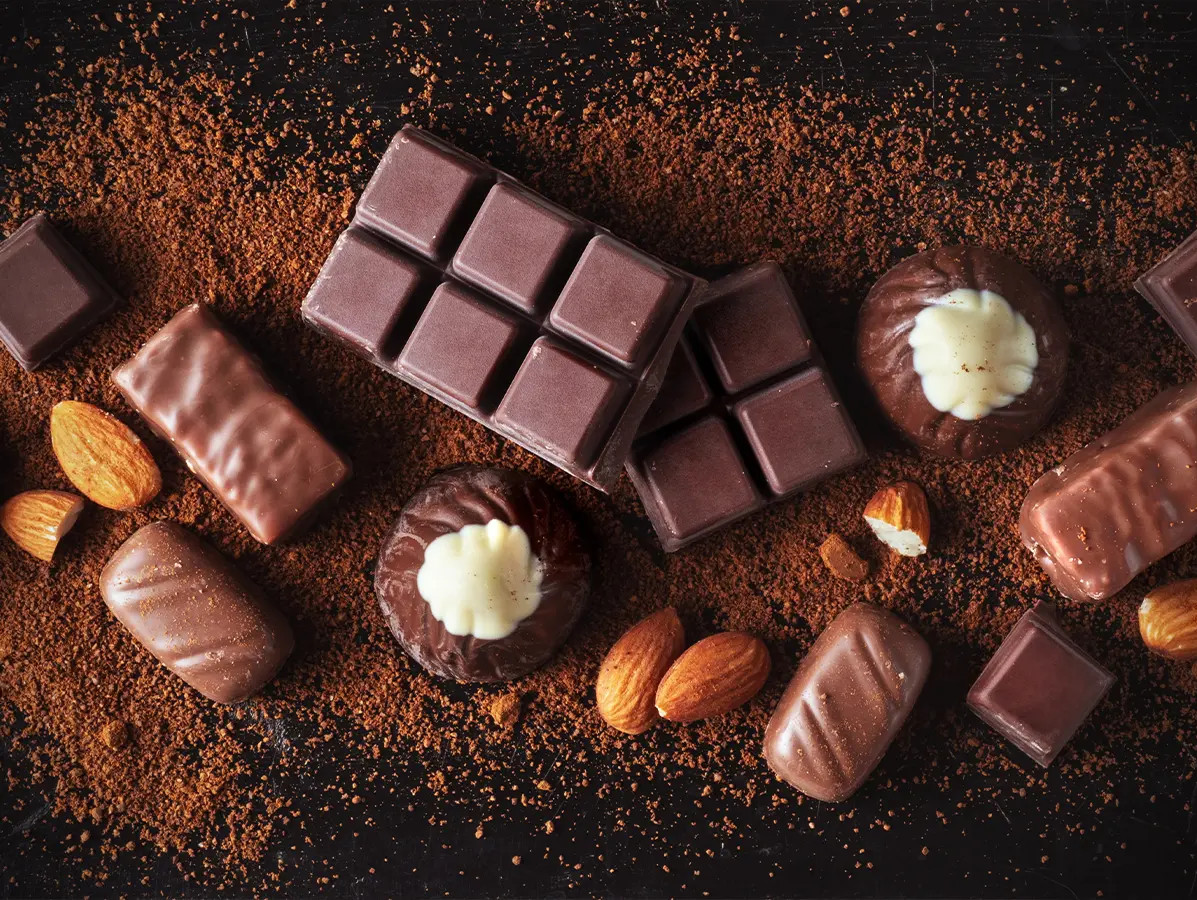
WWF-Belgium has published an online chocolate guide for consumers. The guide compares nineteen chocolate brands and companies active on the Belgian market. Among other things, the organization looks at deforestation, traceability, living income, and child labor.
According to WWF, better information should help consumers make more informed choices. “Consumers can have a real impact on deforestation, but they need access to reliable and understandable information about the chocolate sector,” says Hendrik Mersseman, Forest Policy Officer at WWF-Belgium.
The chocolate guide is based on data from the international Chocolate Scorecard. Companies are assessed on seven criteria. These include deforestation, climate, pesticide use, gender equality, and living income.
According to figures from Global Forest Watch, 4.3 million hectares of tropical forest were lost worldwide in 2025. WWF still considers cocoa production a major cause of deforestation and human rights violations. The organization also refers to research from 2020 showing that 1.5 million children were working on cocoa plantations in West Africa.
The Belgian chocolate sector is also mentioned. According to WWF, Belgian cocoa imports are linked each year to forest destruction covering an area comparable to the city of Leuven.
WWF sees progress among several companies in the areas of deforestation and traceability. According to the organization, Nestlé, Mars, and Ferrero have strengthened their policies and monitoring efforts. New European legislation, including the EUDR, is also playing a role, according to WWF.
Tony’s Chocolonely and Ritter Sport rank among the best-performing companies in the assessment. WWF says their results show that working with more sustainable cocoa “is also possible on a large scale.”
Among retailers, WWF points to Ahold Delhaize, Aldi, and Carrefour, which according to the organization have participated in the Chocolate Scorecard evaluation process for years. Mondelēz International, parent company of brands including Côte d’Or, Milka, and Toblerone, received the ‘Bad egg award’ due to a lack of transparency.
Source: WWF
Magazine Voedingsindustrie has been made possible in part by:



© COPYRIGHT 2026 VOEDINGSINDUSTRIE | ALLE RECHTEN VOORBEHOUDEN
Powered by Wallbrink Crossmedia © 2026