
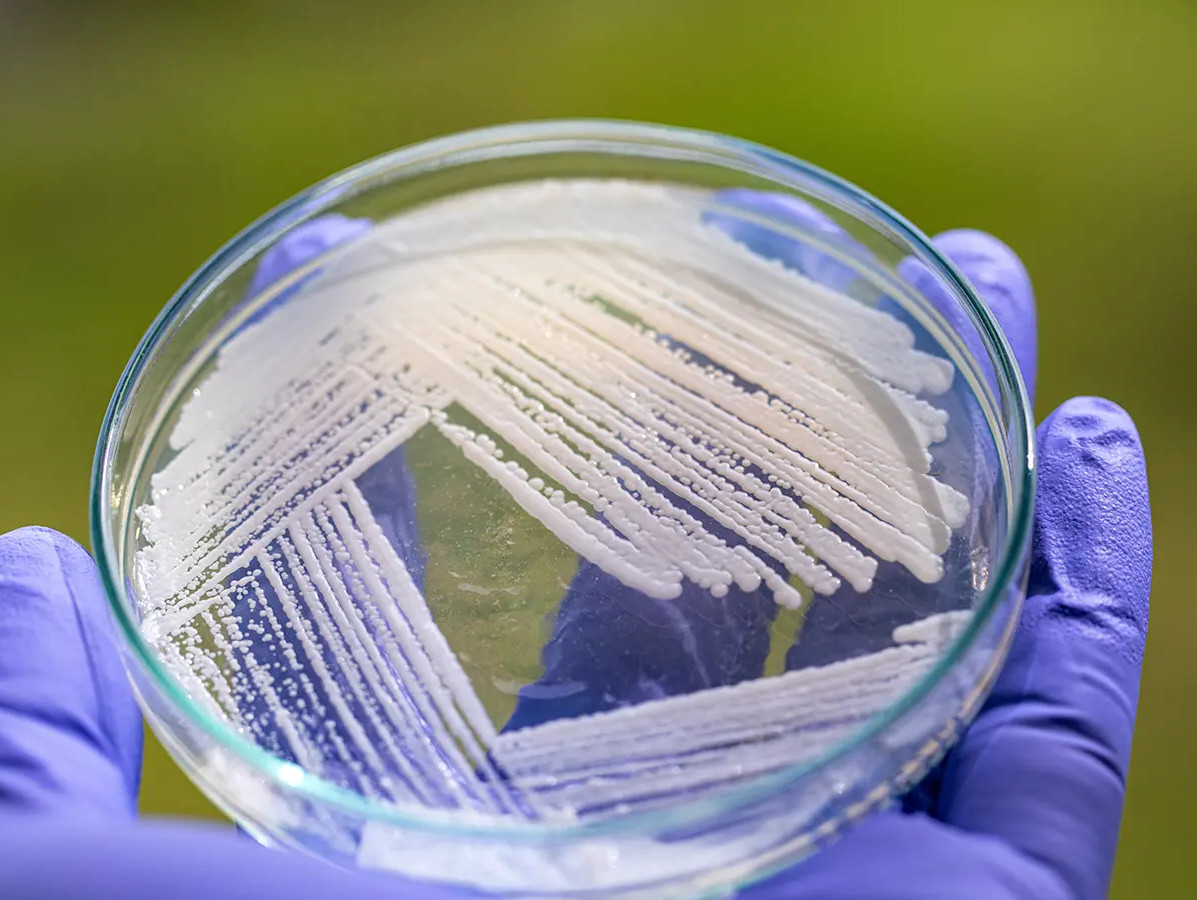
Yeast has been a mainstay in food production for centuries, but it also has its limitations. During industrial processes, yeast cells often die prematurely. An international research project led by Wageningen University & Research is examining how this process works and how cell death can be delayed. This should lead to more efficient production of, among other things, food proteins.
Yeast plays a central role in biotechnological applications. It makes bread rise, ferments beer and wine, and, after genetic modifications, can also produce food proteins. During production processes, however, yeast cells are exposed to stress, for example due to temperature or salt concentrations. As a result, cells die and rupture. Substances released in this process can contaminate the product. “We actually want to get as much use as possible out of each yeast cell,” says Mark Bisschops, Associate Professor of Bioprocess Engineering at WUR. “To achieve that, we need to push the yeast to live longer while continuing to produce.”
The research focuses on the molecular pathways that lead to cell death. By understanding which genes and signals are involved, researchers hope to block these processes. Yeasts have several forms of regulated cell death, each following its own pathway. So far, little is known about these mechanisms. Most existing knowledge comes from research on baker’s yeast, while industry also relies on other species. These species respond differently to environmental factors, depending on their origin.
In addition to Saccharomyces cerevisiae, the project examines three industrial yeast species: Komagataella phaffii, Yarrowia lipolytica and Debaryomyces hansenii. Each species has specific characteristics, such as protein production, fat storage or salt tolerance. Starting in 2026, thirteen PhD candidates will work on the project across seven European universities. They will study genetic pathways and process conditions, and develop models and measurement methods to better monitor cell death. The project is funded through the MSCA Doctoral Network and has a budget of approximately four million euros.
Source: Wageningen University & Research
Magazine Voedingsindustrie has been made possible in part by:



© COPYRIGHT 2026 VOEDINGSINDUSTRIE | ALLE RECHTEN VOORBEHOUDEN
Powered by Wallbrink Crossmedia © 2026