
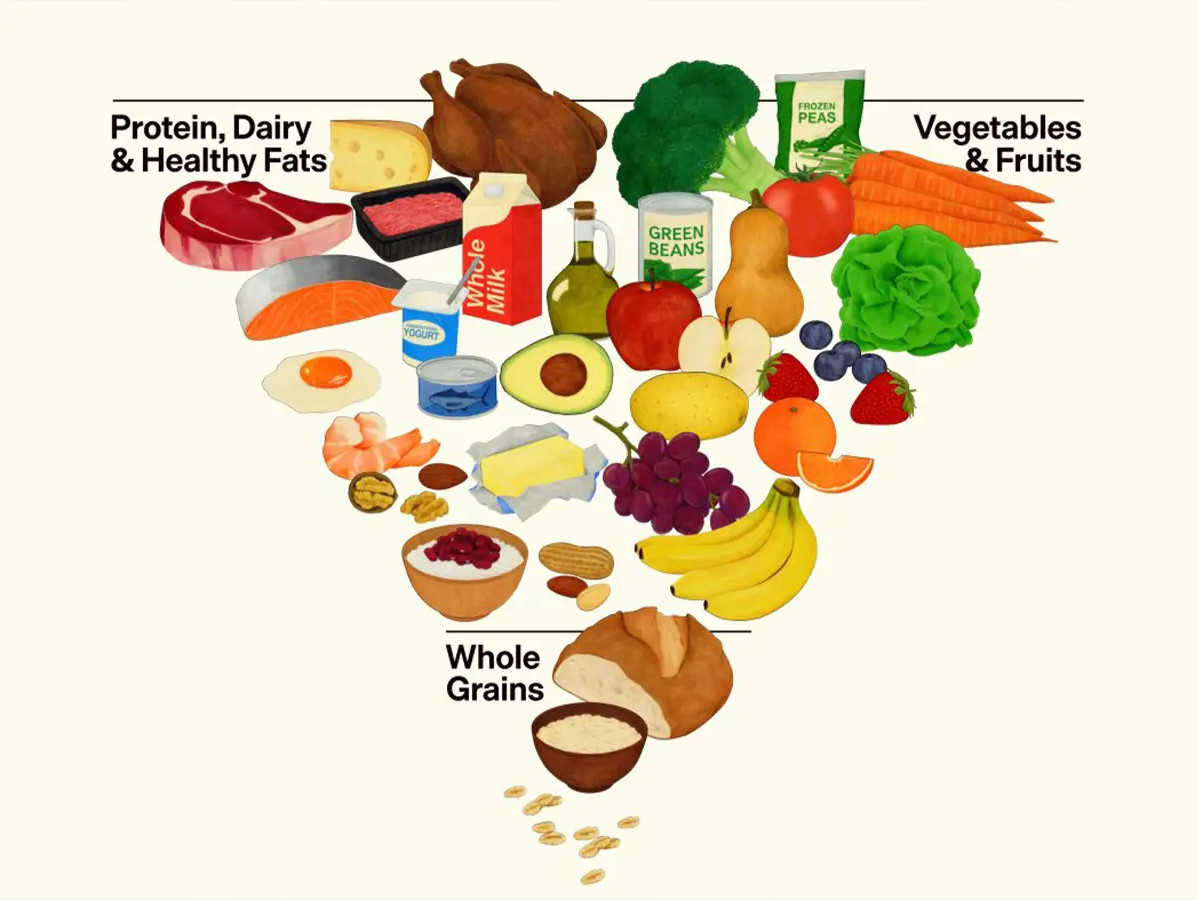
On January 7, the United States published new dietary guidelines. The Dietary Guidelines for Americans are presented as a “historic reset” in response to a national health crisis. The guidelines place strong emphasis on eating ‘real food’ and limiting added sugars. At the same time, critics note that this mainly reflects a shift in tone and priorities, rather than a fundamental change in direction.
The U.S. guidelines recommend a dietary pattern rich in unprocessed foods. Whole grains, vegetables, and fruit form the foundation. Healthy fats receive explicit attention, with oils such as olive oil preferred for food preparation. Protein is recommended at every meal, sourced from meat, fish, and plant-based options.
Added sugar is strongly discouraged. Avoiding heavily processed, pre-packaged foods high in sugar and salt is also a key focus. Sugar-sweetened soft drinks and energy drinks are discouraged. Frying is preferably replaced by other cooking methods, and salt intake should be limited.
In several areas, the U.S. guidelines align with the Dutch Schijf van Vijf. Both emphasize the importance of appropriate portion sizes, variety in protein sources, and daily consumption of vegetables and fruit. Choosing whole-grain products and limiting saturated fat to a maximum of ten percent of total calorie intake are also shared principles.
There are differences as well. In the Netherlands, greater emphasis is placed on a predominantly plant-based diet. This focus is not reflected in the U.S. guidelines. In addition, the United States recommends a higher protein intake than current Dutch guidelines. Notably, full-fat dairy is included, and fats from dairy and meat are categorized as healthy fats. To meet the guideline for saturated fat, the primary recommendation is to significantly reduce processed products.
The new U.S. guidelines are separate from developments in the Netherlands. In April 2026, the Voedingscentrum will introduce a further developed version of the Schijf van Vijf. This will incorporate the partially revised Richtlijnen goede voeding from the Gezondheidsraad, including new recommendations for protein sources such as legumes and meat.
The updated Schijf van Vijf will also include nutritional standards and clear conditions for sustainability and food safety. Using a scientific optimization model, all recommendations are being recalculated. The Schijf van Vijf will remain recognizable, with five segments and existing core advice, supplemented by adjusted recommended amounts, greater emphasis on plant-based proteins, and additional practical guidance.
Source: Voedingscentrum
Magazine Voedingsindustrie has been made possible in part by:



© COPYRIGHT 2026 VOEDINGSINDUSTRIE | ALLE RECHTEN VOORBEHOUDEN
Powered by Wallbrink Crossmedia © 2026





