
Ultra-processed food? It’s quickly dismissed. Unhealthy, people say. Fattening too. But that image isn’t as black-and-white as often assumed, according to research from Wageningen University & Research (WUR). It’s not just what you eat that matters, it’s how you eat it. Or more precisely: how fast.
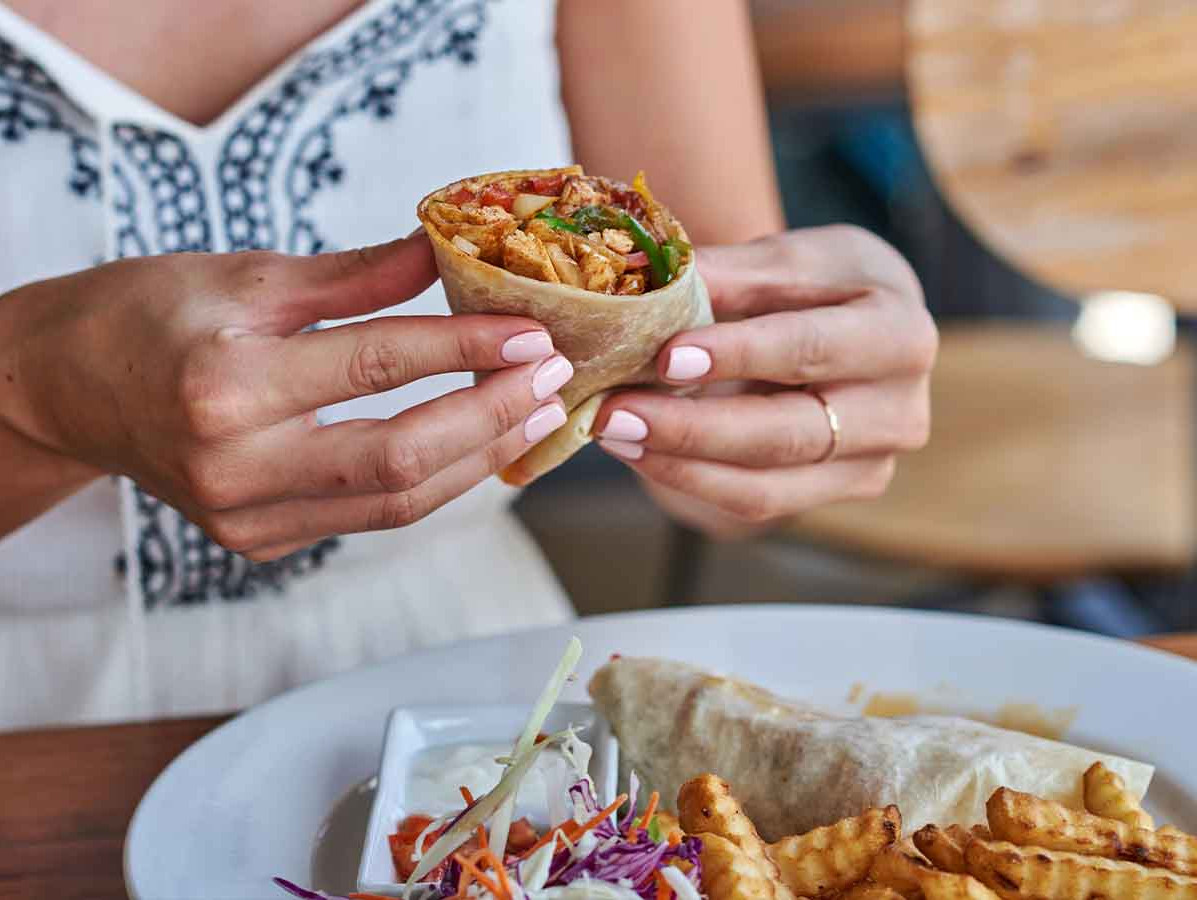
In the study, 41 participants followed two diets, each lasting two weeks. In both cases, over 90 percent of what they ate was ultra-processed. The difference? Not the ingredients, but the texture. Think: soft buns and smooth sauces versus crusty rolls and chunky burritos.
Participants were told to eat until they felt comfortably full. The result? On the ‘fast’ diet, they consumed an average of 369 more calories per day compared to the slower-eating diet. That’s roughly the equivalent of five bitterballen. Measured over two weeks, that adds up to more than five thousand extra calories. “On the slow-eating diet, participants lost an average of half a kilo,” says Marlou Lasschuijt, assistant professor at WUR.
What stood out: participants didn’t need any instructions. As soon as they were served meals that required more chewing, they automatically slowed down — and ate less. “We usually see a wide range of responses to behavioral interventions, but in this case, nearly everyone adjusted naturally,” says Lasschuijt.
In a second experiment, held on campus and focused on different lunch combinations, calorie intake varied significantly as well. All because of how the bread, toppings and vegetables were put together. Calorie counts ranged from 300 to 900 per meal, depending on whether the food was soft and rich or firm and lean.
Professor Vincenzo Fogliano called the study an important piece of evidence in a post on LinkedIn: “This study demonstrates once and for all that the association between ultra-processed food consumption and health outcomes is not related to the degree of processing, but to eating speed.”
And Lasschuijt? She adds a note of nuance: “You can absolutely eat ultra-processed foods without gaining weight. Of course, the category includes products you shouldn’t eat every day — but it also contains many that, when it comes to weight gain, are perfectly fine.”
Source: Resource Online
Magazine Voedingsindustrie has been made possible in part by:



© COPYRIGHT 2026 VOEDINGSINDUSTRIE | ALLE RECHTEN VOORBEHOUDEN
Powered by Wallbrink Crossmedia © 2026