
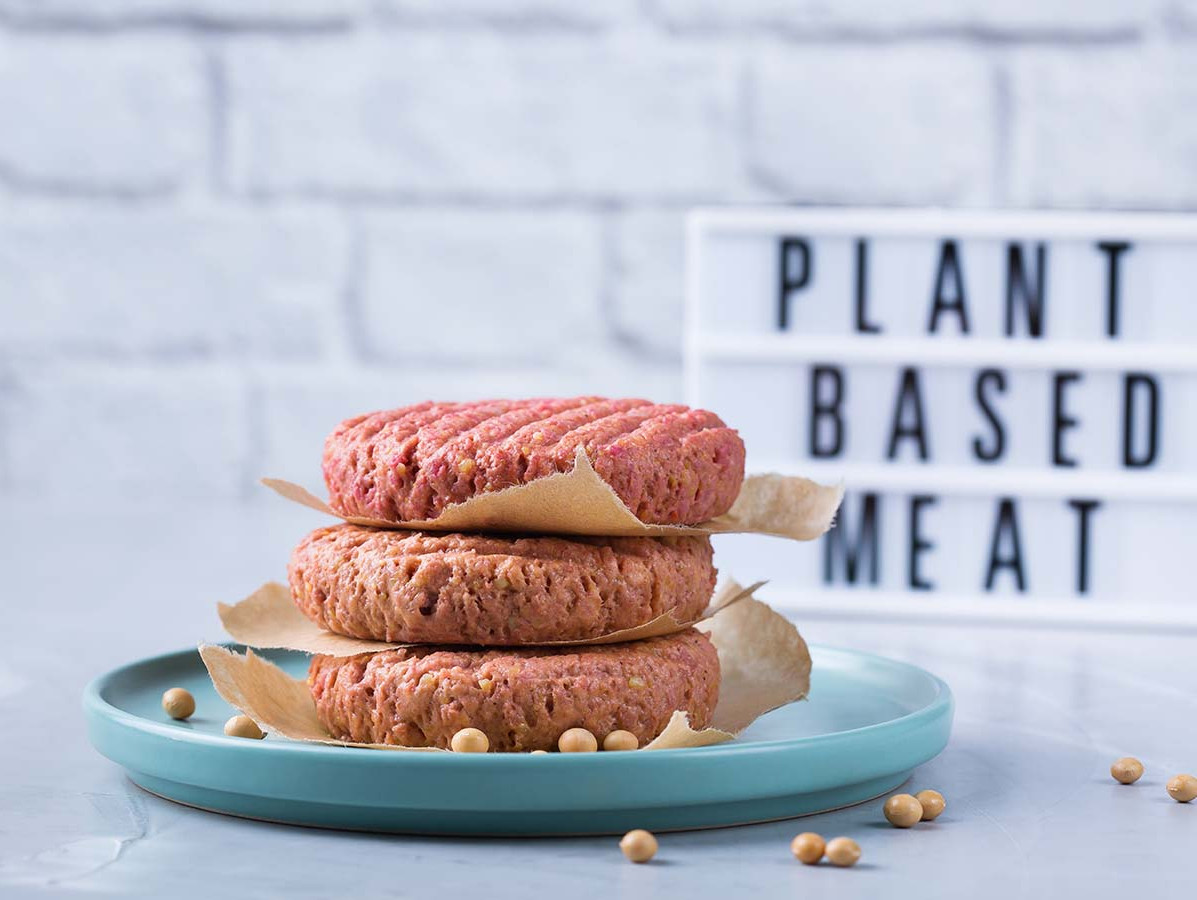
Shoppers looking for healthier choices in the vegetarian aisle now have more options on hand. The share of meat substitutes that meet all criteria of the Dutch healthy eating guidelines has nearly tripled since 2023: from 9 to 26 percent. This is shown in new research by ProVeg on plant-based products resembling meat. Salt levels are also improving. Today, 56 percent remain within the maximum of 1.1 grams per 100 grams.
The nutritional profile is clearly moving in the right direction. Of the products studied, 84 percent are high in protein and 83 percent are low in saturated fat. And when it comes to fibre, iron and vitamin B12, two out of three products score well. According to Martine van Haperen, nutrition and health expert at ProVeg, this is no coincidence.
“The result shows that the market is developing,” she says. “Research by the Consumentenbond in 2023 showed, for example, that two-thirds of vegaburgers contained too much salt at the time. That is one of the reasons why many people still believe ready-made meat substitutes are often unhealthy. By now, more than half of the products we assessed meet the salt criterion of the Netherlands Nutrition Centre. Producers are becoming increasingly aware of the importance of sound nutritional value and are taking steps to improve it.”
Today, more than a quarter of the meat substitutes examined meet the Dutch healthy eating guidelines. Compare that with processed meat products such as bacon, sausages or burgers, and only 11 percent make the cut. Plant-based often comes out ahead. The same goes for calories: meat substitutes contain on average 187 kcal per 100 grams, compared to 255 kcal in their animal-based counterparts.
Van Haperen points to another striking figure. “We conducted research at six supermarket chains. There we found 83 meat alternatives that meet the Dutch healthy eating guidelines. These include not only products that resemble meat, but also many made from tofu, tempeh, vegetables and legumes.”
For this study, 129 meat substitutes from supermarket shelves were compared with 54 animal-based reference products. Burgers, nuggets, schnitzels, bacon, shawarma – those categories. Tofu, seitan and vegetable-based burgers were left out. Not because they are less healthy, but because there is no proper meat equivalent to compare them with.
The assessment was based on product labels (for the plant-based items) and NEVO standard values (for the meat). And equally important: producers and retailers had no involvement whatsoever in the study. The results were drawn up completely independently.
Source: ProVeg
Magazine Voedingsindustrie has been made possible in part by:



© COPYRIGHT 2026 VOEDINGSINDUSTRIE | ALLE RECHTEN VOORBEHOUDEN
Powered by Wallbrink Crossmedia © 2026