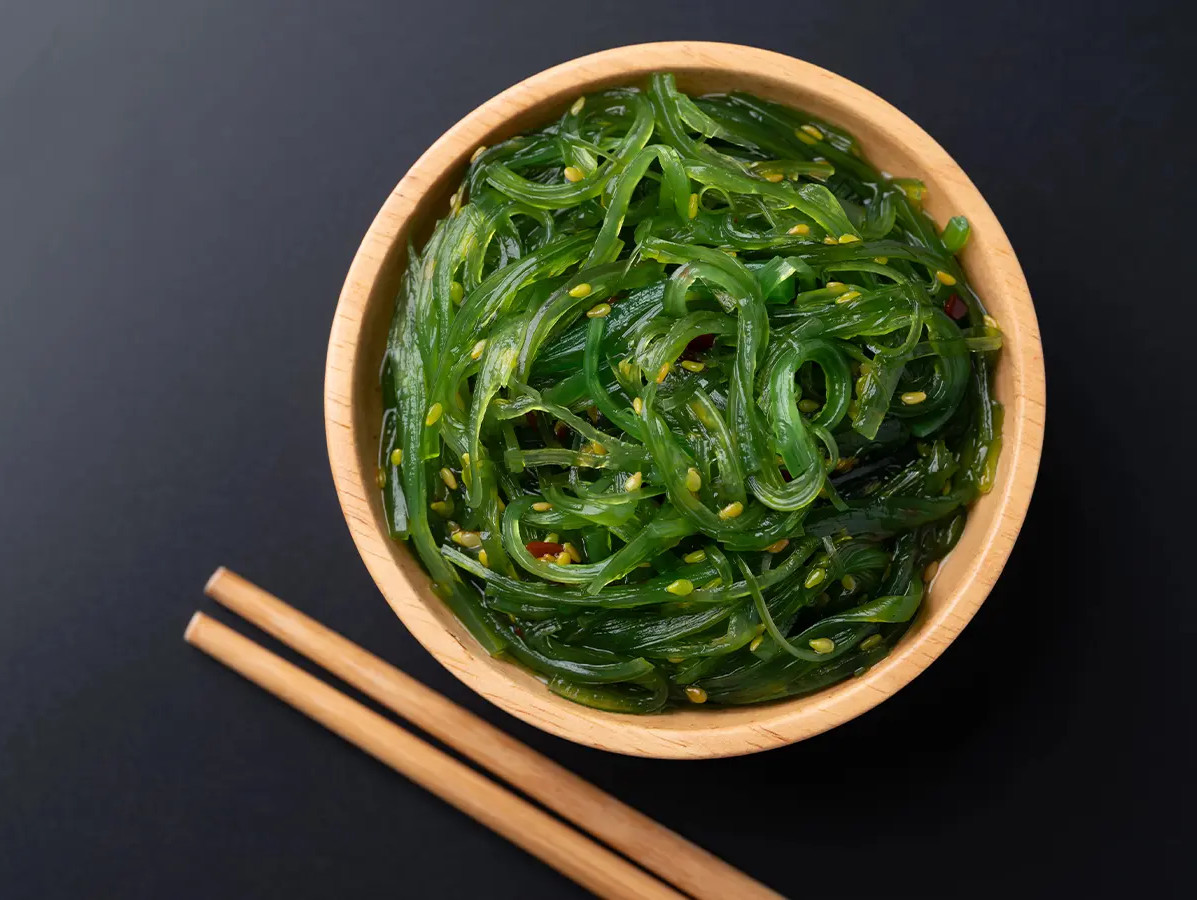
Seaweed is appearing on more and more menus. In salads, wraps, chips, and noodles. This trend is driven not only by the rise of sushi but also by the search for alternative proteins. As a result, interest within the food industry continues to grow. The NVWA has revisited the risks linked to cultivation and consumption, highlighting opportunities as well as clear points of attention.
Seaweed consumption is rising quickly. At the same time, the risk assessment shows that fresh, unprocessed seaweed can contain notable levels of iodine, lead, inorganic arsenic, and PFAS. Daily intake of large portions — roughly 90 grams fresh or 13 grams dried — may pose a health risk.
Fortunately, these levels usually decrease after washing, drying, salting, or fermenting. That’s why the risks tied to processed seaweed products are considered low in practice. Fresh seaweed, however, especially when eaten raw, remains more sensitive.
There is still plenty we don’t know about pathogens on seaweed. What is clear: environmental bacteria such as Vibrio spp. and B. cereus are found regularly. Pathogens originating from humans or animals appear only occasionally and mainly in waters affected by sewage discharge or runoff from farmland.
For most micro-organisms, seaweed is not a relevant transmission route; norovirus is the exception. The NVWA estimates the risk of infection through seaweed as low to very low. A comparison is made with raw fish, which aligns with what is observed in practice.
Food safety is not the only factor. Nature can also be affected by seaweed cultivation, especially when non-native species are used or when the starting material is not collected locally. In the Netherlands, species such as wakame, Japanese wireweed, and perforated sea lettuce are already common. When local material is used, cultivation does not create additional risk.
Once material is brought in from elsewhere, however, other species may tag along. They can settle, spread further, and put pressure on existing ecosystems. The NVWA also notes that responsibilities for permits and oversight concerning non-native species are not clearly defined, which allows these risks to persist.
Source: NVWA
Magazine Voedingsindustrie has been made possible in part by:



© COPYRIGHT 2026 VOEDINGSINDUSTRIE | ALLE RECHTEN VOORBEHOUDEN
Powered by Wallbrink Crossmedia © 2026