
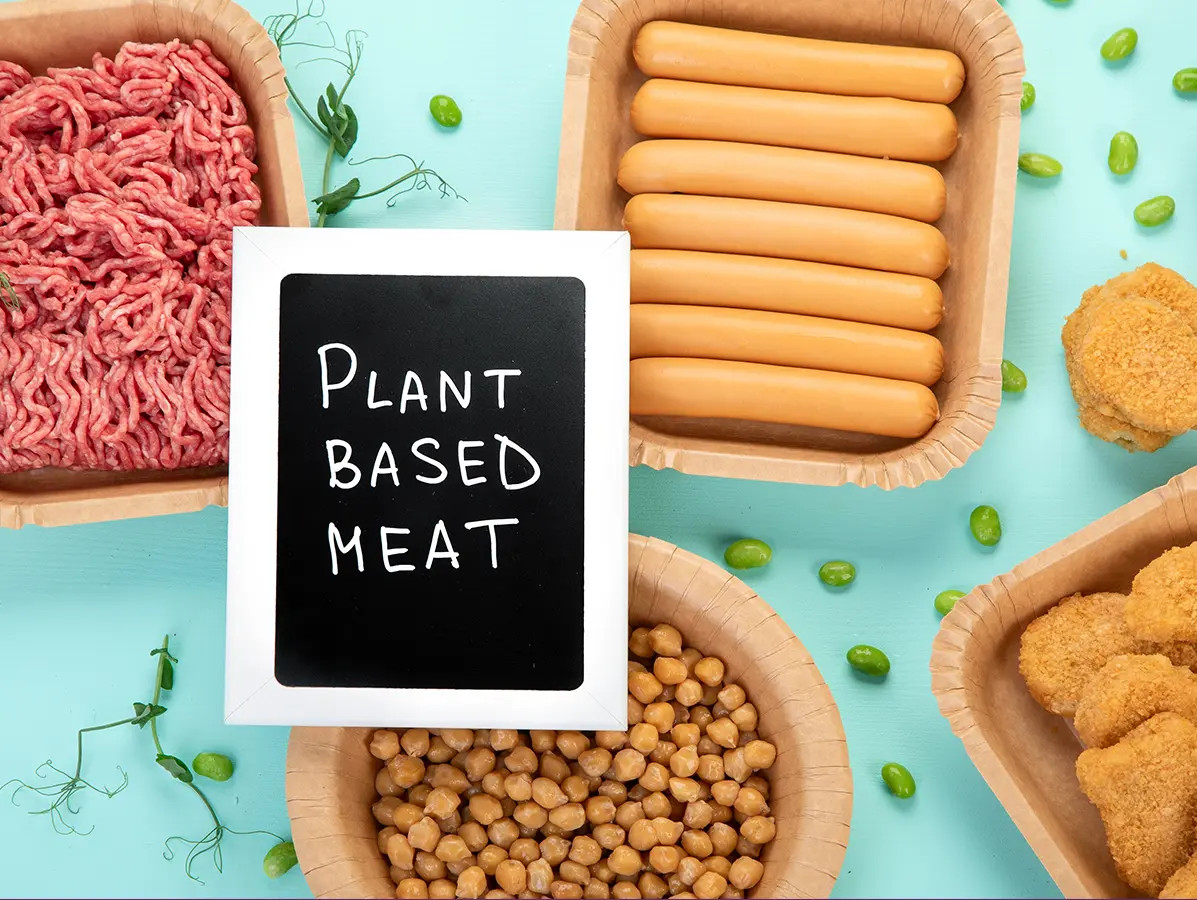
Meat substitutes are getting healthier, and that’s good news. Supermarket private labels are showing it can be done: less salt, better nutrition. New data from ProVeg confirm the trend.
The salt content of meat substitutes has dropped significantly in just two years. More than half now meet the Dutch Nutrition Centre’s salt criterion. And the private labels? They are leading the way. Lidl tops the list: 10 out of 11 products reviewed meet all of the “Schijf van Vijf” criteria. Aldi, Garden Gourmet, Go Vega! and Jumbo follow closely. On average, these private labels even outperform unprocessed meat. “We see more and more supermarkets adopting policies to make their meat substitutes healthier. Lidl is a frontrunner in this,” says Martine van Haperen of ProVeg.
Burgers, meatballs, nuggets, sausage, shawarma and bacon – the plant-based versions generally score higher than their animal-based counterparts. Shawarma and nuggets come out about equal. Only fresh minced meat, chicken pieces, chicken fillet and schnitzel give meat a slight edge. Still, many meat substitutes in these categories meet all “Schijf van Vijf” requirements and fit a healthy diet.
Since 2023, the share of meat substitutes meeting the criteria has nearly tripled, from 9 to 26 percent. Looking at salt, sugar and saturated fat alone, the figure rises to 35 percent – compared to just 11 percent for the animal reference products. For supermarkets and foodservice, this is a clear signal: here’s an opportunity to grow healthier and more sustainable at the same time.
Source: ProVeg
Magazine Voedingsindustrie has been made possible in part by:



© COPYRIGHT 2026 VOEDINGSINDUSTRIE | ALLE RECHTEN VOORBEHOUDEN
Powered by Wallbrink Crossmedia © 2026