
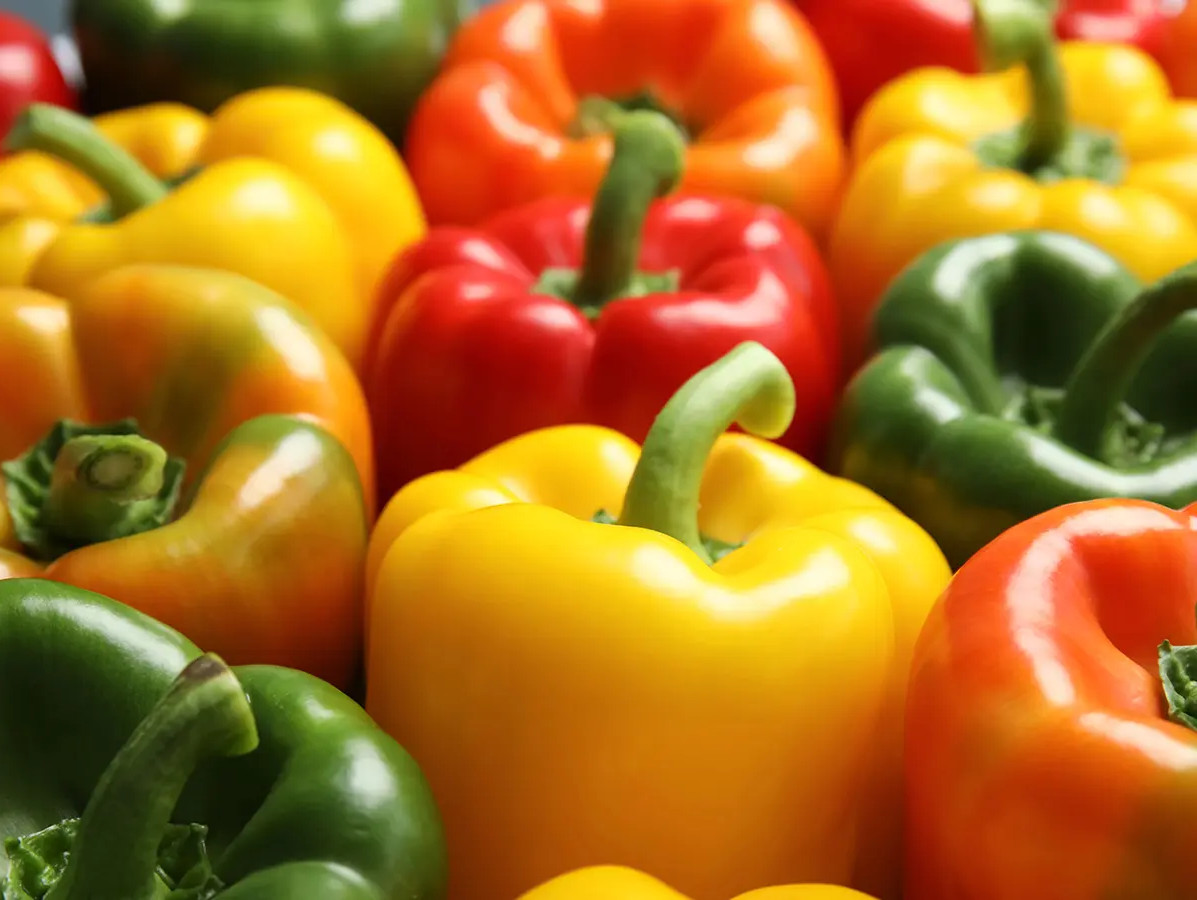
Paprika tops the Pesticide Food Guide this year. Not because of popularity, but because this vegetable contains the highest average number of pesticide residues. This is shown by new figures based on residue measurements by the NVWA. Last year, paprika still ranked third. That has now changed. At the same time, the total amount of pesticide residues on fruit and vegetables continues to increase.
Paprikas contain an average of 2.1 different pesticides. This makes them the most contaminated vegetable. Spinach and pak choi follow, each with an average of 2.0 types of residues. In fruit, citrus remains at the top of the list. An average of 4.4 pesticides are found on citrus fruit. Strawberries share that top position; contamination increased from 3.7 last year to 4.4 this year. Grapes follow with an average of 3.6 types.
Looking more broadly, the increase stands out most. The number of pesticide residues on fruit and vegetables rose by seven percent, to an average of 1.8 types. The average residue level increased by as much as fifteen percent. Residues of PFAS, hormone-disrupting pesticides, and substances classified as candidates for substitution are also found more frequently. The Pesticide Food Guide is based on sample measurements conducted by the NVWA. These measurements were carried out in supermarkets and other parts of the retail chain. The most recently published data from the years 2022 through 2024 were used.
At first glance, the findings appear to conflict with recent CBS figures. Those figures show a 22 percent decrease in total pesticide use in Dutch agriculture. A closer look reveals a different picture. Within the category of vegetables, potatoes, and fruit, usage actually increased. Between 2020 and 2024, this amounted to a rise of 26 percent.
With the Pesticide Food Guide, PAN-NL aims to help consumers make informed choices. This is especially relevant for pregnant women and families who prepare food themselves for babies and young children. For jars of baby and toddler food, Europe applies a maximum limit of 0.01 milligrams of pesticide per kilogram. In conventional fruit and vegetables, however, amounts tens to well over one hundred times higher are regularly found. Pesticides can also cross the placenta, posing a risk to the unborn child.
Sjoerd van de Wouw, campaigner at PAN-NL, says: “People are rightly encouraged to eat more fruit and vegetables. It is simply common sense to then choose products with as few pesticide residues as possible, especially for pregnant women, babies, and children. Our Pesticide Food Guide can help consumers do just that. For people and nature alike, unprocessed fruit and vegetables remain the best choice.”
Source: PAN Netherlands
Magazine Voedingsindustrie has been made possible in part by:



© COPYRIGHT 2026 VOEDINGSINDUSTRIE | ALLE RECHTEN VOORBEHOUDEN
Powered by Wallbrink Crossmedia © 2026