
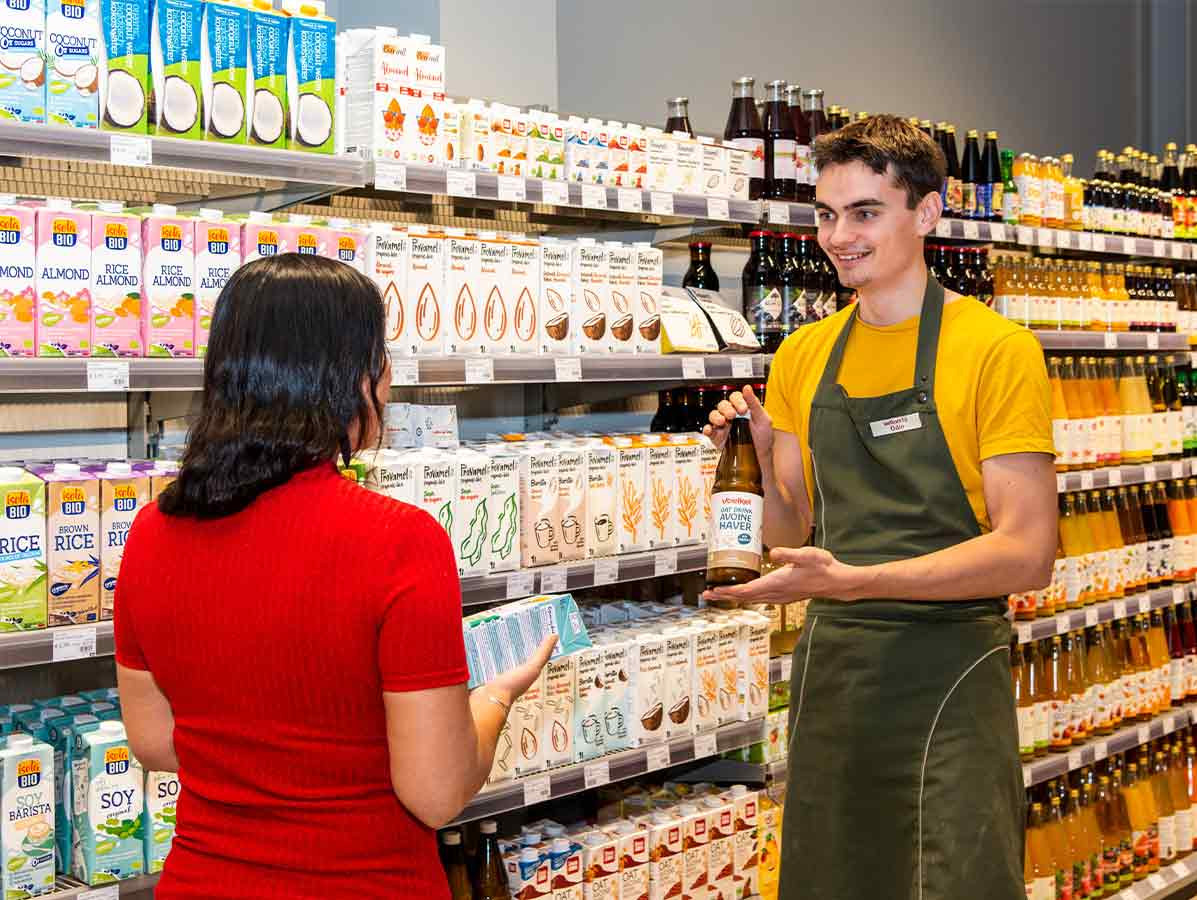
Organic supermarket Odin leads all Dutch supermarkets in the share of plant-based proteins on its shelves. While the national average sits at 40% plant-based and 60% animal-based, Odin reaches 67.1% plant-based and 32.9% animal-based.
“Of course we’re pleased with this strong result!” says Odin director Merle Koomans van den Dries. “It’s a logical outcome of the choices we make as a company. Vegetarian and plant-based food have always received a lot of attention at Odin, just like working toward greater animal welfare and reducing environmental impact. That’s why we haven’t promoted meat or fresh fish for years.”
Currently, about 40% of protein intake in the Netherlands comes from plant sources. The Dutch government aims for a 50/50 balance by 2023, while activist group Wakker Dier wants at least 60% plant-based protein sales by 2030. Odin supports this so-called "protein transition", citing both sustainability and animal welfare reasons.
With help from the Eiweet method, Odin calculated that 67.1% of their sold proteins are plant-based and 32.9% are animal-based. The Eiweet method is validated by the Green Protein Alliance and used by many supermarkets to monitor their protein ratio.
“With this ratio, Odin has already met the national supermarket target of 60% plant-based proteins by 2030. A fantastic achievement!”, the Green Protein Alliance posted on LinkedIn.
Koomans van den Dries adds: “We also think it’s important that the animal proteins we sell are of the highest possible quality. That’s why our animal proteins come mainly from biodynamic farms. These farms meet the strictest standards, work in circular systems, don’t use soy protein from tropical rainforests in their animal feed, and allow cows to keep their horns. Our animal proteins increasingly come from dual-purpose animals too. For example, eggs from chicken breeds where both the hens and roosters are also used for meat. That way, fewer broiler chickens are needed.”
Source: Odin
Magazine Voedingsindustrie has been made possible in part by:



© COPYRIGHT 2026 VOEDINGSINDUSTRIE | ALLE RECHTEN VOORBEHOUDEN
Powered by Wallbrink Crossmedia © 2026