
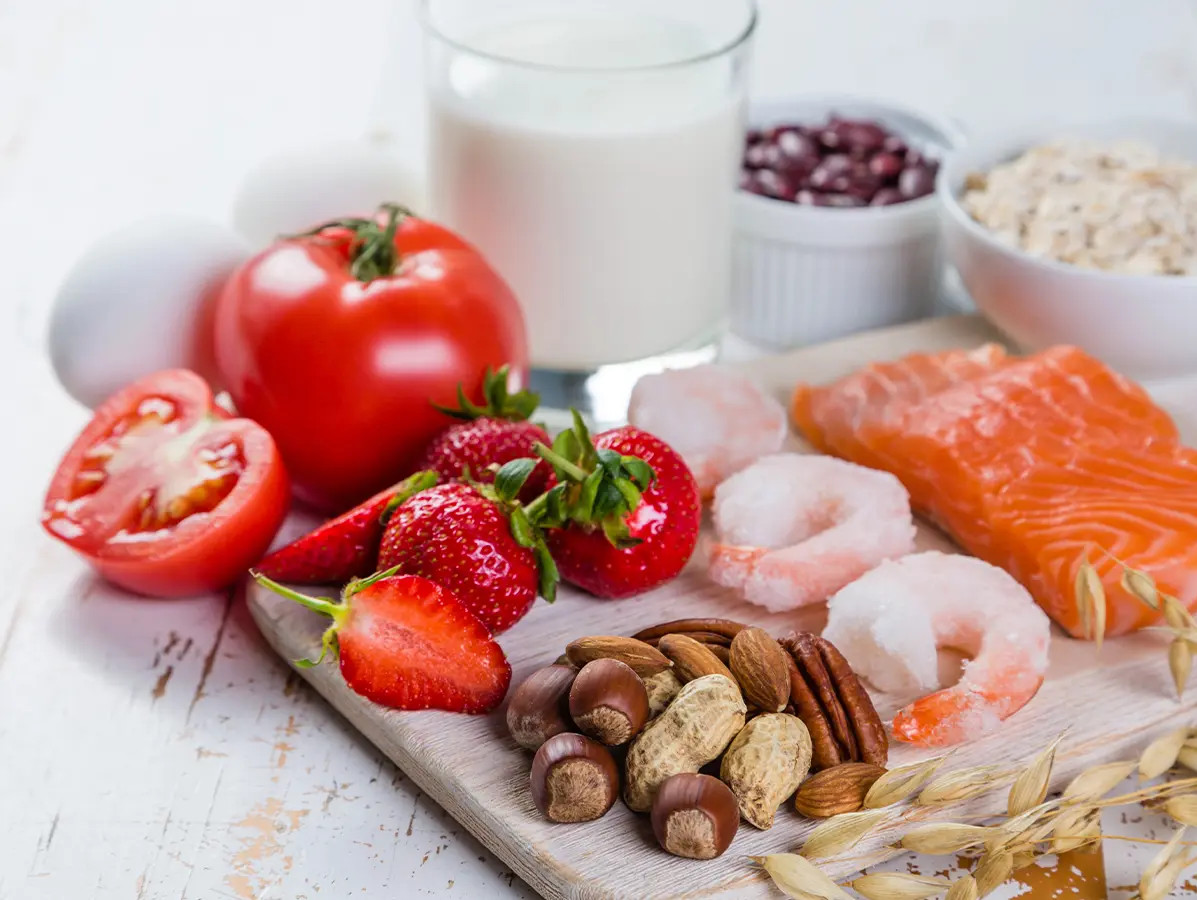
As of January 1, 2026, the Netherlands Food and Consumer Product Safety Authority (NVWA) will begin enforcing new rules on allergen labeling. These rules concern warnings on labels for allergens that may unintentionally end up in food products. For example, through cross-contamination during production.
The agreements are not new. They were discussed two years ago and formally announced last year. This gave companies time to adjust their processes and labels accordingly. From 2026 onward, the NVWA will assess whether prepacked products actually comply with the rules.
Cross-contamination can occur anywhere food is produced, packaged, or traded. Think of factories where machines are used for multiple products. Through those machines, an allergen can pass from one product to another.
Companies are expected to do everything possible to prevent this. If a risk remains despite preventive measures, a risk analysis is mandatory. That analysis determines whether the presence of an allergen could lead to exceeding the reference value. If that is not the case, no warning may be placed on the label. A warning without proper substantiation is therefore not permitted.
Warnings for unintended allergens fall under Precautionary Allergen Labelling, abbreviated as PAL. These warnings may only be used on prepacked products. The rules allow for two formulations.
The first is: “May contain X,” for example, “May contain sesame.” The second option reads: “Not suitable for people with an X allergy,” such as “Not suitable for people with a peanut allergy.” All conditions are laid down in the Allergen Labeling Policy as a precaution. This policy forms the basis for supervision and enforcement.
For people with a food allergy, reliable information is essential. That is why, as of January 1, 2026, the NVWA will check during inspections whether labels properly warn of possible cross-contamination. Inspectors will also assess whether businesses take appropriate measures to prevent cross-contamination.
Failure to comply with the rules may result in a warning or a fine. Hospitality businesses and artisanal producers, in particular, need to be extra attentive to the labels on ingredients and (semi-)finished products. This enables them to provide consumers with correct information. This topic will be further discussed in consultations between the ministry, artisanal trade associations, patient organizations, and the NVWA.
Source: NVWA
Magazine Voedingsindustrie has been made possible in part by:



© COPYRIGHT 2026 VOEDINGSINDUSTRIE | ALLE RECHTEN VOORBEHOUDEN
Powered by Wallbrink Crossmedia © 2026