
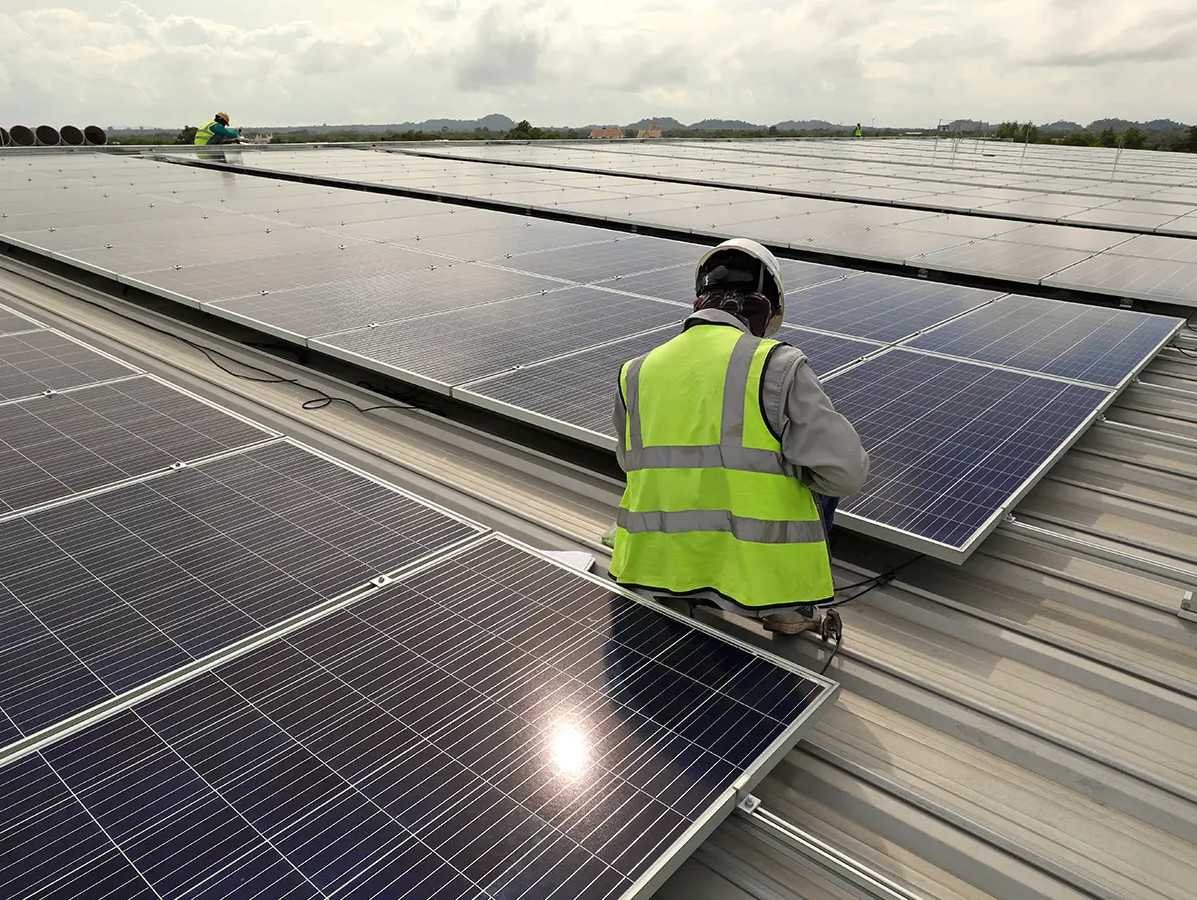
The Netherlands wants to reduce its dependence on fossil fuels. To achieve that, the Dutch government is taking another step to make investments in renewable energy more attractive. The scheme is also intended to support the decarbonization of Dutch industry, including the food industry.
The Dutch government is introducing two-way contracts, also known as Contracts for Difference (CfDs). These contracts provide companies with greater financial certainty when investing in large-scale renewable energy projects.
Under this type of contract, the government and a company agree on a fixed price for generating renewable energy. If the market price falls below that level, the government covers the difference. If the market price rises above it, the company pays the difference back. This means the government also shares in the returns when energy prices are high. The bill that enables these contracts has now been submitted to the House of Representatives.
According to Minister for Climate and Green Growth Stientje van Veldhoven, the contracts make investments in large-scale renewable energy more financially attractive.
"These contracts make it more financially attractive to invest in large-scale renewable energy projects, such as offshore wind, onshore wind, and solar energy. Support is necessary for the Netherlands to achieve its climate targets and to reduce its dependence on fossil fuels."
The Dutch government expects the scheme to make the Netherlands more attractive to international investors. It is also intended to help Dutch industry accelerate its decarbonization.
From 2027 onward, the Dutch government plans to use CfDs for offshore wind, onshore wind, and solar energy. The bill also leaves room to apply the instrument later to areas such as nuclear energy and measures that stimulate demand for renewable energy.
With these contracts, the Netherlands joins countries such as the United Kingdom and France, where the scheme is already in use.
Source: Rijksoverheid
Magazine Voedingsindustrie has been made possible in part by:



© COPYRIGHT 2026 VOEDINGSINDUSTRIE | ALLE RECHTEN VOORBEHOUDEN
Powered by Wallbrink Crossmedia © 2026