
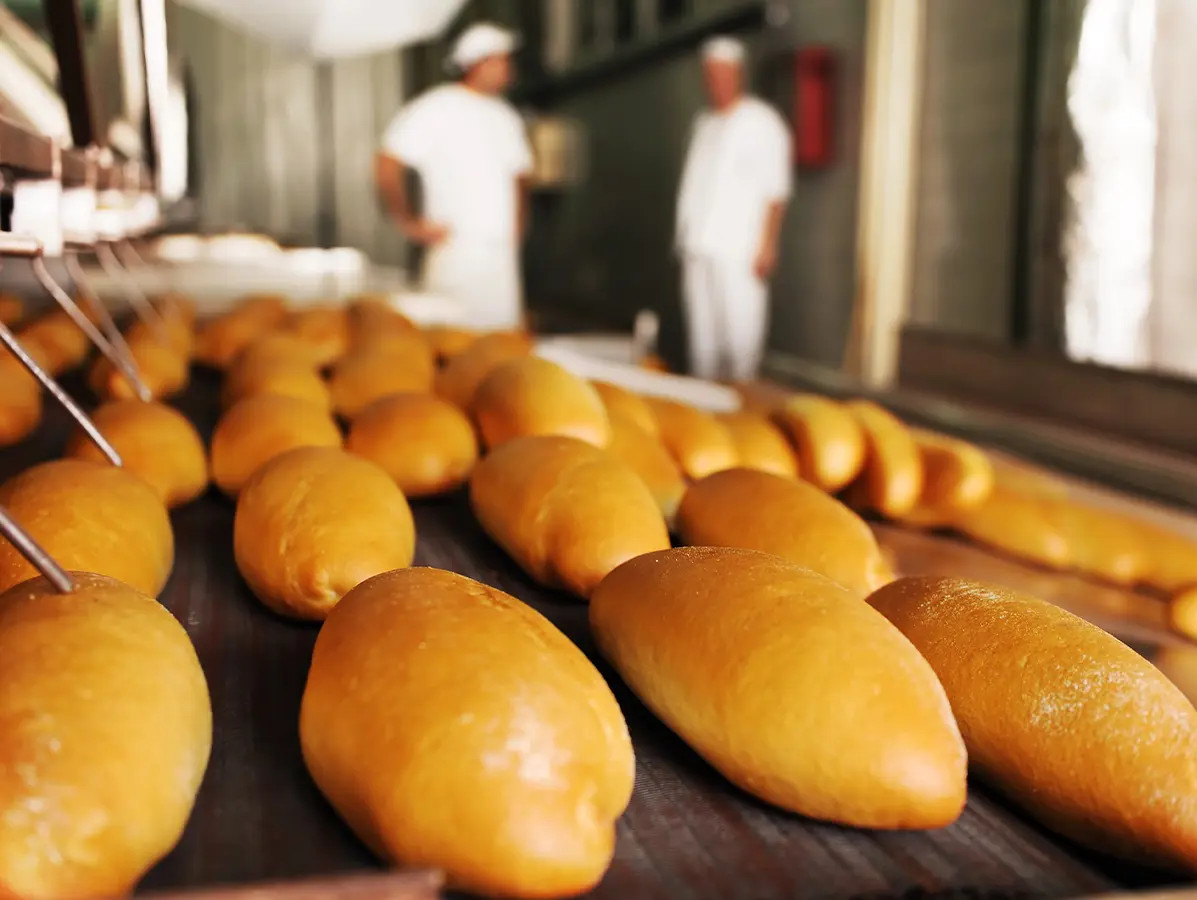
More and more industrial bakeries are using par-baked bread to make production more flexible and offer bread with a fresh-baked character. However, it is still not fully understood which processes during par-baking and storage determine the final bread quality. Doctoral research at UGent provides new insights into how bread develops throughout this process.
The dissertation examined the physicochemical changes that occur during par-baking, cooling, and final baking. Using rheological simulations, the research tracked the viscoelastic development of the bread crumb. The findings show that the crumb structure continues to develop during the cooling stage after par-baking.
The research also identifies a limit at approximately 60 percent of the total baking time. This corresponds to a core temperature of around 92°C. Beyond that point, additional par-baking results in only limited further improvement of the crumb structure.
Under standardized conditions, the dissertation investigated how the degree of par-baking affects small wheat rolls. The final baking step was found to largely compensate for the differences created during par-baking. As a result, the rolls ultimately showed comparable texture and physicochemical properties.
For commercially available MAP-packaged par-baked wheat, whole wheat, and gluten-free rolls, quality differences could not be attributed solely to starch transformations. Recipe formulation, thermal history, and storage conditions also play an important role.
The dissertation also examined the effect of pea, cocoa, and apple fibers in wheat-based dough systems. Fiber additions of up to five percent had a relatively predictable effect on dough and bread quality. Higher inclusion levels resulted in greater variation.
The findings also show that the optimal degree of par-baking depends on the type of bread. For wheat, whole wheat, and rye bread, baking time and core temperature alone are not sufficient to determine the appropriate degree of par-baking. According to the dissertation, par-baking is a dynamic technological process shaped by the interaction between recipe formulation, product size, and thermal history.
Source: Universiteit Gent
Magazine Voedingsindustrie has been made possible in part by:



© COPYRIGHT 2026 VOEDINGSINDUSTRIE | ALLE RECHTEN VOORBEHOUDEN
Powered by Wallbrink Crossmedia © 2026